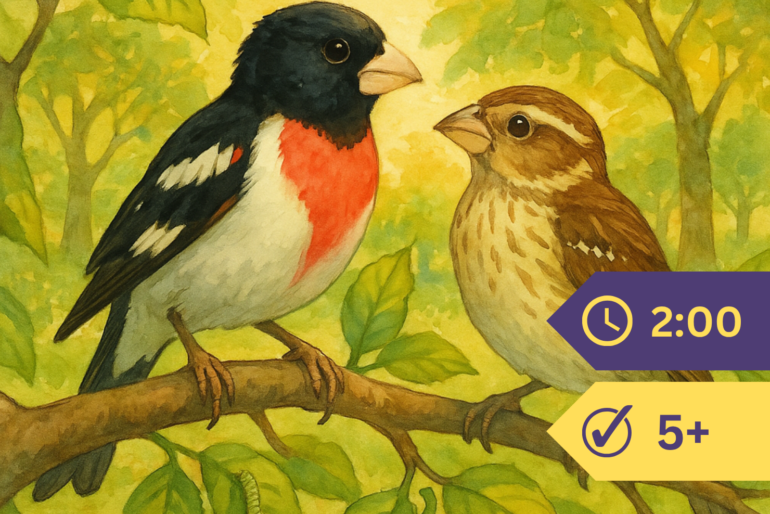
The rose-breasted grosbeak is one of the most beautiful birds in the wood, and also one of the most useful — which is not always the way of beautiful things.
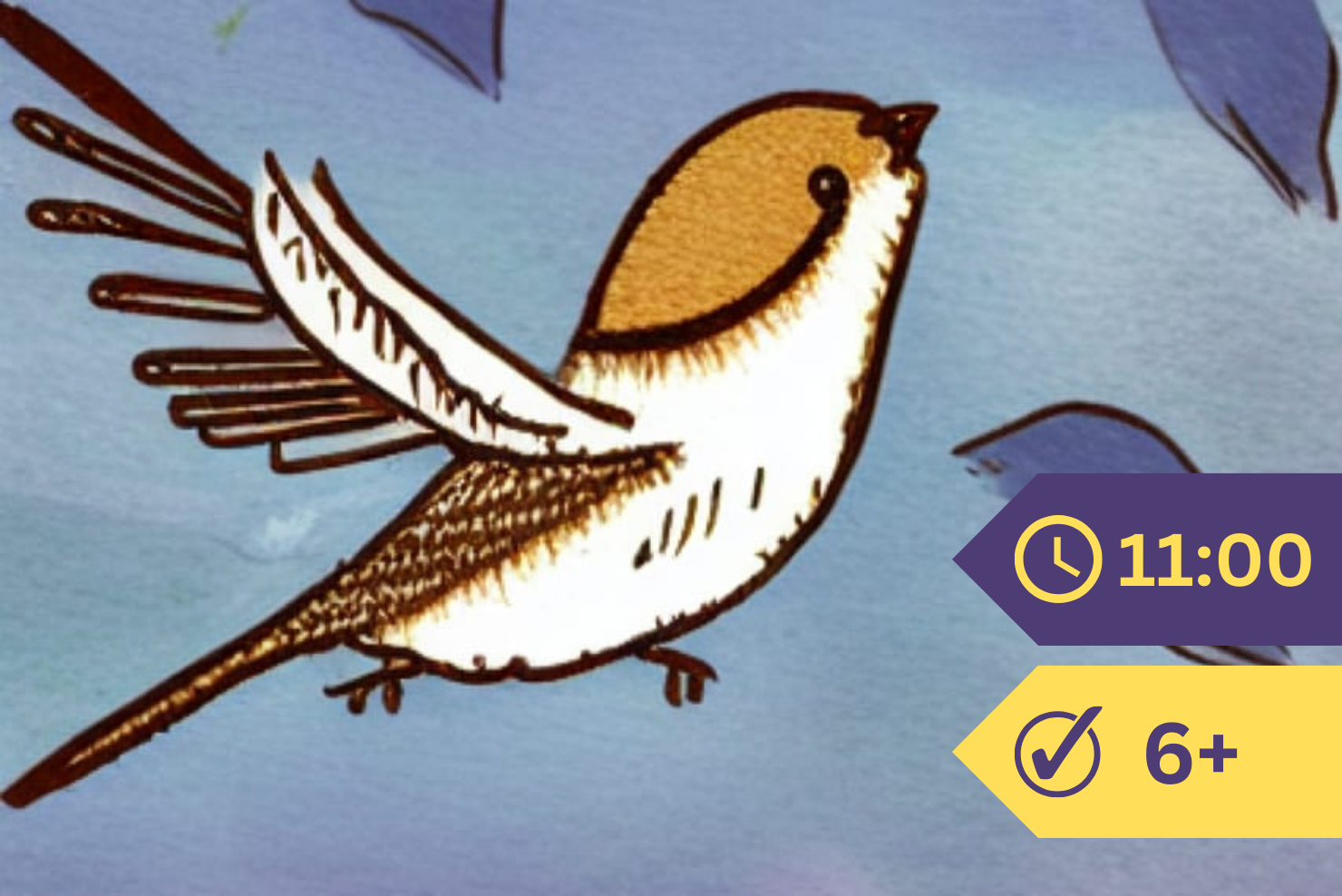
Mr. Rose-Breasted Grosbeak dresses in black and white, with a handsome triangle of rose-red on his chest and the same colour tucked under his wings. Mrs. Grosbeak wears sensible brown, not unlike her cousin the sparrow. They have distinguished relations: the Blue Grosbeak, the male in deep blue with chestnut shoulder-trims; the Evening Grosbeak in brown and gold; and the Pine Grosbeak, the male in wonderful dusky red, who loves cold weather and trusts people enough to let them walk right up to him in winter.
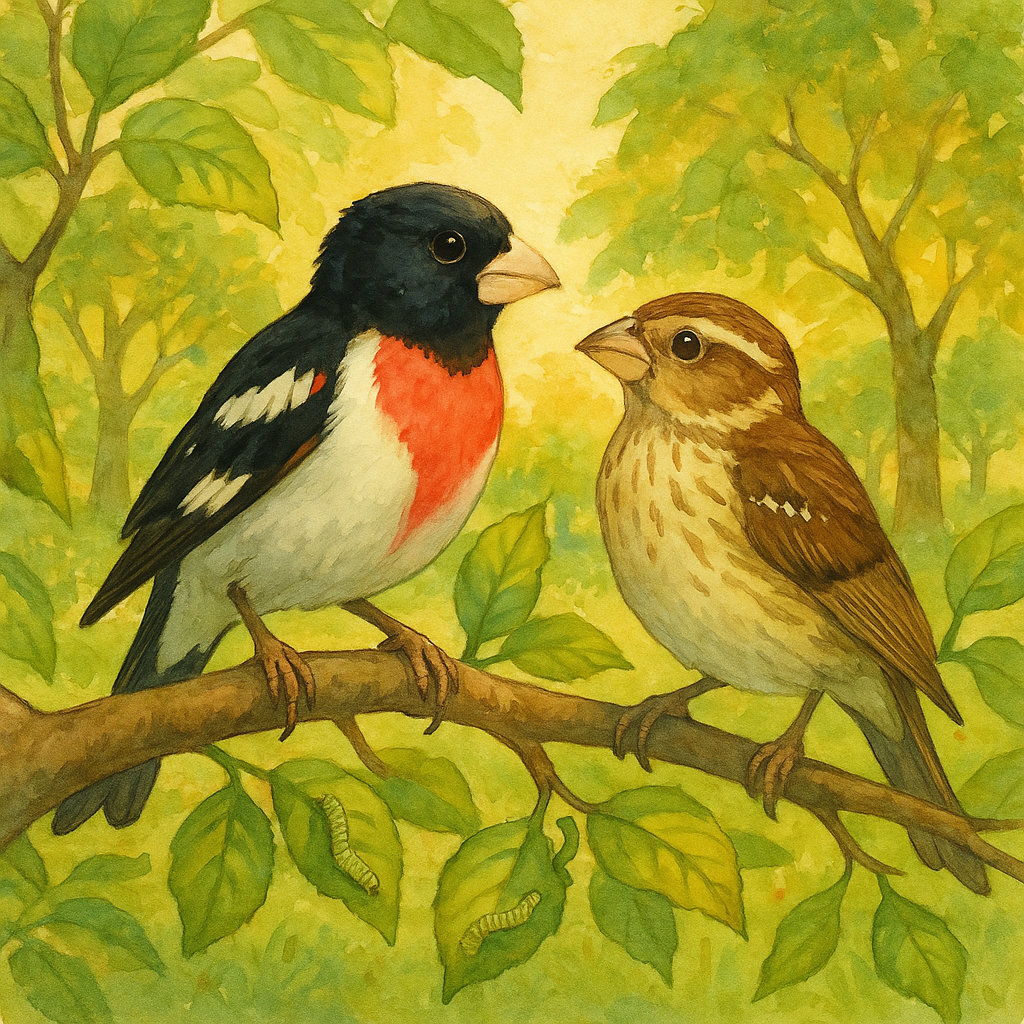
But Mr. Rose-Breasted Grosbeak has a particular story.
One day, long ago, he turned to his mate and said: “I am not content simply to be beautiful and have a fine voice.”
“What will you do instead?” asked Mrs. Grosbeak.
“I have been thinking about it,” he said. And after a while: “We will be useful. We will eat the insects and caterpillars that damage crops and orchards. We can easily develop a taste for them — and it would be far more interesting than doing nothing. It is horrible, really, to be handsome and comfortable and idle.”
Mrs. Grosbeak thought this was an excellent idea. “If we did nothing but sing all day,” she said later, “we’d eventually have nothing to sing about. No news. No work finished. No joy we’d actually earned.”
And so the grosbeak family became great helpers to farmers and orchardists — eating the caterpillars that strip trees bare, the potato beetles, the cucumber beetles, the moths. And they never stopped singing.
Glosses: grosbeak — from French gros bec, “large beak”; caterpillar — the larva of a moth or butterfly, often very damaging to crops