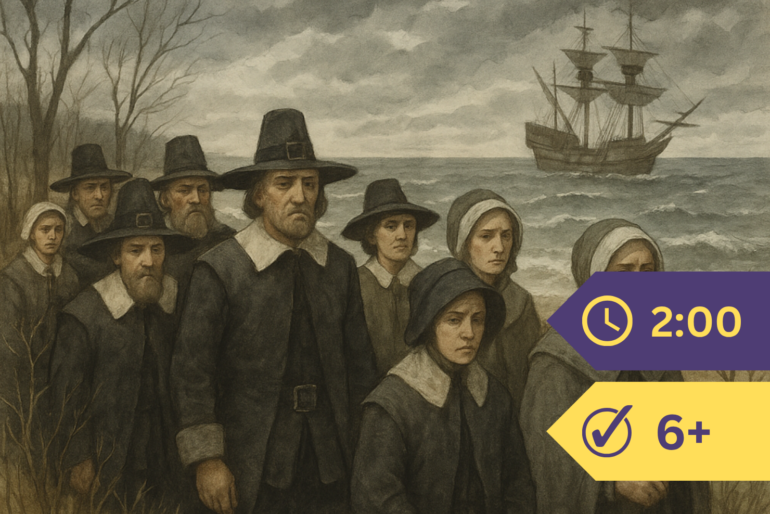
In 1620, a small group of men and women boarded a ship called the Mayflower and sailed from Plymouth, England. They had already tried once and turned back — their first ships had leaked. Another group might have given up. These people would not.
There were only a hundred of them. The Atlantic crossing was terrible. When they finally reached the American coast — driven off course by storms, landing further north than they had planned, on the shore of Cape Cod in New England — they were exhausted, and winter was already coming.
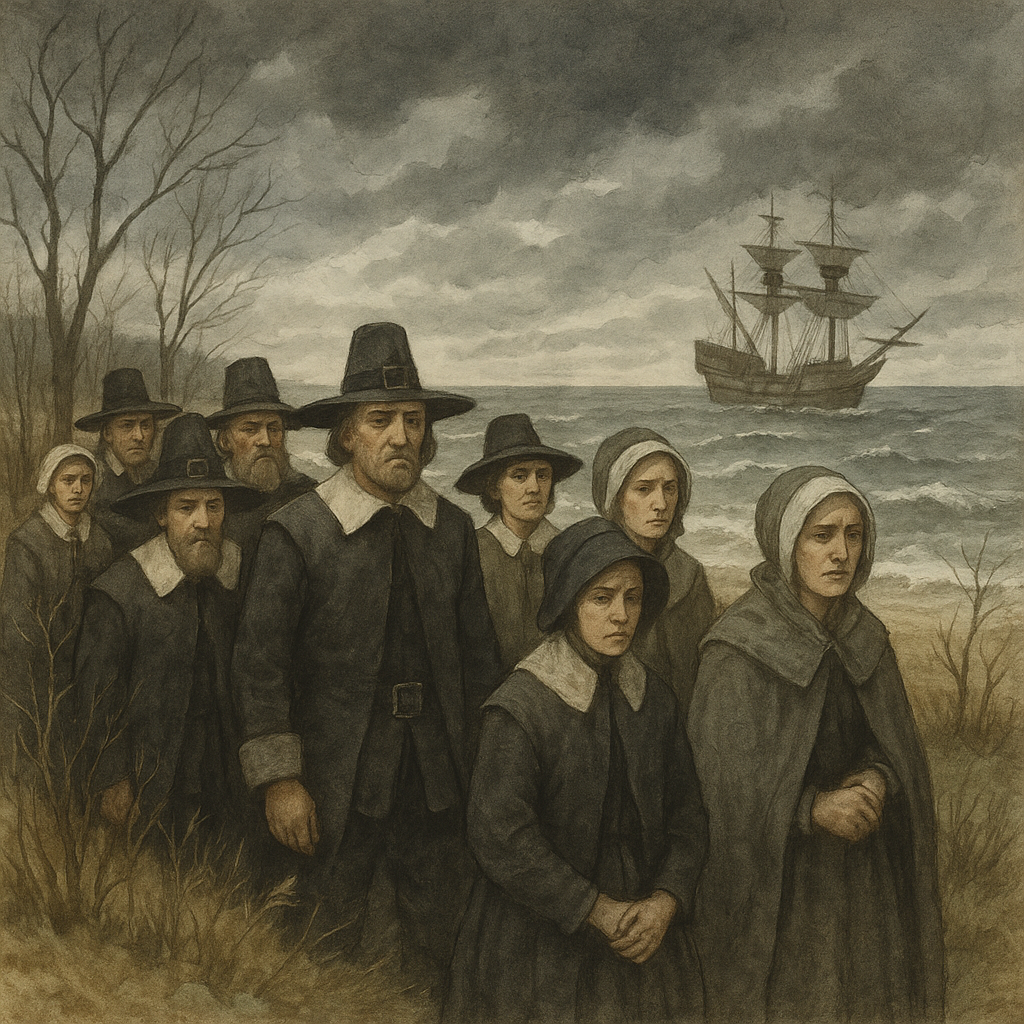
Plymouth became their colony. That first winter was devastating. More than half of their number died.
In the spring, the survivors stayed.
They had every reason to go back. They chose to remain. And in the autumn of 1621, when the harvest came in at last, their hearts were so full of relief and gratitude that they set aside a day to give solemn thanks. They called it giving thanks to the glorious Hearer of Prayers.
That first Thanksgiving was theirs. The tradition they began grew slowly into a national one. In 1789, President George Washington named a day in November as a day of national thanksgiving. And many years later, President Abraham Lincoln made it a fixed annual observance — the last Thursday in November — for the whole country, every year without exception.
We have the Pilgrims to thank for the feeling, and Lincoln to thank for the date. But the heart of it goes back to those hundred people on the Cape Cod shore, facing a future they couldn’t predict, still choosing to be grateful.
It seems right that their holiday became one of joy. People who could endure so much for what they believed in could not help but have hearts capable of great happiness.