One season, the mother lioness grew very ill. The keeper could see she wasn’t going to recover, and he didn’t know what would become of her cubs.
The lioness seemed to know it herself. Over and over she kissed her babies with her tongue, nuzzling them close with the great paw that could have crushed a creature if she’d wished — but which touched her cubs so gently they never suspected there was anything to be afraid of.
The little lions nestled against her, making their soft growling sounds. How warm you are, mother. How good you are to us.
And the lioness held them, and looked far out beyond the bars of her cage, into some distance only she could see. What will happen to them when I’m gone? Her eyes searched and searched. The people who came to watch her every day saw a lioness with her cubs. They didn’t see what she was doing — scanning the unknown, worrying, trying to understand what was coming for her babies.
The next morning, the lion babies woke to find their mother gone.
The keeper came, and was kind. He fed them and spoke to them in soft tones. But there is a feeling that is not hunger — a hollow that no food fills. The lion babies lay together, missing what they could not name.
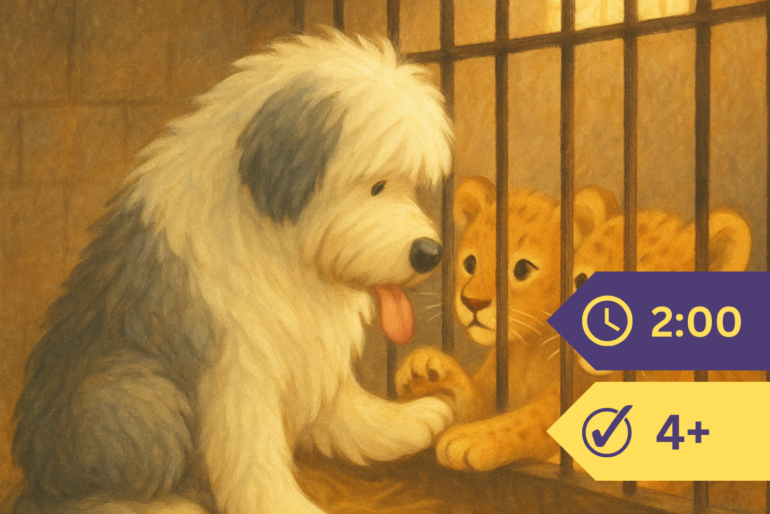
Then, on the second morning, the keeper arrived to find a large woolly sheepdog sitting outside the cage, licking the cubs’ paws through the bars. The cubs were giving their low growls again. When the dog saw the keeper, she jumped up — let me in, please.
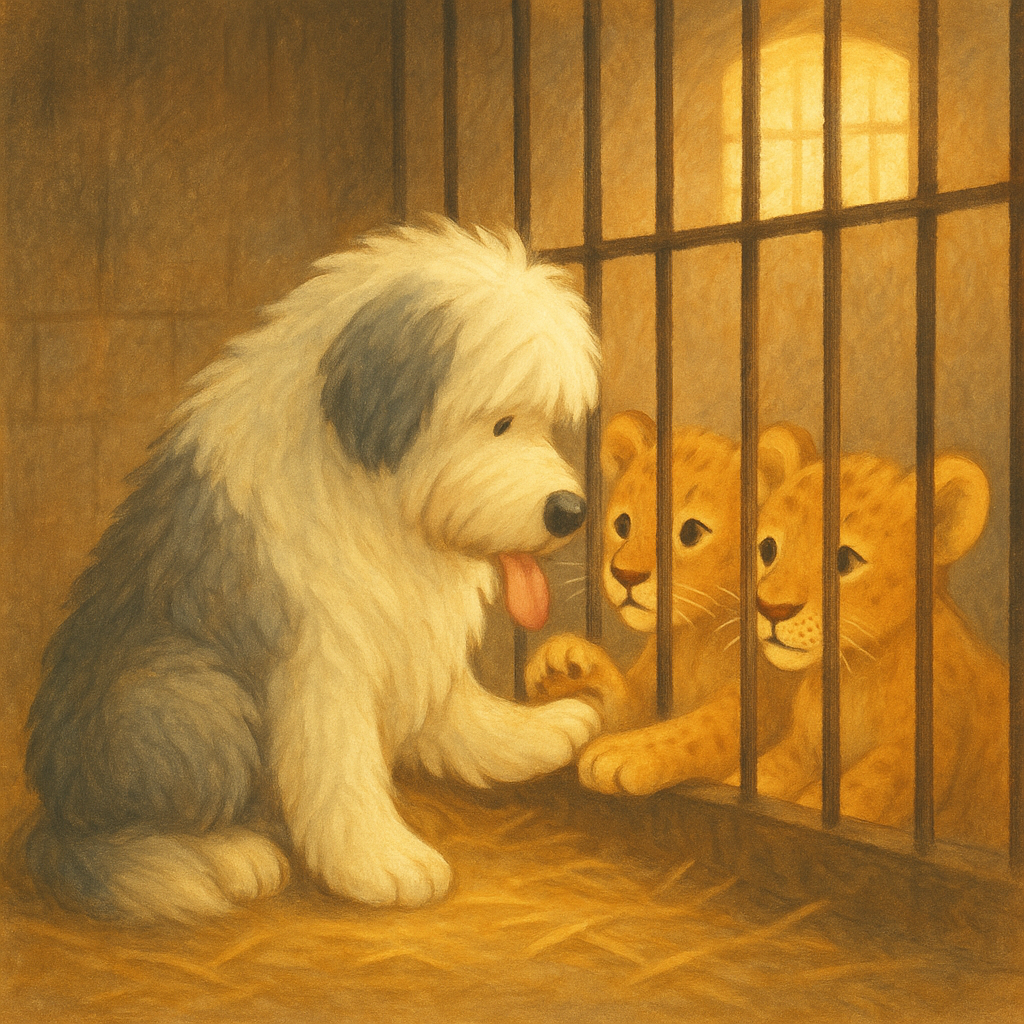
He opened the door.
From that day, the sheepdog lived with the lion babies. She raised them and watched over them. And when those lions grew big enough for the circus, they always had their dog with them — the one who had stepped in when no one else could.