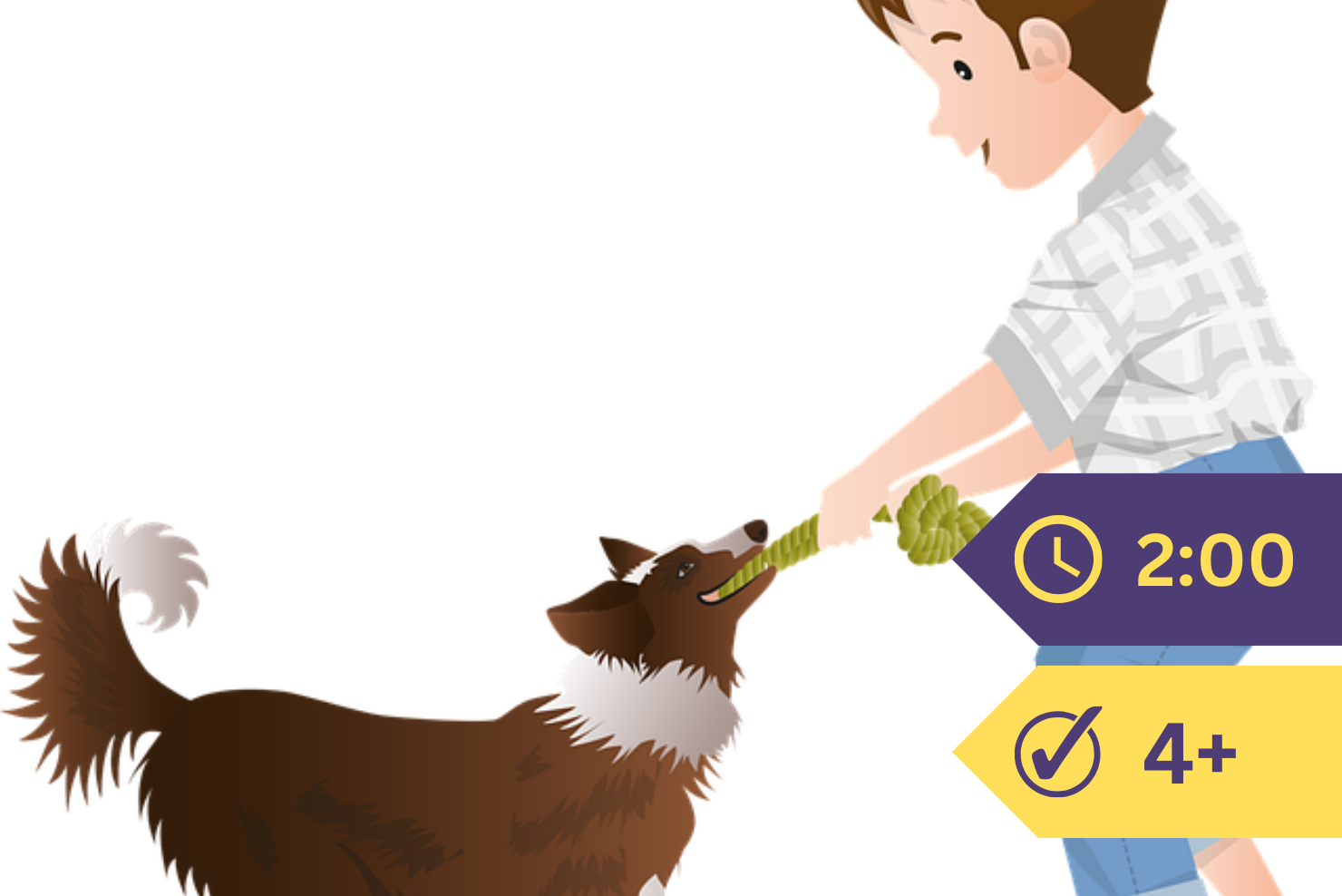
Rowdy was a bulldog — large and handsome, with a fine white throat and a magnificent collar that he wore when he went out into the street. He lived with a boy named Alfred, whose mother kept a comfortable house and saw to it that Rowdy wanted for nothing: a beautiful basket in Alfred’s room, good food, and the run of the place.
Alfred was not a strong boy. He couldn’t do all the sports that other boys loved, and because of this, he and Rowdy were especially close. Alfred had a phonograph that he played every afternoon, and Rowdy would sit before it with his head tilting first to one side and then the other — entirely absorbed, wagging his tail to show his opinion.
In the afternoons, Alfred and his mother took drives in a big open carriage. One bright afternoon in early spring, they set out, and Rowdy came along as always in his best collar, sitting up very straight.
They had not gone far when they passed a small, thin dog — a stray, clearly — picking its way along the gutter. Rowdy saw it. He went very still. Then he began to whine, a low, sad sound, and tried to get out of the carriage.
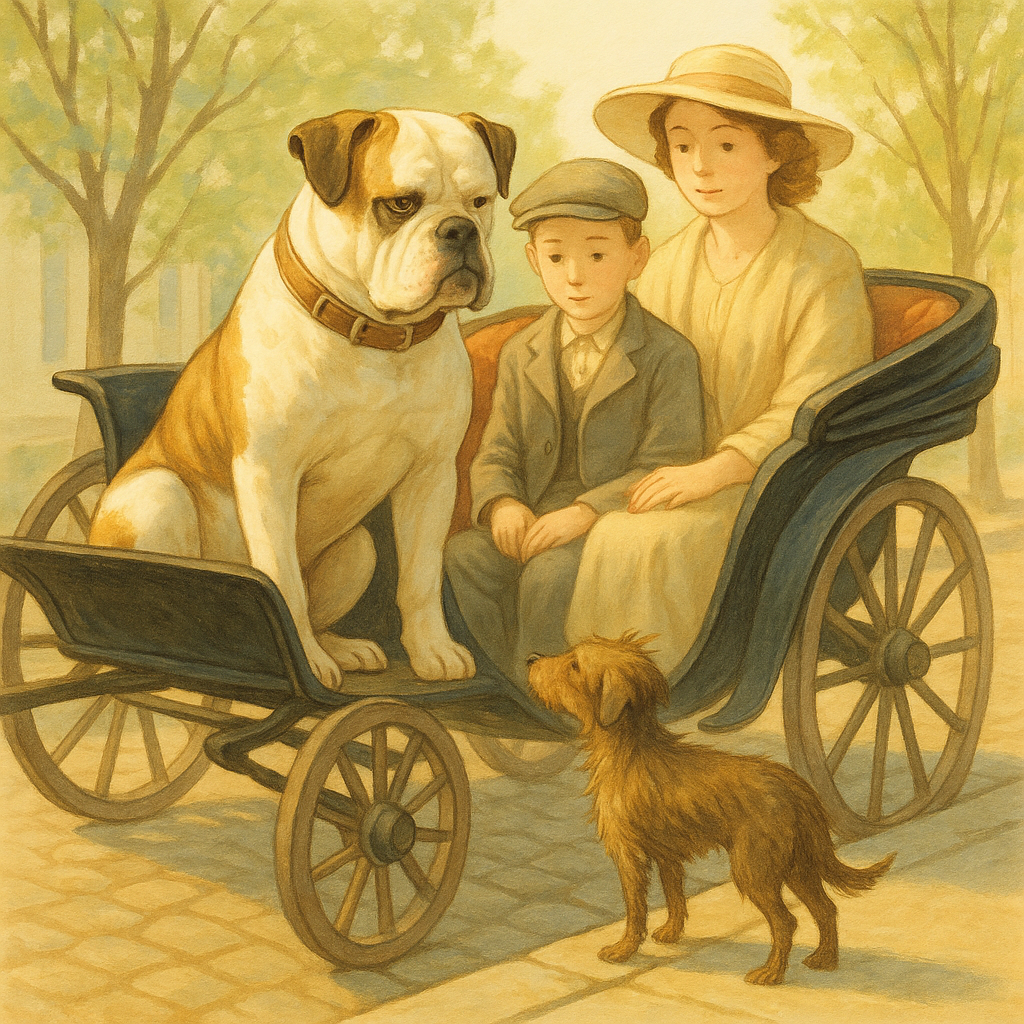
“Rowdy,” said Alfred. “Do you want to bring that little dog with us?”
Rowdy showed, as clearly as a dog can show anything, that yes, he did.
So they went back. They collected the stray. They brought it home.
Rowdy seemed satisfied in a way that was more than ordinary contentment — as if giving some of his good luck away had been something he’d wanted to do for a long time, and now he had.