
Wilhelm Hauff
Dive into Wilhelm Hauff’s complete fairy tales and short stories, and read them online for free — filter to discover your favorites, or explore our article to learn more.
Wilhelm Hauff (1802–1827) was a German Romantic writer, born in Stuttgart, Württemberg. Despite his remarkably short life — he died at just twenty-five years of age — he left a significant mark on German literature, particularly through his fairy tales and novellas. Hauff is widely regarded as one of the most gifted German storytellers of the early nineteenth century, often mentioned alongside the Brothers Grimm as a shaping force in the German fairy tale tradition.
Hauff published his fairy tales in three almanacs between 1825 and 1828, framing them within elaborate frame narratives in the tradition of One Thousand and One Nights. His stories are notable for their vivid settings, morally complex characters, and their blend of the fantastical with the grounded realities of everyday life. He drew on Middle Eastern, European, and German folk traditions, weaving them into original narratives that felt both exotic and deeply familiar to his readers.
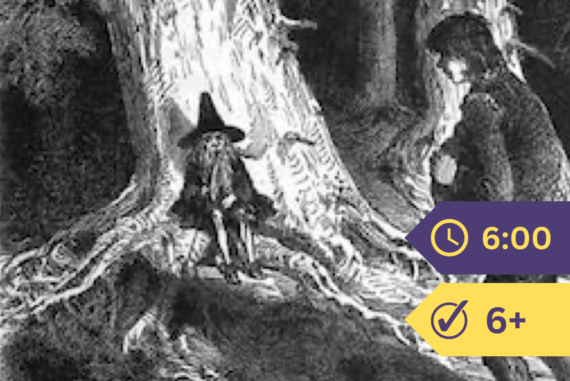
One of his most celebrated works, A Heart of Stone, is set in the Black Forest and follows Peter Munk, a poor and discontented charcoal burner who yearns for wealth and status. The tale explores themes of greed, spiritual corruption, and redemption, drawing on the folklore of the forest region while delivering a sharply moral narrative. The story reflects Hauff’s recurring interest in characters who make fateful bargains — trading something essential about their humanity for material gain — and the consequences that follow.
Across his body of work, Hauff demonstrated a remarkable ability to adapt and originate stories that spoke to universal human experiences: ambition, envy, loyalty, and the search for belonging. His narrative voice balanced warmth with an unsentimental honesty about human weakness, giving his tales a psychological depth that distinguished them from simpler moral fables of the era.
Though Hauff’s life was cut tragically short by typhoid fever in 1827, his literary output was prolific for his years. Beyond fairy tales, he wrote historical novels, satirical works, and poetry. His fairy tale almanacs continued to be published posthumously and remained popular throughout the nineteenth century and beyond in German-speaking countries. Today, his works occupy a respected place in the canon of German Romantic literature, studied for both their literary craft and their contribution to the development of the literary fairy tale as a genre.