
Shakespeare
Dive into Shakespeare’s complete short stories and poems — read them online for free, filter to discover your favorites, or explore our article to learn more about the author.
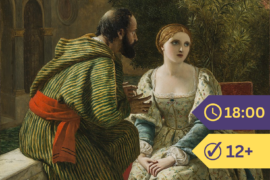
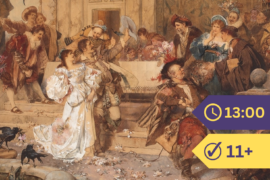
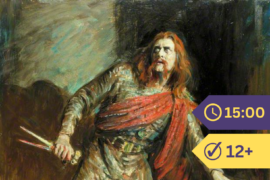
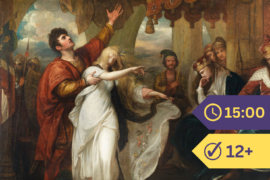

William Shakespeare (1564–1616) was an English playwright, poet, and actor widely regarded as the greatest writer in the English language and the world’s pre-eminent dramatist. Born in Stratford-upon-Avon, England, he wrote approximately 37 plays, 154 sonnets, and several longer poems during the late sixteenth and early seventeenth centuries. His works have been translated into every major language and are performed more often than those of any other playwright in history.
Shakespeare worked primarily in London as a playwright and part-owner of the Globe Theatre. His career spanned roughly two decades, during which he produced tragedies, comedies, histories, and romances that together cover an extraordinary range of human experience. His language — dense with metaphor, wordplay, and psychological insight — helped shape the development of the English language itself, contributing thousands of phrases and words still in common use today.
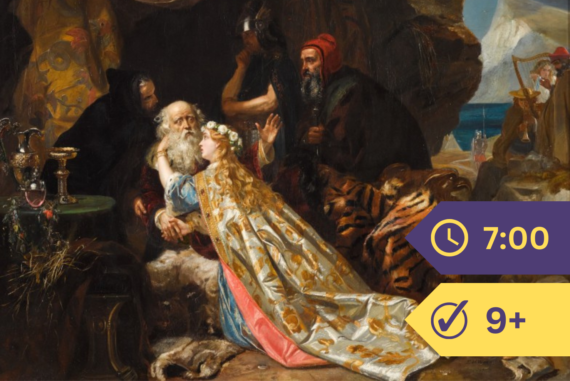
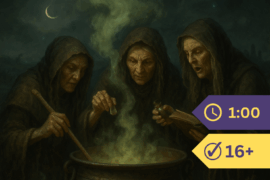
Among his tragedies, Hamlet stands as one of the most analysed works in literary history, exploring grief, revenge, and moral paralysis through the story of a Danish prince haunted by his father’s murder. Othello examines jealousy and manipulation with devastating precision, while Macbeth traces the destruction of a man consumed by ambition. King Lear follows an aging monarch whose catastrophic misjudgment of his daughters sets off one of literature’s darkest chains of consequence.
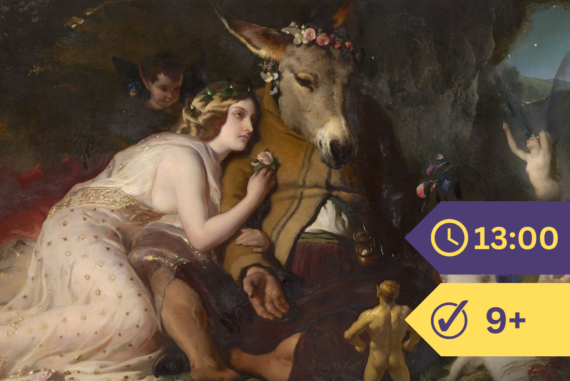
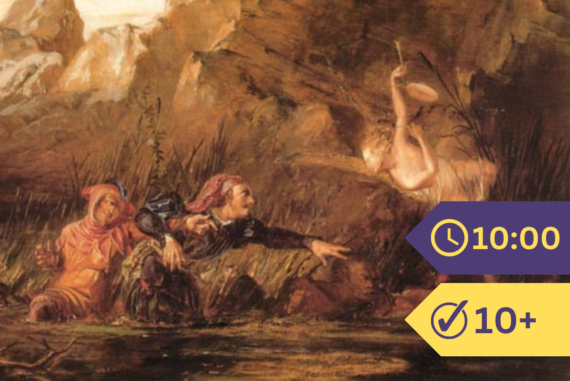
Shakespeare’s comedies and romances offer a contrasting world of mistaken identities, disguise, and reconciliation. A Midsummer Night’s Dream weaves together the quarrels of fairy royalty with the romantic entanglements of young Athenians, while Twelfth Night uses cross-dressing and comic misunderstanding to explore the nature of desire and identity. The later romance The Tempest, set on an enchanted island ruled by the sorcerer Prospero, is often read as a meditation on power, art, and forgiveness.
Beyond his plays, Shakespeare’s Sonnets — 154 poems addressed to an unnamed young man and a mysterious “dark lady” — remain among the most studied lyric poems in the English language, notable for their exploration of love, time, beauty, and mortality. His influence on literature, theatre, philosophy, and the arts has been continuous from his own era to the present day, and his plays remain central texts in academic curricula and on stages worldwide.