
Rudyard Kipling
Dive into Rudyard Kipling’s complete collection of short stories, fables, and poems — read them online for free, filter to discover your favorites, or explore our article to learn more about the author.
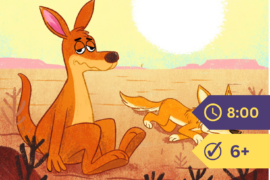
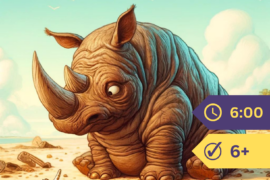
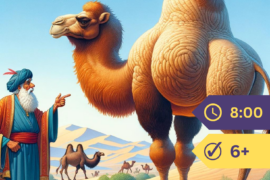
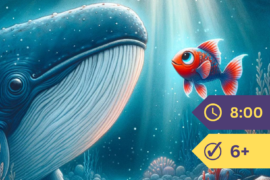
Rudyard Kipling (1865–1936) was a British author and poet born in Bombay, India, whose writing drew deeply from his experiences of the Indian subcontinent and the wider British Empire. He is one of the most widely read English-language writers of the late nineteenth and early twentieth centuries, and in 1907 he became the first English-language author to receive the Nobel Prize in Literature. His work spans poetry, short fiction, novels, and children’s literature, and he remains a significant — if also debated — figure in literary history.
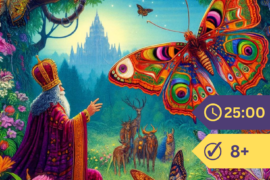
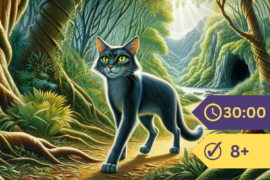
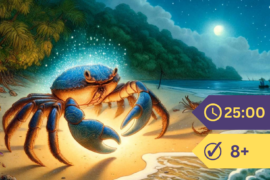
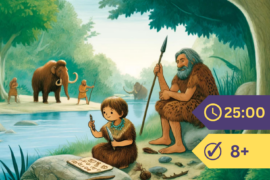
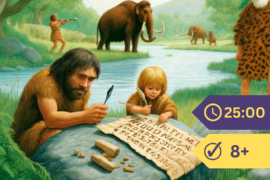
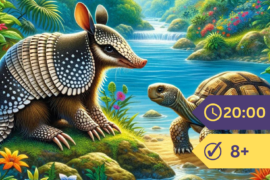
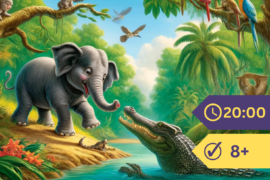
Kipling is perhaps best known for his children’s fiction, particularly the Just So Stories (1902), a collection of whimsical origin tales addressed warmly to the reader as “Best Beloved.” These stories explain, with playful invention and rich language, how animals came to look and behave as they do. How The Whale Got His Throat, How The Camel Got His Hump, and The Elephant’s Child are among the most recognizable, each built around a single comic premise delivered with Kipling’s characteristically rolling, incantatory prose. Other tales in the same vein — such as The Cat That Walked By Himself and The Beginning Of The Armadillos — blend folklore structure with Kipling’s own invention, creating stories that feel both ancient and entirely original.
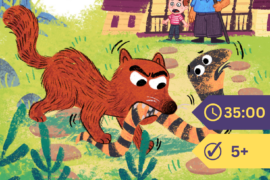
Beyond the Just So Stories, Kipling’s fiction for younger readers includes Rikki-Tikki-Tavi, the story of a young mongoose who defends a household in colonial India against two deadly cobras. The story, originally published as part of The Jungle Book (1894), is notable for its tense plotting and its vivid depiction of the natural world. Kipling’s poetry also reached wide audiences; IF—, published in 1910, is a didactic poem addressed from a father to a son, outlining virtues of resilience, humility, and self-possession. It remains one of the most quoted poems in the English language.
Kipling’s literary style is marked by a strong oral quality — his prose is often rhythmic, his narrators direct and conversational, and his stories frequently incorporate verse passages or songs. Across his body of work, he showed a sustained interest in the natural world, in origin myths and creation narratives, and in the relationship between human civilization and the animal kingdom. His place in literary history is complex: celebrated in his own time and still widely read, his work is also studied critically for what it reflects about the imperial attitudes of his era.