
Robert Louis Stevenson
Dive into Robert Louis Stevenson’s complete books and poems — read them online for free, filter to discover your favorites, and explore our article to learn more.
Robert Louis Stevenson (1850–1894) was a Scottish novelist, poet, and essayist, widely regarded as one of the most significant writers of the Victorian era. Born in Edinburgh, Scotland, he overcame persistent ill health throughout his life and channeled his restless imagination into a body of work that spanned adventure fiction, horror, poetry, and travel writing. His prose style — vivid, precise, and deeply atmospheric — earned him admiration from contemporaries and lasting recognition in literary history.
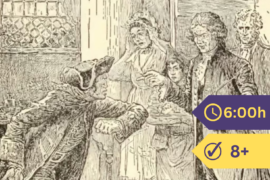
Stevenson is perhaps best known for his mastery of the adventure novel and the psychological thriller. Treasure Island (Full Book) stands as one of the defining works of adventure literature, introducing readers to the young Jim Hawkins, the treacherous Long John Silver, and a world of buried gold and maritime intrigue. First serialized in a children’s magazine in 1881, the novel shaped the popular image of pirates for generations of readers and writers alike. Its brisk pacing and morally complex characters set it apart from simpler adventure tales of the period.
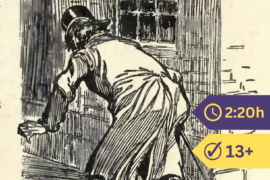
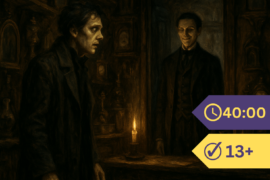
Equally influential is The Strange Case of Dr. Jekyll and Mr. Hyde (Full Book), a novella that probes the duality of human nature with unsettling precision. Published in 1886, it follows the respectable Dr. Henry Jekyll and his terrifying alter ego, Mr. Edward Hyde, through a narrative structured around witness accounts, letters, and legal documents. The story drew on contemporary debates about science, morality, and the hidden impulses lurking beneath Victorian respectability, and it has since become a foundational text in both Gothic and psychological fiction.
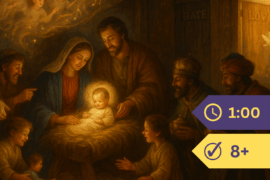
Beyond his fiction, Stevenson also wrote verse marked by simplicity and emotional directness. A Christmas Prayer demonstrates this quieter register — a short devotional piece reflecting on compassion, forgiveness, and the spirit of the Christmas season. It offers a glimpse into a more contemplative side of a writer usually associated with high adventure and psychological drama.
Stevenson spent his final years in Samoa, where he died in 1894 at the age of forty-four. Despite his short life, his output was substantial and varied, and his influence on adventure fiction, horror, and the short psychological novel remains considerable. Writers from G.K. Chesterton to Jorge Luis Borges acknowledged his impact, and his major works continue to be studied and read widely across the world.