
Madame d’Aulnoy
Dive into Madame d’Aulnoy’s complete fairy tales and short stories — read them online for free, filter to discover your favorites, and explore our article to learn more.


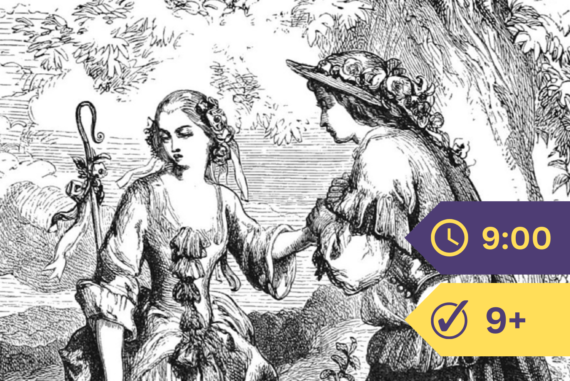
Madame d’Aulnoy (Marie-Catherine Le Jumel de Barneville, Baroness d’Aulnoy, c. 1651–1705) was a French author who played a central role in establishing the literary fairy tale as a respected genre in seventeenth-century France. Writing during the reign of Louis XIV, she was among the first writers to publish fairy tales in a sophisticated, literary form aimed at adult salon audiences. Her 1697 collection Les Contes des fées appeared the same year as Charles Perrault’s famous tales, making her a true contemporary and equal in the history of the genre — though she has historically received far less popular recognition than Perrault.
D’Aulnoy’s fairy tales are known for their elaborate plots, rich settings, and psychologically complex characters. Unlike the stripped-down brevity of some contemporaries, her stories tend toward the novelistic: they unfold across courts, enchanted kingdoms, and magical forests, often exploring themes of love, loyalty, sacrifice, and the tension between free will and fate. In The White Cat, a prince undertakes a series of impossible tasks set by his father, only to find enchantment and devotion in the most unexpected form. The Yellow Dwarf is notably darker in tone, following the beautiful Bellissima and her mother into a bargain with a sinister creature whose claim cannot easily be undone. These stories demonstrate d’Aulnoy’s willingness to allow tragedy and moral ambiguity into what might otherwise be expected to be simple tales of virtue rewarded.
Royal courts and their intrigues provide the backdrop for much of her work. In The Ram, a king’s youngest daughter Miranda finds herself bound to an enchanted prince in animal form, while Princess Rosette follows a spirited young princess whose birth is foretold by fairies with both gifts and consequences. The Good Little Mouse weaves together themes of maternal protection and magical intervention in a tale of a queen and her captive daughter. Even The White Doe, rooted in the transformation motif common to folklore, carries d’Aulnoy’s characteristic blend of courtly elegance and enchanted peril.
Madame d’Aulnoy’s place in literary history is secure as one of the founders of the conte de fées tradition in French literature. Her work influenced the shape of the European fairy tale and contributed to a genre that would eventually reach a global audience through later anthologists and storytellers. Scholars of folklore and French literature continue to study her tales as both literary achievements and cultural documents of late seventeenth-century French society.