
Lewis Carroll
Dive into Lewis Carroll’s complete books and poems — read them online for free, filter to discover your favorites, or explore our article to learn more about the author.

Lewis Carroll was the pen name of Charles Lutwidge Dodgson (1832–1898), an English author, mathematician, and logician associated with the Victorian era. He is best known for his works of literary nonsense, which combine playful humor, logical puzzles, and inventive wordplay in ways that set them apart from most fiction of their time. Dodgson lectured in mathematics at Christ Church, Oxford, and his academic background in logic and formal reasoning quietly shapes much of his imaginative writing.
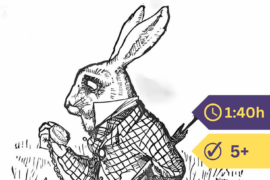
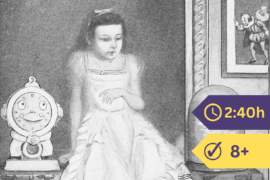
Carroll’s most celebrated works center on a young girl named Alice. Alice in Wonderland (Chapter Book) follows Alice as she tumbles down a rabbit hole into an underground world populated by eccentric characters — a hookah-smoking Caterpillar, a Duchess with a troublesome pig, and a chaotic Mad Hatter’s tea party, among many others. Its sequel, Alice Through The Looking-Glass (Full Book), sends Alice through a mirror into a world structured like a giant chess game, where she encounters Tweedledum and Tweedledee, Humpty Dumpty, and a cast of characters equally strange and memorable. Both books are notable for their internal logical consistency — the absurdity follows rules, even when those rules are invented on the spot.
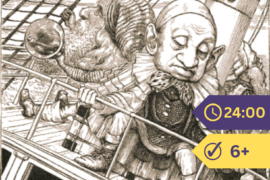
Beyond prose, Carroll wrote substantial poetry. The Hunting of the Snark: An Agony in Eight Fits is an extended narrative poem following a crew of oddly named characters on a voyage to hunt an elusive and possibly dangerous creature. It is considered one of the finest examples of literary nonsense in the English language, blending mock-heroic structure with deliberate ambiguity. Phantasmagoria is a lighter comic poem in which a narrator is visited by a bumbling ghost who explains the rules and inconveniences of haunting — a work that showcases Carroll’s facility for dry wit and verse comedy.
Carroll’s writing occupies a distinctive place in English literary history. His Alice books influenced Surrealism, psychoanalytic theory, and twentieth-century fantasy literature, and are among the most quoted and analyzed texts in the Western canon. His poetry contributed to the tradition of nonsense verse pioneered earlier by Edward Lear, pushing the form toward greater structural complexity. Dodgson published works under his own name in the fields of logic and mathematics, but it is the Carroll pseudonym — and the imaginative worlds attached to it — that has endured most durably in literary culture.