
Henry Beston
Dive into Henry Beston’s complete fairy tales and bedtime stories — read them online for free, filter to discover your favorites, and explore our article to learn more about the author.
Henry Beston (1888–1968) was an American author and naturalist, best known for his lyrical prose and deep sensitivity to the natural world. Born Henry Beston Sheahan in Quincy, Massachusetts, he studied at Harvard University and went on to serve as a journalist before devoting himself fully to writing. While he is perhaps most celebrated for his 1928 nature memoir The Outermost House, Beston also made a significant contribution to children’s literature through his original fairy tales, which drew on the great European storytelling tradition while carrying his own distinctive voice.
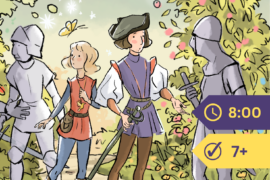
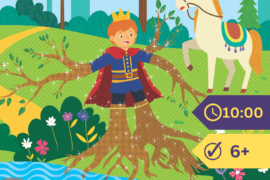
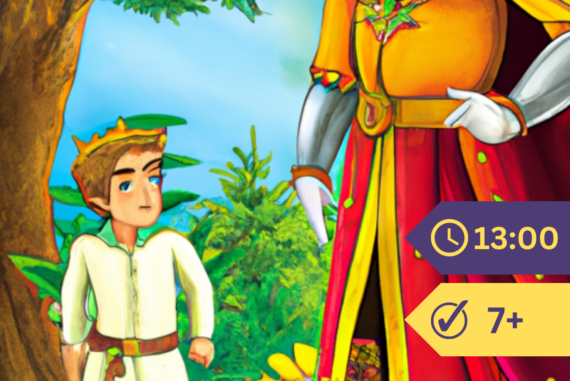
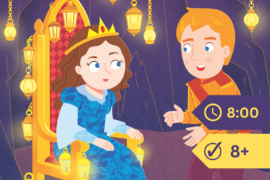
Beston’s fairy tales were collected primarily in two volumes: The Firelight Fairy Book (1919) and The Starlight Wonder Book (1923). These stories were written to be read aloud by firelight — a quality that still comes through in their unhurried, atmospheric prose. Many of the tales follow young heroes and heroines navigating enchanted landscapes, mysterious kingdoms, and tests of courage or wit. In The Adventures of Florian, a girl of noble birth raised with uncommon learning sets out on an unlikely quest, while The Lost Half Hour follows Bobo, a seemingly foolish youngest son who proves wiser than his brothers. This “youngest child” archetype — underestimated yet ultimately triumphant — recurs throughout Beston’s work, echoing classic folk traditions from across Europe.
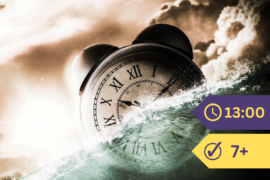
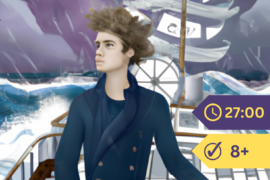
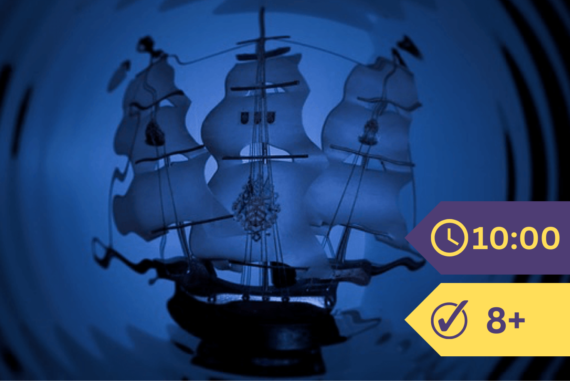
The sea and the natural world, themes central to all of Beston’s writing, appear frequently in his fairy tales as well. The Master Mariner centers on a young fisherman drawn into an underwater conflict, while The City Under the Sea sends a merchant’s son into a hidden oceanic realm. Even in stories set inland, such as The Shepherd of Clouds, Beston populates the landscape with a sense of wonder rooted in the physical world — plains, mountains, rivers, and skies that feel genuinely vast. The Clock of the Earth and the Clock of the Sea captures this duality directly, contrasting the rhythms of land and ocean through the life of a retired sailor.
Beston’s fairy tales occupy a distinctive place in early twentieth-century American children’s literature. At a time when most original fairy tales published in the United States were retellings of European originals, Beston crafted entirely new stories that nonetheless felt ancient and deeply rooted. His prose is precise without being cold, and imaginative without tipping into whimsy. Scholars and librarians of his era praised the tales for their literary quality, and they remained in print for decades. Beston is recognized today both as an important voice in American nature writing and as a skilled, if underappreciated, author of literary fairy tales for children.