
Heinrich Hoffman
Dive into Heinrich Hoffmann’s complete collection of cautionary children’s stories — read them online for free, filter to discover your favorites, and explore our article to learn more.
Heinrich Hoffmann (1809–1894) was a German physician and author, best known for creating one of the most distinctive works in the history of children’s literature. Born in Frankfurt am Main, Hoffmann trained and practiced as a psychiatrist, but it was a gift he made for his young son at Christmas 1844 that would secure his literary legacy. Unable to find a suitable picture book in the shops, he wrote and illustrated his own — a collection of darkly comic, cautionary verses that he originally titled Lustige Geschichten und drollige Bilder, later published under the now-famous title Struwwelpeter.
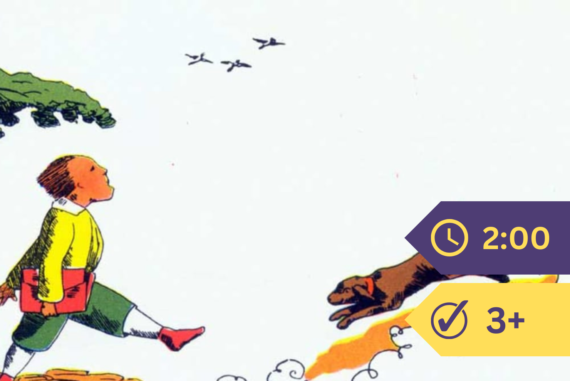
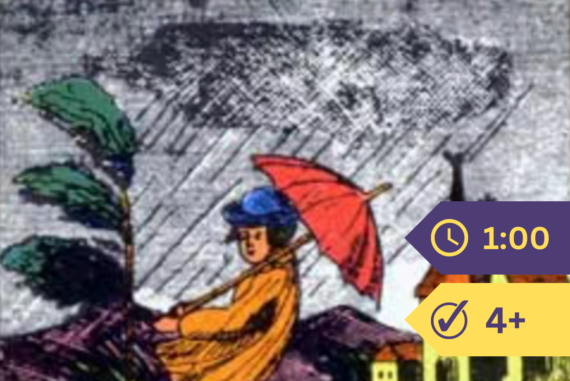
Hoffmann’s stories follow naughty or careless children whose bad habits lead to exaggerated, often alarming consequences. The tone is satirical rather than purely moralistic — Hoffmann was poking gentle fun at the heavy-handed didactic literature of his era even as he produced something that functioned within that same tradition. In The Story of Johnny Head-in-Air, a boy so absorbed in watching clouds that he refuses to look where he is going eventually walks straight into a river — a wryly comic portrait of inattentiveness and its consequences. Similarly, The Story of Flying Robert follows a boy who insists on playing outside in a violent storm, only to be lifted off the ground by his umbrella and carried away — never to be seen again. Both stories share Hoffmann’s characteristic blend of humor, vivid imagery, and a consequence just exaggerated enough to signal that the moral is not entirely serious.
The Struwwelpeter collection became an immediate and lasting success across Europe and beyond, translated into dozens of languages throughout the nineteenth and twentieth centuries. Hoffmann’s influence on children’s literature is considerable: his use of illustration alongside verse, his willingness to treat children as an audience capable of appreciating absurdity and dark humor, and his departure from purely pious instruction all helped shape the direction of the picture book as a form. His characters — the distracted Johnny, the storm-defying Robert, the thumb-sucking Conrad — entered the broader cultural vocabulary of childhood cautionary tales in a way few literary creations have managed.
Though Hoffmann spent most of his professional life as a psychiatrist and director of a Frankfurt asylum, his identity as the creator of Struwwelpeter remained central to his public reputation. He continued writing and illustrating in later life, but none of his subsequent works matched the cultural reach of that first homemade gift. Today, Struwwelpeter is recognized as a landmark of German-language children’s literature and an important document in the history of how European culture has thought about childhood, discipline, and storytelling.