
François Coppée
Dive into François Coppée’s complete stories and poems — read them online for free, filter to discover your favourites, and explore our article to learn more about the author.

François Coppée (1842–1908) was a French poet and prose writer, born in Paris and associated with the Parnassian movement in French literature. He became widely known for his ability to find poetry in ordinary, everyday life — particularly in the lives of humble working-class Parisians. His writing earned him a seat in the Académie française in 1884, cementing his place among the major French literary figures of the late nineteenth century.
Though primarily celebrated as a poet, Coppée also wrote short stories and prose tales that carried the same gentle sensitivity found in his verse. His narratives tend to focus on modest, often forgotten people — the poor, the young, and the marginalised — treated with compassion and quiet dignity rather than sentimentality. His prose style is clear and restrained, allowing emotional weight to emerge naturally from the situation rather than from dramatic embellishment.
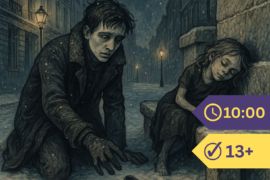
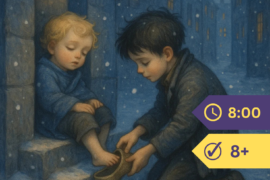
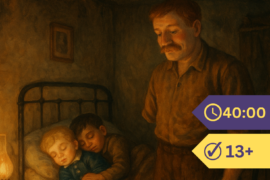
Among his most enduring prose works is Little Wolff’s Wooden Shoes, a Christmas tale set in a cold northern city. The story follows a small, lonely orphan boy who makes a selfless gesture on Christmas Eve and receives a miraculous reward in return. The tale draws on the Christian tradition of charity and grace, presenting its moral through a simple, affecting narrative rather than overt preaching. It has remained a beloved example of the French conte de Noël, or Christmas story, and has been translated and retold across many countries and languages.
Coppée’s legacy rests largely on his empathy for ordinary humanity. At a time when French literature was often preoccupied with grand themes or aesthetic experimentation, he consistently returned to the streets, courtyards, and small lives of Paris. His work offers a portrait of nineteenth-century French society seen from below — not from the salons or the academies, but from the cold doorsteps and modest kitchens that most writers of his era overlooked.