
Clement Clarke Moore
Dive into Clement Clarke Moore’s beloved Christmas poetry — read it online for free, filter to discover your favorites, and explore our article to learn more.
Clement Clarke Moore (1779–1863) was an American scholar, professor, and poet born in New York City. A man of considerable academic standing, he spent much of his career teaching biblical languages and literature at the General Theological Seminary in New York. Although he produced serious scholarly works throughout his life, he is remembered almost exclusively for a single poem that would go on to shape the cultural imagination of Christmas across the English-speaking world and far beyond.
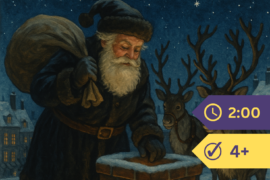
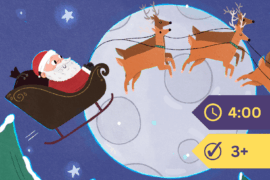
Moore is credited as the author of ‘Twas the Night Before Christmas (A Visit from St. Nicholas), first published anonymously in the Troy Sentinel newspaper on December 23, 1823. The poem opens with its now-legendary lines — “Not a creature was stirring, not even a mouse” — and proceeds to describe a household on Christmas Eve, the hanging of stockings by the chimney, and the dramatic arrival of St. Nicholas in a sleigh pulled by eight named reindeer. Moore’s authorship was claimed publicly in 1837, though some later scholars have attributed the poem to Henry Livingston Jr., a debate that has never been fully resolved.
The poem’s cultural impact is difficult to overstate. It is largely responsible for consolidating the modern image of Santa Claus as a jolly, rotund figure who travels by reindeer-drawn sleigh, enters homes through the chimney, and delivers gifts to children on Christmas night. Many of the reindeer’s names — Dasher, Dancer, Prancer, Vixen, Comet, Cupid, Donner, and Blitzen — originate in this single text, as does much of the warm, domestic atmosphere that has come to define Christmas storytelling in Western tradition.
Moore published a collection of his poetry in 1844, which included the Christmas poem alongside his other verse. Despite his ambitions as a scholar and his extensive work in Hebrew studies, it is this one seasonal poem, composed reputedly for his own children, that secured his permanent place in American literary and cultural history. Few works of any era have so thoroughly defined a holiday tradition through the power of a single piece of writing.