
Claude McKay
Dive into Claude McKay’s complete poems and stories, read them online for free, filter to discover your favorites, and explore our article to learn more.
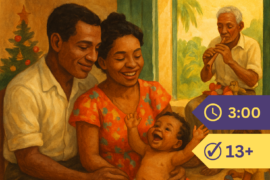
Claude McKay (1889–1948) was a Jamaican-American poet, novelist, and short story writer widely regarded as one of the most influential figures of the Harlem Renaissance. Born in Sunny Ville, Jamaica, McKay moved to the United States in 1912 and went on to become a pioneering voice in Black literature and political thought. His work helped define an era in which African American writers asserted their cultural identity and pushed back against racial injustice with extraordinary literary force.
McKay wrote with unflinching honesty about the realities of Black life in America and the Caribbean. His poetry frequently explored themes of racial pride, displacement, resistance, and longing — often drawing on the formal traditions of the English sonnet while filling them with urgent, radical content. His 1919 poem “If We Must Die,” written in response to racial violence during the Red Summer, became one of the most celebrated acts of literary defiance in American history. Beyond poetry, McKay produced significant prose fiction, including the novel Home to Harlem (1928), the first novel by a Black author to reach the top of the American bestseller lists.
His short fiction and autobiographical writing further revealed the breadth of his vision. McKay spent years living and working in Europe and North Africa, and that restlessness informed much of his writing — a persistent tension between belonging and exile, between the beauty of the Caribbean landscape he had left behind and the harsh urban realities he encountered abroad. Collections such as Gingertown (1932) gathered his shorter fiction, which dealt frankly with questions of class, migration, and identity.
McKay’s place in literary history is secure not only because of his artistic achievements but because of the influence he had on subsequent generations of writers. His insistence on racial dignity and his willingness to engage with socialist politics made him a complex and sometimes controversial figure in his own time. He converted to Roman Catholicism near the end of his life, adding yet another dimension to an already layered intellectual and spiritual journey. Today, McKay is studied as a central figure of the Harlem Renaissance and as a forerunner of the negritude movement, whose ideas about Black culture and self-determination resonated far beyond the United States.