
Christina Georgina Rossetti
Dive into Christina Georgina Rossetti’s complete poems and verse narratives — read them online for free, filter to discover your favourites, and explore our article to learn more about the poet.


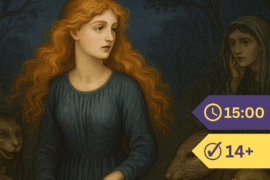

Christina Georgina Rossetti (1830–1894) was an English poet and one of the most significant literary voices of the Victorian era. Born in London to an Italian father and an English mother, she grew up in a household steeped in art and literature — her brother was the painter and poet Dante Gabriel Rossetti. She is widely regarded as one of the finest religious and devotional poets of the nineteenth century, alongside a body of work that ranges from lyrical fantasy to haunting meditations on death, longing, and spiritual faith.
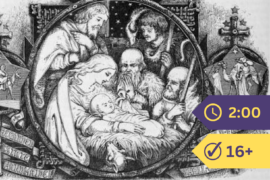
Rossetti’s poetry is distinguished by its formal precision, musical cadence, and emotional depth. Her work frequently draws on Christian imagery and themes of sacrifice, redemption, and unfulfilled desire. Two of her most enduring Christmas poems — Love Came Down at Christmas and In the Bleak Midwinter — exemplify this devotional strand of her writing. Both poems, composed in her characteristic spare and rhythmic style, were later set to music and became widely sung hymns throughout the English-speaking world.
Beyond her devotional verse, Rossetti showed a striking gift for narrative poetry and the supernatural. Goblin Market, published in 1862 and considered her masterpiece, is a rich and complex narrative poem about two sisters, temptation, and redemption, told through vivid, incantatory verse. Its imagery of forbidden fruit and sisterly devotion has attracted wide critical attention over the decades. Rossetti also wrote a cluster of ghost poems that explore grief and the thin boundary between the living and the dead. A Chilly Night, The Poor Ghost, and The Ghost’s Petition each present spectral figures caught between worlds, rendered with quiet pathos rather than sensationalism.
Rossetti published several major collections during her lifetime, including Goblin Market and Other Poems (1862) and The Prince’s Progress and Other Poems (1866). She was associated with the Pre-Raphaelite Brotherhood through her family connections, though her own work resists easy categorisation within any single movement. Her poetry has remained a steady presence in the English literary canon, studied for its technical craft, its spiritual complexity, and its quietly unconventional treatment of female experience and voice.