‘Twas later when the summer went
Than when the cricket came,
And yet we knew that gentle clock
Meant nought but going home.
‘Twas sooner when the cricket went
Than when the winter came,
Yet that pathetic pendulum
Keeps esoteric time.


 Read Anywhere, Anytime
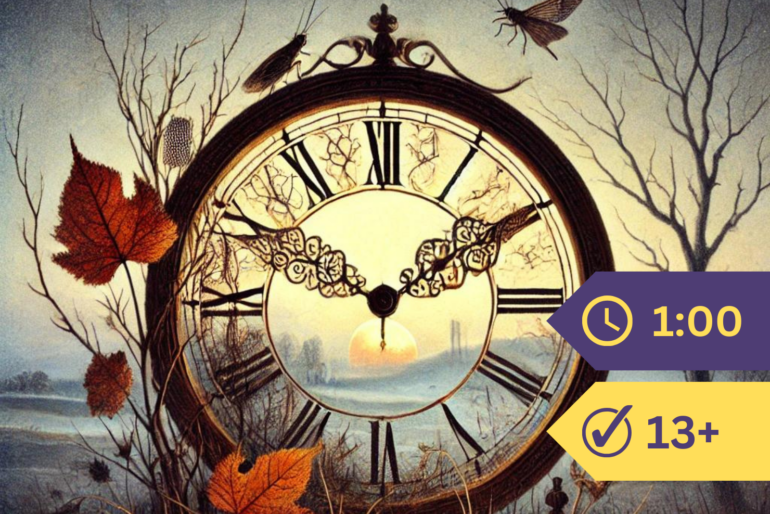
"'Twas Later When the Summer Went" is a short poem by Emily Dickinson that meditates on the passage of time through the quiet signals of nature. Using the cricket's song as a ticking clock, Dickinson traces the subtle, almost imperceptible shift from summer into winter — a transition felt before it is fully understood. The poem's two spare stanzas hold a melancholy tension between what we sense and what we can name, as time moves in its own "esoteric" rhythm, indifferent to human reckoning.
‘Twas later when the summer went
Than when the cricket came,
And yet we knew that gentle clock
Meant nought but going home.
‘Twas sooner when the cricket went
Than when the winter came,
Yet that pathetic pendulum
Keeps esoteric time.
Emily Dickinson (1830–1886) was an American poet whose compressed, unconventional verse — largely unpublished in her lifetime — became central to the canon of English literature. Known for her slant rhyme and dashes, she returned repeatedly to themes of nature, mortality, and time; in this poem, the cricket serves as one of her characteristically intimate symbols of life's turning.