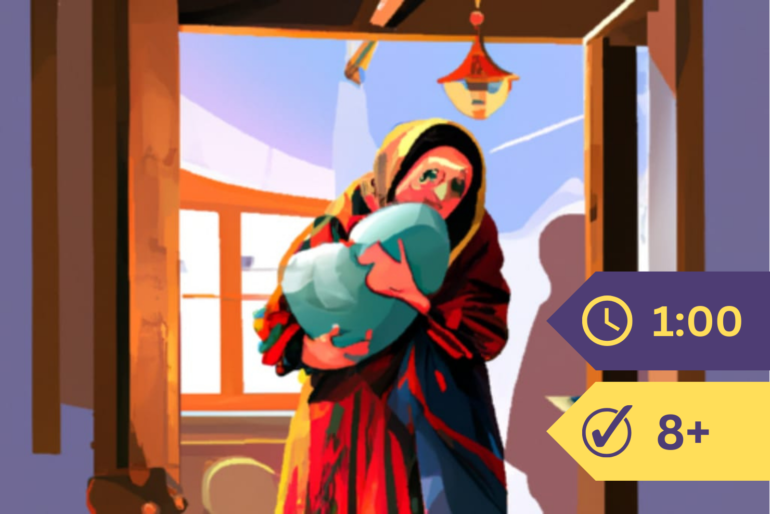
A poor woman had a daughter by the name of Masha. Masha went in the morning to fetch water, and saw at the door something wrapped in rags. When she touched the rags, there came from it the sound of “Ooah, ooah, ooah!” Masha bent down and saw that it was a tiny, red-skinned baby. It was crying aloud: “Ooah, ooah!”
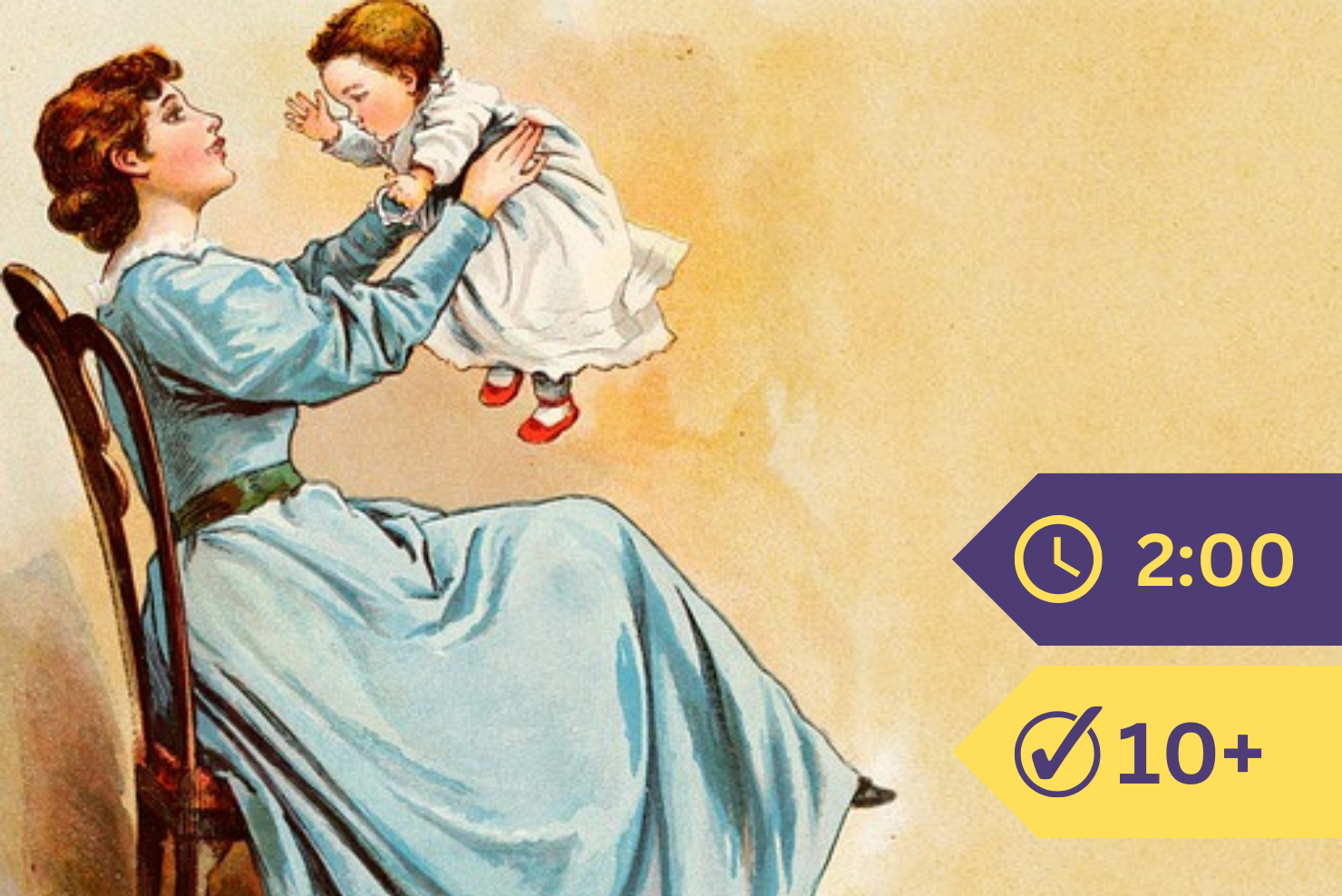
Masha took it into her arms and carried it into the house, and gave it milk with a spoon. Her mother said: “What have you brought?”
“A baby. I found it at our door.”

The mother said: “We are poor as it is; we have nothing to feed the baby with; I will go to the chief and tell him to take the baby.”
Masha began to cry, and said: “Mother, the child will not eat much; leave it here! See what red, wrinkled little hands and fingers it has!”
Her mother looked at them, and she felt pity for the child. She did not take the baby away. Masha fed and swathed the child, and sang songs to it, when it went to sleep.