“Count me out, boys. Everything I earn goes to my mother and sisters for Christmas.”
The speaker was a newsboy — bright-eyed, clean-faced, with clothes that were patched in half a dozen places but carefully kept.
“Come on, Will. Christmas only comes once a year — why shouldn’t we have our banquet same as the silk-stockings? What would any of them know about the world if we didn’t bring it to their doors? All in favor, raise your hands!”
Up went a score of hands, but Will’s stayed down.
“What’s the reason you won’t stand by us?”
The boy was quiet for a moment. “Boys, things are tight at our house. Fried chicken and pound cake don’t come our way. Turkeys roost too high for us.” He paused. “The only good thing we’ve really got up there is our mother’s love. See these patches? She put them on. See these stockings? She’s been mending the same pair for over a year — washes and irons them after I’ve gone to bed at night. Every stitch is a stitch of love. One night I woke up and saw her tears dropping on the sleeve of my coat while she was patching this very elbow.” He looked around at them. “The best thing I have in the world is my mother. If I had a million dollars I’d give every cent of it back to her. No banquet for me — not while I know she’s going without food so we children can have more.”
One of the boys shrugged. “Well, if I had a mother like that, maybe I’d feel the same. But all I get at home is a beating from a drunk, so I’m going in for a square Christmas meal even if it’s the last one I ever have.”
The boys were gathered near the park when someone suddenly shouted, “Look out!” A runaway horse thundered into their midst. Will was knocked off his feet. Minutes later he was being carried into a druggist’s shop, unconscious. His arm was broken, his body badly bruised. When he came to, his first words were:
“Take me to my mother. She’ll look after me somehow — though this isn’t exactly the Christmas gift I had in mind for her. Boys, will one of you go and tell her? Go easy, though. Don’t burst in and frighten her. Tell her it’s not dangerous. And — just tell her I love her.”
The boys wiped their eyes. “That busts up our banquet,” one of them said quietly. “Should I tell her we want to give her our banquet money for Christmas instead?”
“You bet we will,” came the answer, and big Tom set off at a run while the rest helped carry Will home.
It was a poor home, but everything in it was as neat and tidy as could be. A woman stood in the doorway, and one look told you she was Will’s mother. Poverty and hunger had not taken her beauty, and there was a quiet grace about her that spoke of better days.
“Christmas hasn’t come yet, Mother,” Will said, managing a smile, “but I have. Don’t worry — I’ll come through this, and we’ll have a fine Christmas yet.”
She kissed him tenderly. “I won’t worry,” she said, “as long as I have God, and you, and Josie, and Maggie, and Tot. Whatever Christmas brings, it will be a good day.”
“It’ll bring you heaps of things, Mrs. Sandford,” big Tom burst out. “We’re giving up our banquet and bringing something Will can’t bring right now. Don’t worry a bit.” And with that, the rough boy burst into tears and rushed out the door.
A few more days passed, and Christmas Eve arrived — clear and cold and bright. Will lay asleep in the bed; his mother sat nearby with the old Bible open in her hands, not really reading it, using it as a shield for the tears she couldn’t stop.
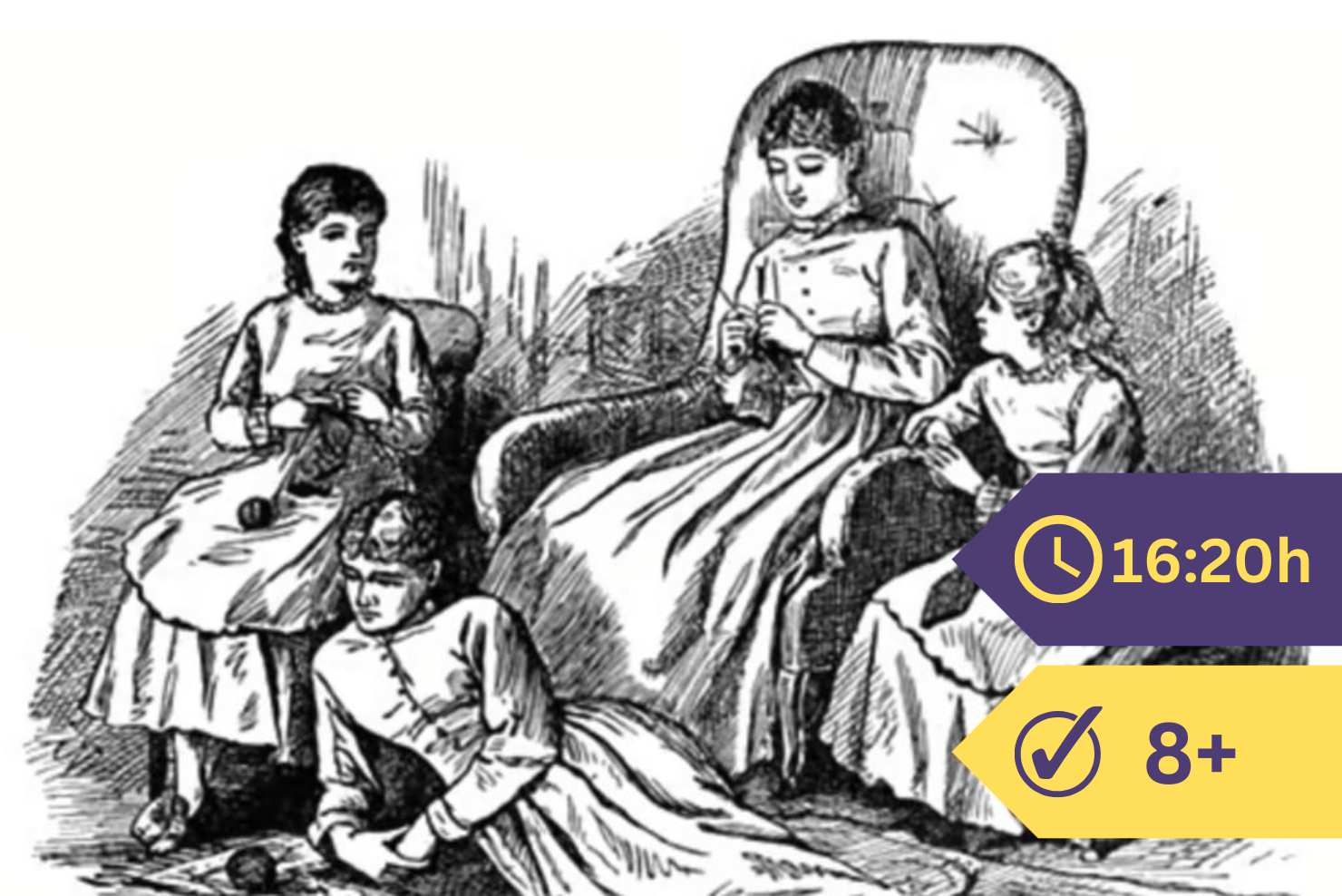
She was thinking about the last thirteen years. Her father had shut the door in her face and told her never to return, because she had married for love instead of for the fashionable match he had arranged. They had been happy together — until three years ago, when her husband died suddenly and left her with four children and nothing else. Too proud to go back to her father, she had carried on alone, leaning on the faith her mother had taught her. Her children were her comfort. They had their father’s goodness and her own, and that was something.
Her tears fell faster now, because she could hear her two youngest at the window.
“Maggie,” said little Tot, “do you see that bright star? Do you think that’s the one the shepherds saw? It looks like it’s staring right down at us. Maybe Jesus is in that star — and if He is, He won’t forget us, will He?”
Maggie considered this with great seriousness. “Jesus loved little children when He was on earth,” she said, “and I think He loves them still. That is a very bright star. It must be the one over Bethlehem.”
“I think so too,” said Tot. “And maybe Josie will hear some of those good tidings while she’s out. Oh, Maggie — if Jesus loves Mother as much as she loves Him, I think He’s sent that star to tell us to watch for something wonderful.”
Where was Josie? Her mother assumed she had gone to a neighbor’s house, as she often did, and felt no worry.
Out in the streets of the city, plenty and poverty walked side by side. Some people carried bundles in their arms; others carried burdens in their hearts. Overhead, the bright star shone on all of them alike.
Then, on one of the busy streets, the crowd stopped.
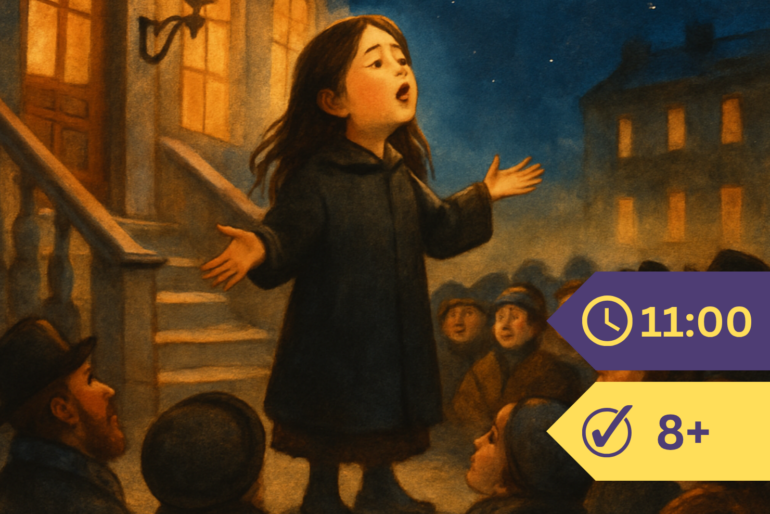
On the steps of a grand lighted mansion stood a little girl who looked, in that moment, like something from another world. She had climbed the steps to get closer to the star — the same star Maggie and Tot were watching — and quite unconscious of the people who had gathered below, she sang, her gaze lifted to the sky:
I think, when I read that sweet story of old,
When Jesus was here among men,
How He called little children as lambs to His fold —
I should like to have been with Him then.
I wish that His hands had been placed on my head,
That His arms had been thrown around me,
That I might have seen His kind look when He said,
“Let the little ones come unto Me.”
The crowd stood perfectly still. Her face, her voice, her upturned eyes and lifted hands held them as if they had forgotten how to move. Then someone looked up in the direction she was pointing and cried, “Look at that star!” And the whole street turned their faces to the sky, and something in the night felt, for a moment, like very old news made new.
A gentleman had made his way up the steps beside her. “Who are you, my child?”
“I’m Josie Sandford, sir.”
He gave a start. “Sandford — Josie Sandford. Where do you live, Josie?”
She told him, and in answer to his gentle questions, told him about her mother, and her brother Will, and her sisters.
“Do you see the star, sir? I’m sure it has good news for our house. I must go and tell Mother.” And she was off — down the steps and away through the bright streets.
She slipped into the room quietly and went straight to her mother. “Have you seen the star, Mother?”
“We’ve seen it!” cried Maggie and Tot together. “Come to the window, quick!”
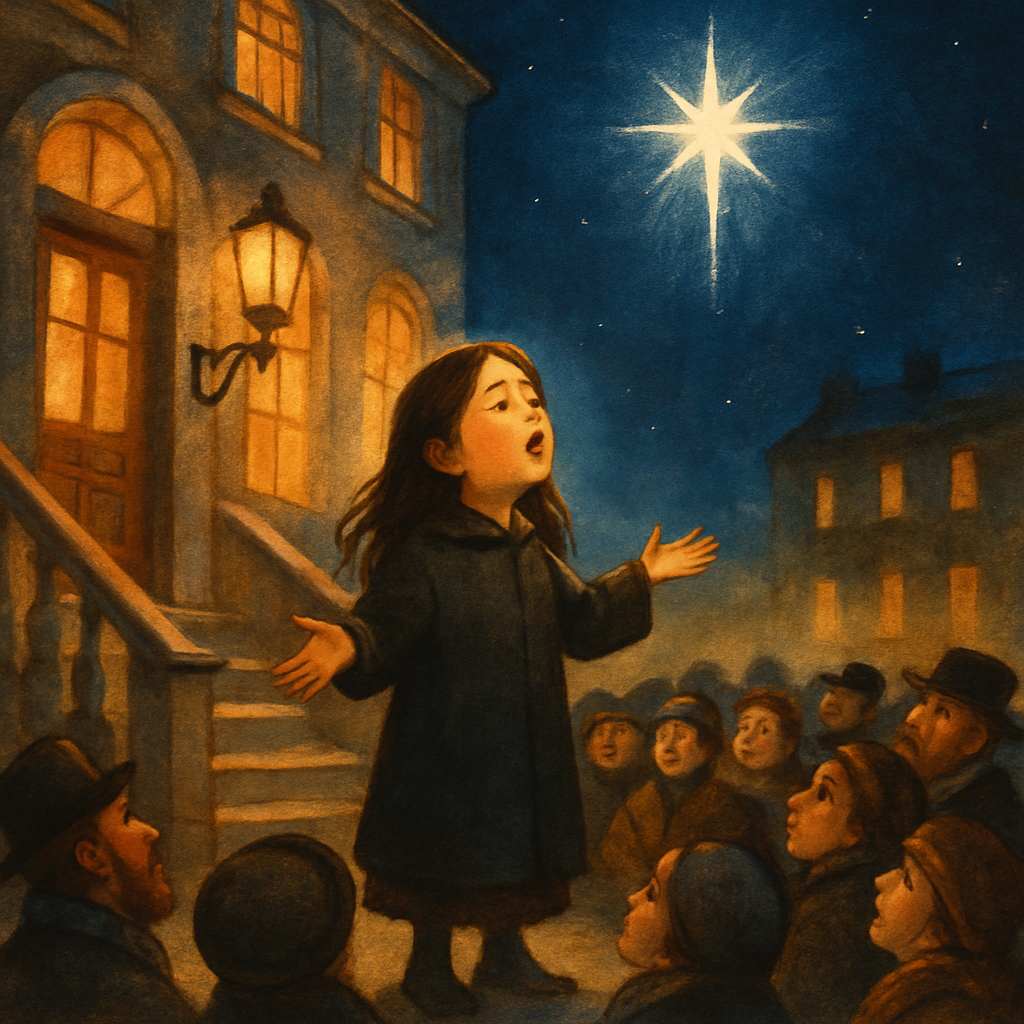
The mother went to the window. The star burned extraordinarily bright. As she looked at it, something eased in her face, and something like peace settled in her heart. Will had woken at the sound of voices and made his way to the window too, and they all stood there together.
At evening time, it was light.
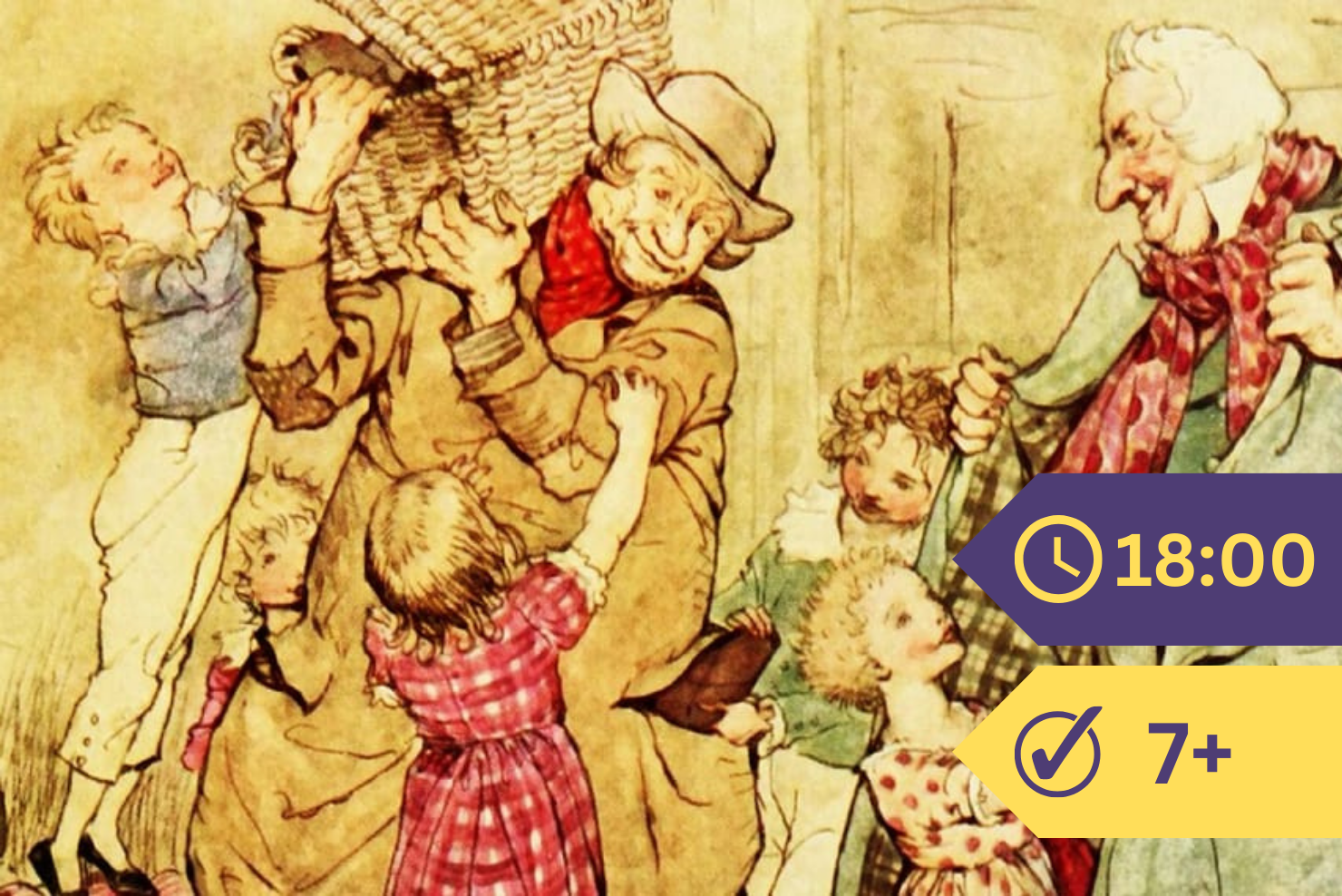
Then came feet on the stairs, a knock at the door — and in tumbled a whole company of newsboys with big Tom at the head. They had bundles and baskets piled high: provisions and poultry, toys and turnips, good-will and grapes, cheer and celery, and things that only someone who had ever truly gone without would have thought to bring.
Big Tom cleared his throat. “If you please, Mrs. Sandford — there’s our banquet. We weren’t going to come till morning, but once we had everything together, we just couldn’t wait. And if it isn’t too soon, ma’am — we wish you and Will and Josie and Maggie and Tot a very Merry Christmas. Don’t we, boys?”
“Indeed we do!” said the boys.
The faces of that mother and her children were something to see. Smiles and tears came at once, and each boy got a kiss from the mother and the girls. Then little Tot declared, with great satisfaction: “I knew it. I knew it! The star had Jesus in it, and I knew He saw Maggie and me looking up at Him.”
“Well, boys,” said Mrs. Sandford, “you’ll have your banquet after all — you must all come for Christmas dinner tomorrow.”
“Yes,” said a voice from the hallway. A gentleman none of them had noticed stepped quietly into the room. “You’ll all have dinner with Mrs. Sandford and her children tomorrow. But it will be at the home of her parents.”
Mrs. Sandford went still. Little Josie — who looked exactly like her mother — ran straight to him.
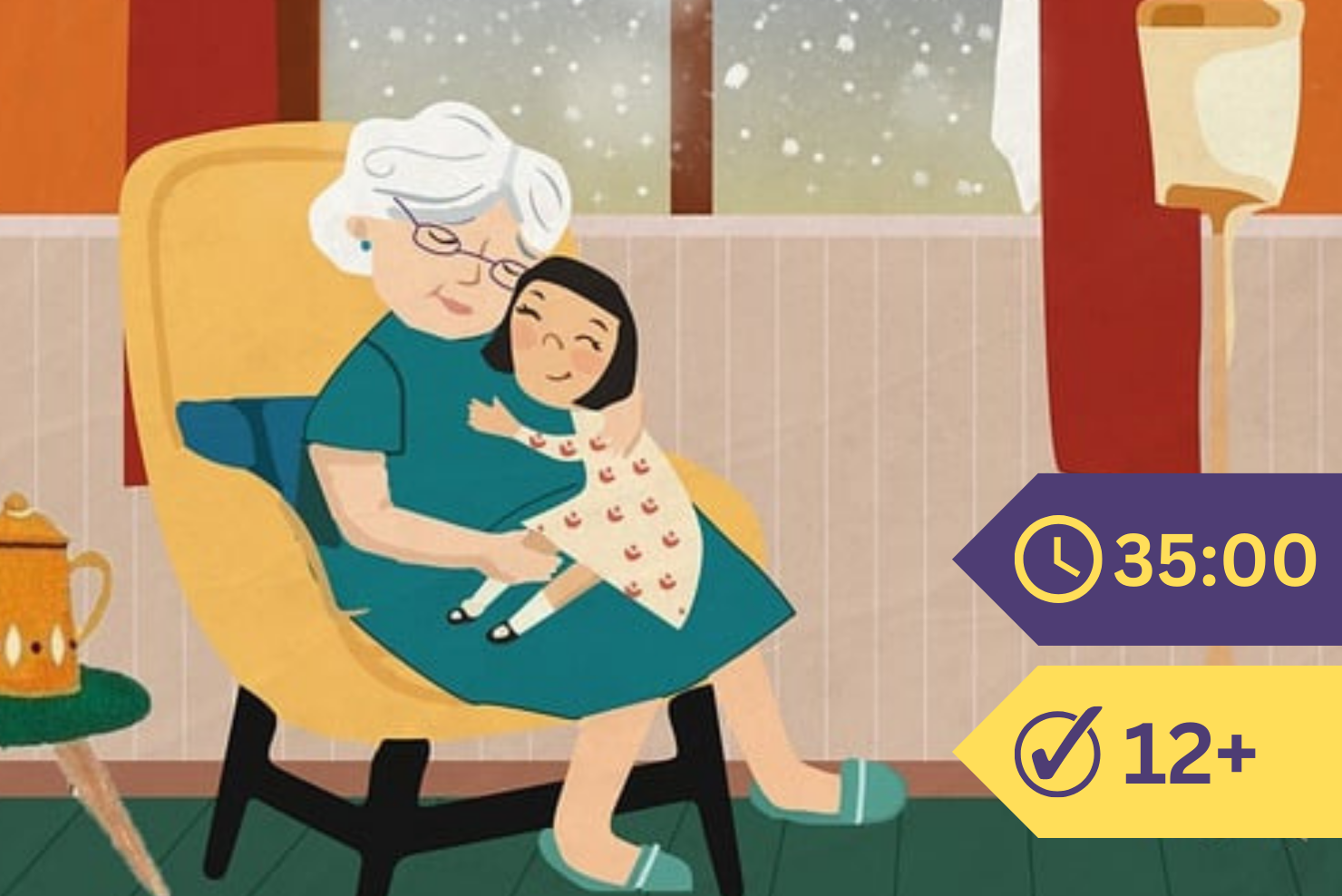
The gentleman opened his arms. “Josie,” he said quietly, “can you forgive me for closing the door on you all those years ago? I have suffered for it — God knows I have. I searched for you and advertised and found nothing. Until tonight, when I heard a child’s voice and looked up and saw your face again in hers.” He could not go on. She was already in his arms, and the children were crowding around him, clinging to this grandfather they had never known.
The newsboys looked on in wondering silence.
Tot ran back to the window. “Grandpa! The star is still there — and it’s brighter than ever!” She blew a kiss up at it.
Christmas morning found them all in a house full of warmth and plenty. A chair that had stood empty at that table for thirteen years was filled again, and beside it were four new chairs for four new grandchildren.
Was it a Merry Christmas? Ask big Tom and his boys, who sat down to their banquet at last — in a home where, that night, the Star of Bethlehem had shone as bright as any Christmas star on record.