Maria Grazia ran errands for a convent at Velletri. One night, a nun was taken so ill that the Superior called her in late and said: “I know it is a poor time to send you out, but I’m afraid she won’t last till morning. Go and fetch the provost.”
Maria Grazia set off by moonlight. The provost’s house was some way outside the town.
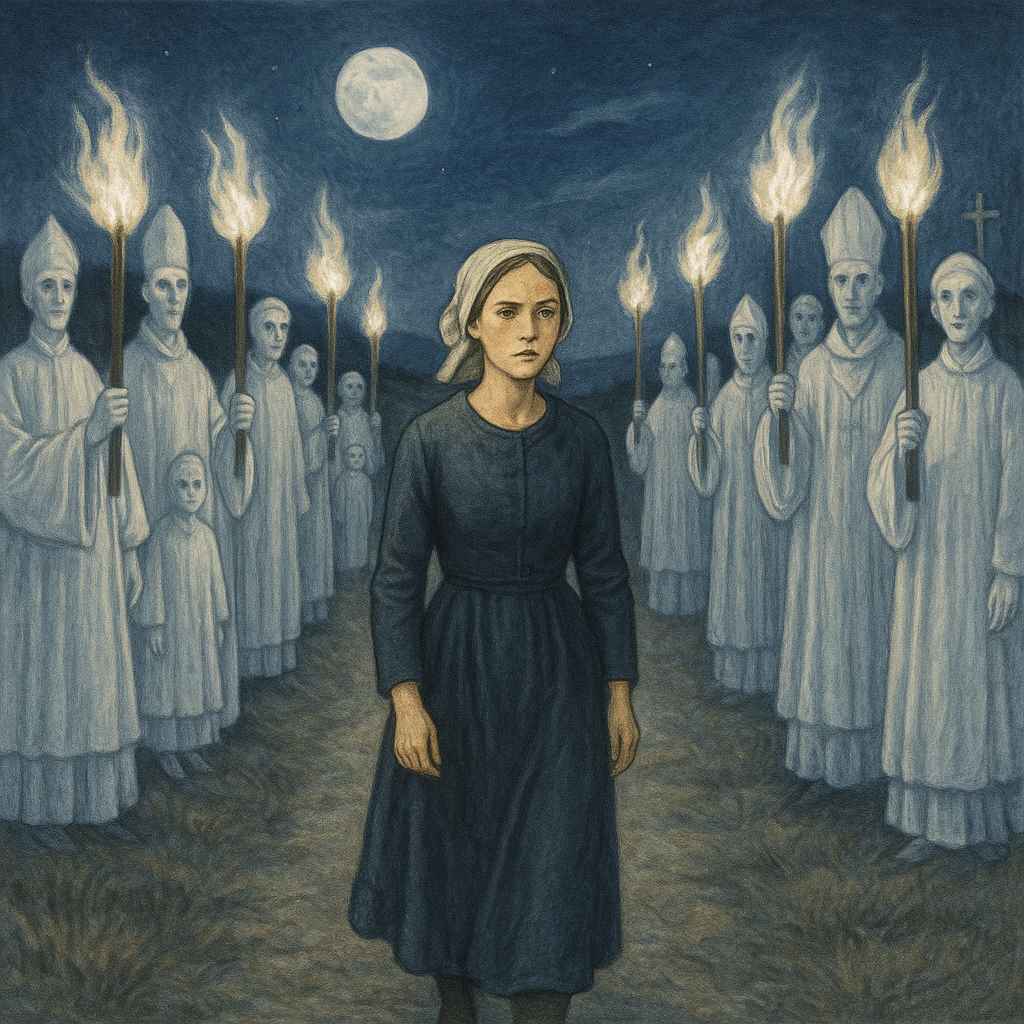
All went well until she left the last houses behind her. Then, in the open country, she saw a great procession coming toward her — white-robed priests and servers carrying torches and chanting. What a fine procession, she thought. What can it be doing out here at this hour?
She went closer — and then the procession parted down the middle to let her walk through.
A real procession would never have done that. She understood what she was walking through, and walked through it anyway, because what else was there to do? The torchlight was strange and too bright, and it seemed to go on for a long time. When it ended and she turned to look, the procession had vanished. There was only the empty field.
Now she was frightened. Her legs were shaking. If she went back there would be that field to cross again, and the provost not fetched, and the nun dying without the sacrament.
“If only there was someone walking the same way,” she said aloud.
And then she saw a peasant coming along the road toward her, a steady-looking man, perfectly ordinary in the moonlight.
“Did you see that procession?” she called out to him. “It must have passed right by you.”
He kept walking toward her and said nothing.
“Weren’t you frightened? I was. I’m trying to get to the provost’s house to fetch him for a dying nun — it’s only a little way off this road. Would you walk with me?”
He kept walking and said nothing.
“Maybe you think I’m a spirit, that you won’t speak,” she said. “I’m not. I’m Maria Grazia, servant at the convent in Velletri.”
Still he said nothing. But he kept pace with her, step for step, all the way to the provost’s gate. She turned to thank him. He was not there.
She went in, and the provost came, bringing his nephew and a servant with torches — they used straw torches in that part of the country — and she went back to the convent in good company.