
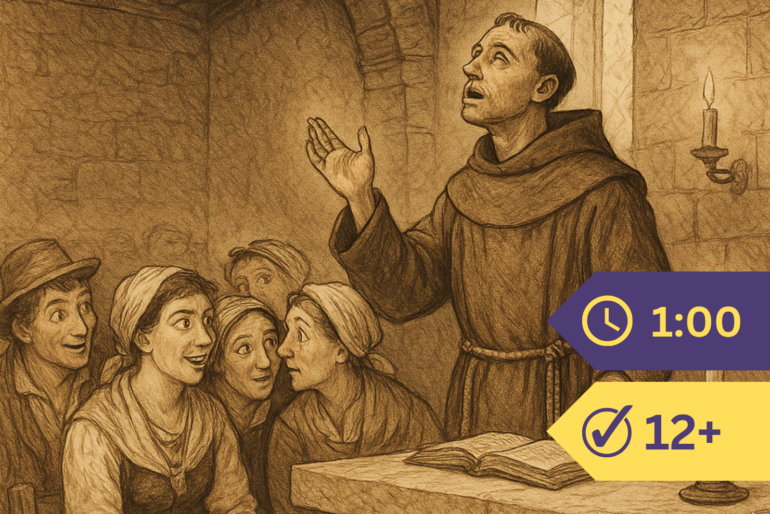
A Franciscan friar was travelling on business of his order when three brigands overtook him on the road and relieved him of his donkey, her saddle, and all his money. They added a warning: if he told anyone what had happened to him, they would find him again and take his life.
The friar said nothing to any living person. But he knew that if his parishioners only knew, they would quickly get his property back for him.
So the following Sunday, as he was singing the Mass, he came to the Preface — that solemn part of the liturgy where particular occasions may be commemorated. After the praises of God, he added, in the same chanting tone as all the rest:
“Nevertheless, me, Thy poor servant, evil men have robbed of my donkey and her saddle and all my money; but to no man have I declared the thing, save unto Thee only, Almighty Father, who knowest all things and helpest the poor—”
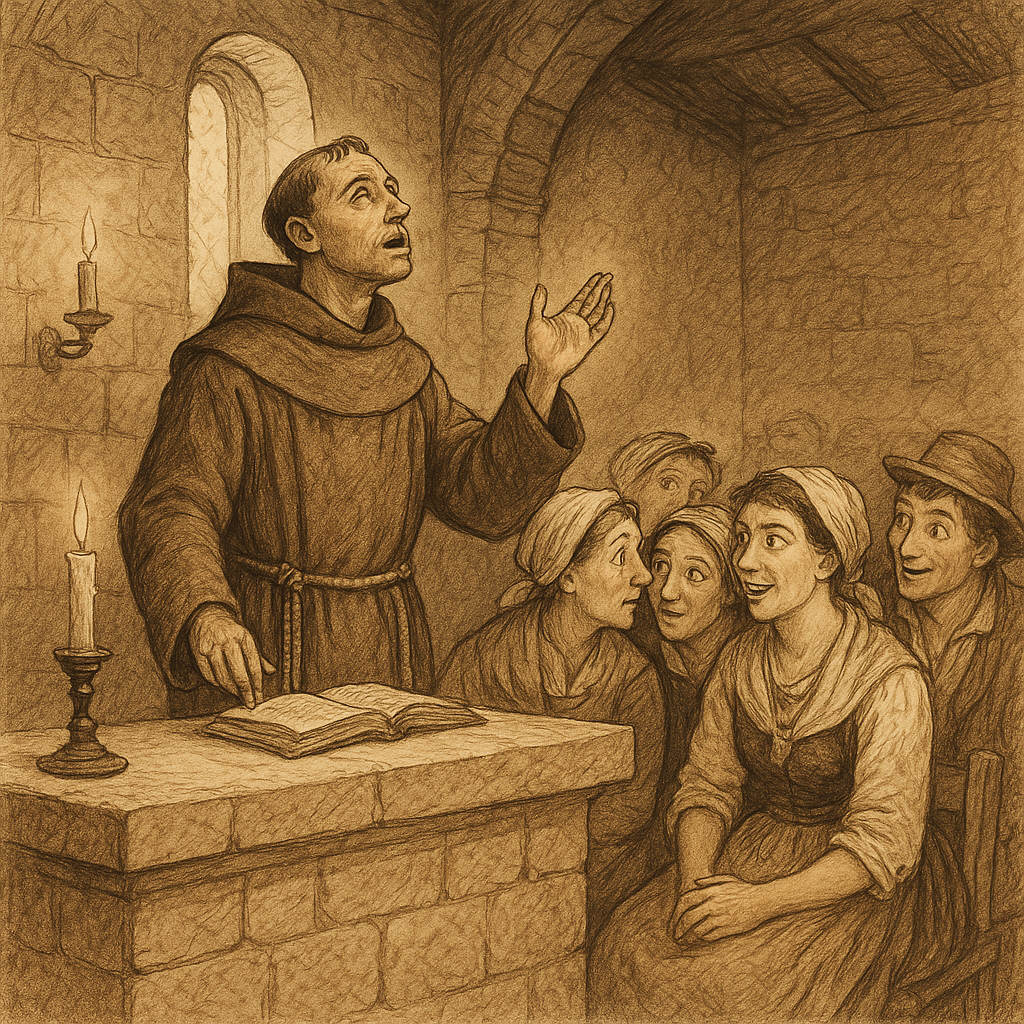
And then he continued seamlessly into the Latin of the Mass.
His parishioners were no sooner informed than they went after the brigands and recovered everything that had been taken.
The next time the friar was out on the Campagna, the brigands caught up with him again.
“Now you die,” they said. “You couldn’t keep your mouth shut.”
But the friar explained, gently, that he had spoken to no man. He had only, as every Christian was perfectly entitled to do, made his lament before God. The brigands considered this. They could find no good answer to it. And so they let him pass, him and his recovered donkey, and went on their way.