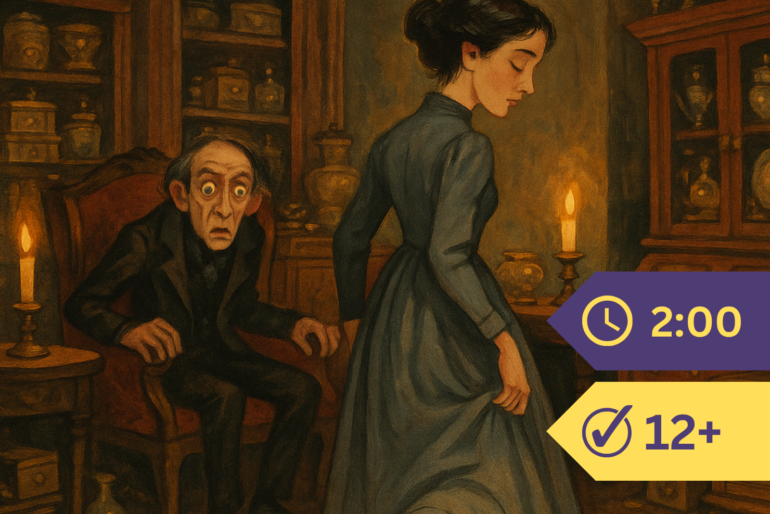
There was a young woman who had set her sights on a particular miser—a man of considerable property who kept every coin so carefully that he would, it was said, have gone without dinner rather than spend an extra farthing. The challenge he presented was obvious: no amount of beauty, charm, or pleasant conversation would move such a man where money was concerned. What might move him was the prospect of acquiring something costly for nothing.
The young woman let it be known that she subsisted entirely on air. No food, no drink, nothing—just the light and the atmosphere and a kind of spiritual nourishment that others had not yet discovered. She was thin enough that this was plausible. The miser heard about her and was fascinated.
He came to call. She received him graciously and made no mention of needing to eat. He came again, and again, and she continued to require nothing. Here, he thought, was a woman who would cost him almost nothing to maintain.
What he did not know was that she had rubbed the soles of her shoes with pitch. When she walked across the floor of his rooms during her visits—admiring the furniture, exclaiming over various objects of value—a coin stuck to each shoe with every step, and was collected when she got home. She was eating perfectly well.
This arrangement continued pleasantly until Carnival Thursday—that last burst of festivity before Lent, when the whole city was laughing and a little giddy, and people did things they would not have done on a quieter day. In the middle of a particularly fine afternoon, a coin stuck to her shoe in the miser’s front room and did not detach when she lifted her foot, but swung there, gleaming, very visibly.
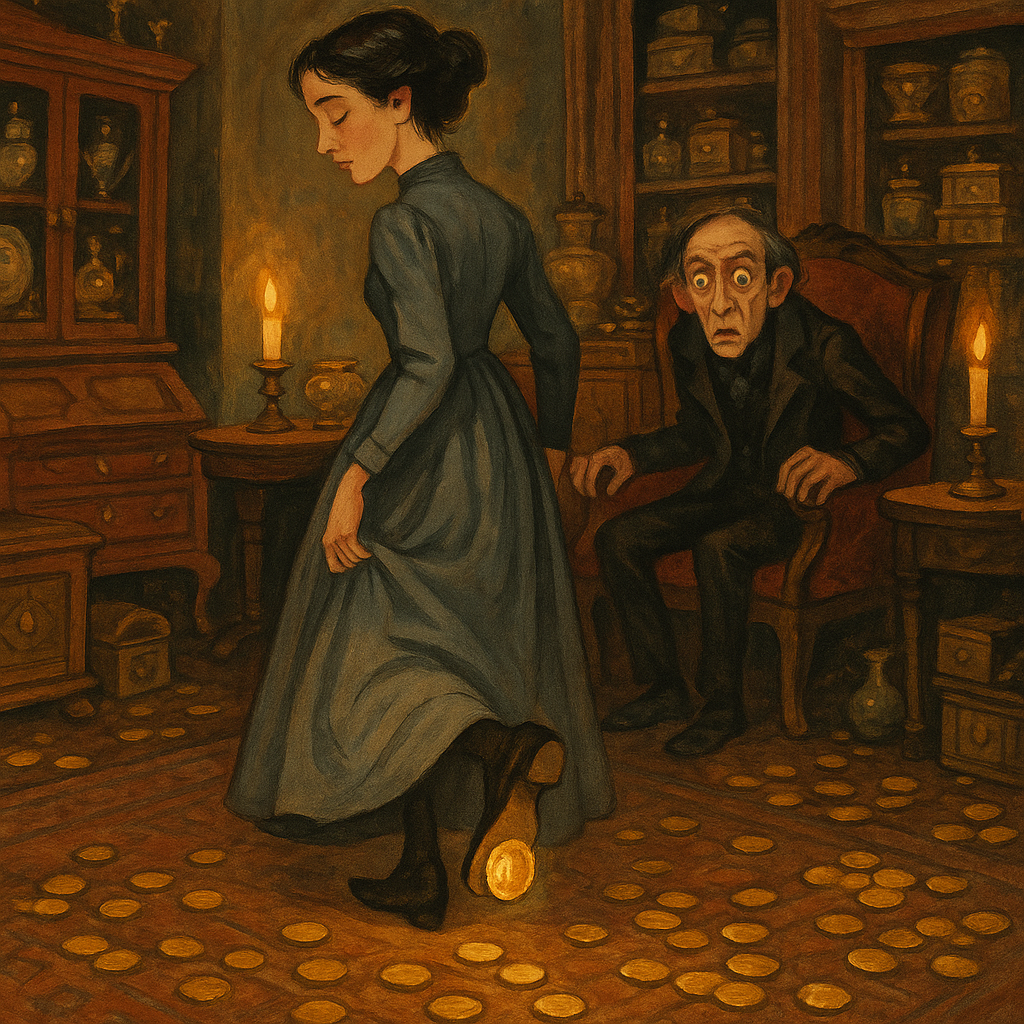
The miser saw it.
She could have brazen it out. She might have invented some story. But it was Carnival, and something came over her, and instead she told him everything—the pitch, the coins, the dinners she had been eating all along in complete comfort, her perfectly ordinary appetite for food and drink and everything else.
The miser died on the spot. Not a poetic death: apoplexy, the doctor said—a sudden rush of blood and fury to the head.
She inherited everything.