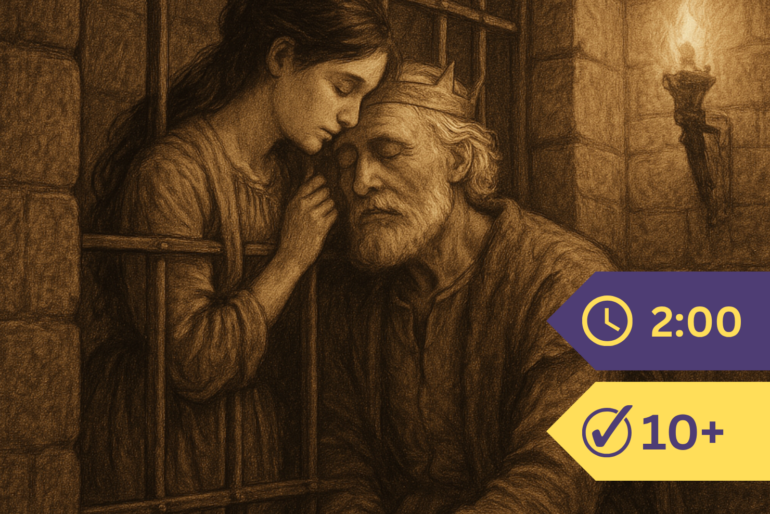
There was once a king of Portugal, old now and growing frail. He had a beautiful daughter, and when a prince came to court her, he saw at once how feeble the old man was and made his calculation accordingly. He seized the king, locked him in a prison cell, and ordered that he should be given only bread and water—just enough to keep him alive, not enough to keep him strong. The plan was simple: the old man would waste away, and when he died without being outright murdered, the prince would take the kingdom.
Every few days the prince sent to ask: “Does he grow pale? Does he look as though he might die soon?”
The answer that came back was always the same: “No, my lord. Every day his face looks fresher. Every day he seems stronger than before.”
The prince could not understand it. He changed the guards, thinking there was treachery. Still the same answer came back. He had his men search the princess whenever she went to visit her father at the prison bars—she was bringing nothing in, nothing at all. Then he had them watch her through the visit itself.
What they saw: she pressed herself against the bars and nursed her father there—a young woman, a girl still almost, who had prayed so hard for some way to keep him alive that something extraordinary had come to her, and she fed him with her own milk.
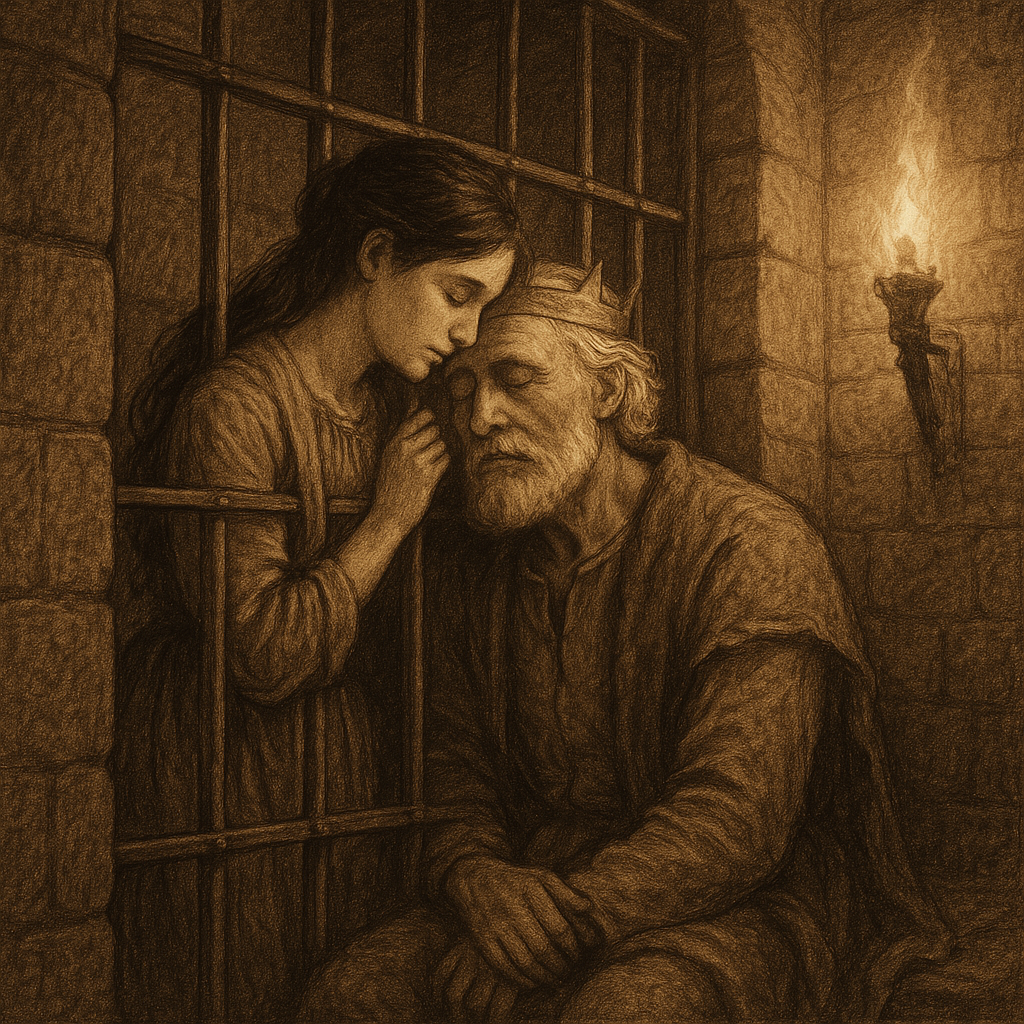
When the prince heard this, something shifted in him. He went to the prison himself and had it opened, and restored the old king to his throne, and departed in shame.
But the king sent for him back and forgave him. More than that: he gave him his daughter in marriage, and when he died, left him the kingdom.