Count Lattanzio had a daughter who was in love with a lawyer, and the count was determined to prevent the match. He kept the girl under close watch, hardly letting her out of his sight. One day he was obliged to go to his vineyard outside the city, and he gave strict orders to the servant: no one was to be let in until he returned at three hours before sunset.
An hour before the appointed time, there was a knock at the door.
“Is the Count Lattanzio in?”
“Not yet.”
“Ah — he said I was to wait. I’ve come to measure him for a new pair of boots.”
The servant hesitated. The bootmaker seemed rather well-dressed for a tradesman, but orders were orders, and the count had apparently invited the man. He let him in.
Shortly after, another knock.
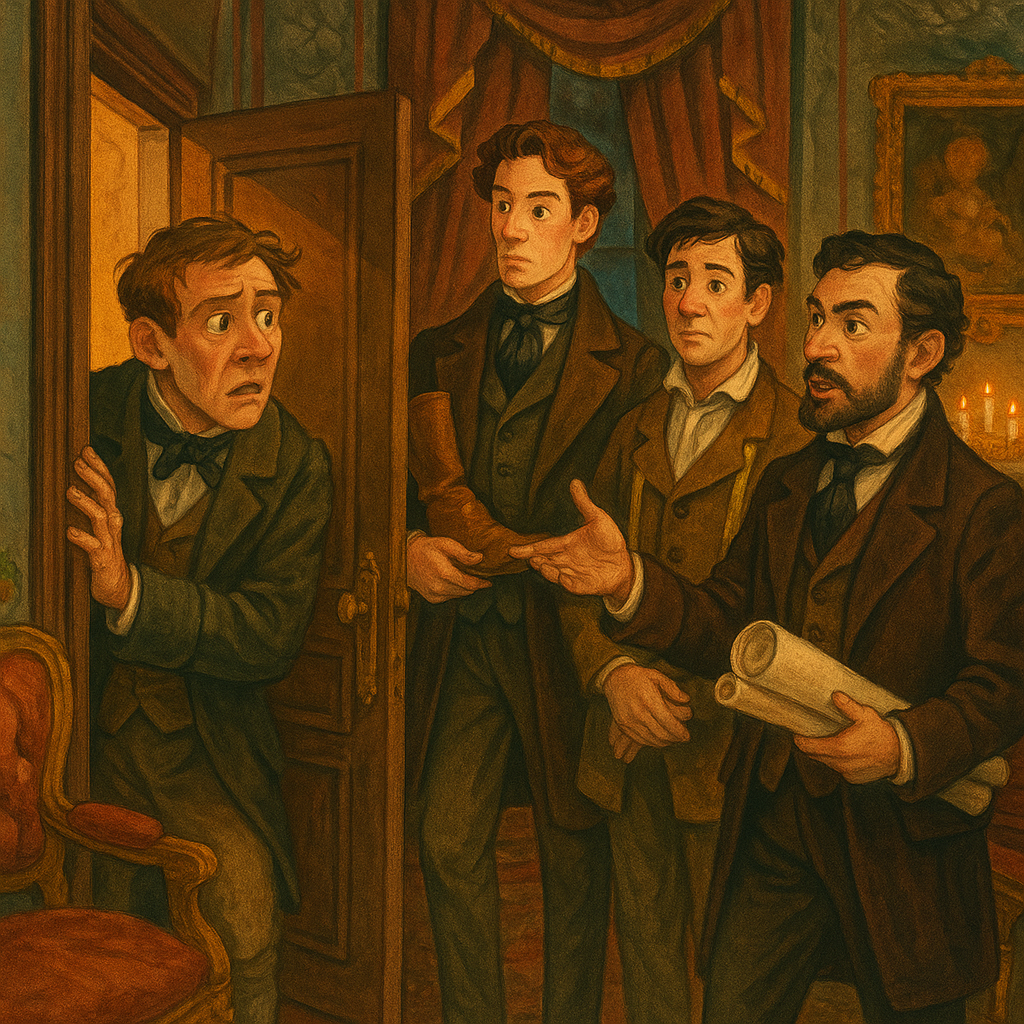
“I’m the tailor. The count told me to wait if he wasn’t in.”
The servant was uncertain, but let him in too, though he was beginning to feel uncomfortable about it.
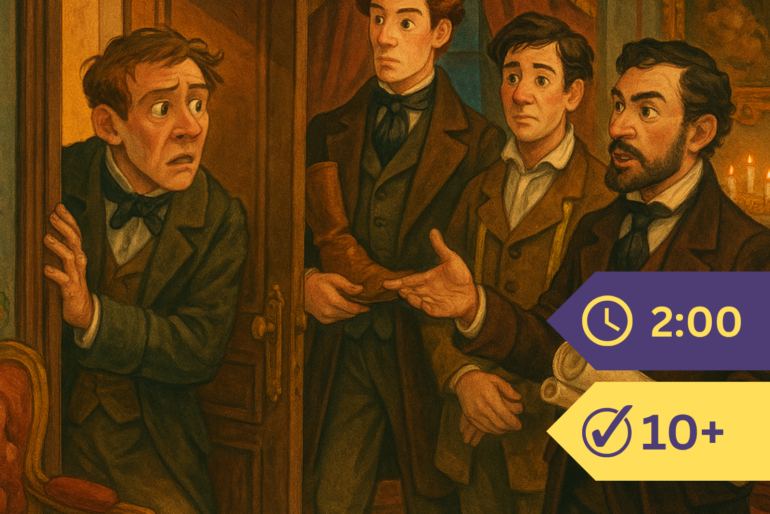
Moments later, a third knock — this time accompanied by an authoritative voice:
“I am the lawyer handling the count’s affairs before the courts. I have my two clerks with me, and we are here on business of the greatest urgency. Do you seriously propose to turn us away?”
The servant, quite overwhelmed, let them all in.
At three hours before sunset, Count Lattanzio came home to find his drawing-room full of strangers. A great shout went up: “Long live Count Lattanzio!”
He looked around in bewilderment. The bootmaker was the bridegroom. The tailor was the best man. The lawyer and his two clerks were the notary and his witnesses. The marriage articles had been drawn up, signed, and witnessed. The couple were of age. There was no undoing it.
The count dismissed the servant for failing to follow orders. But as the tale notes, that made very little difference to anything.