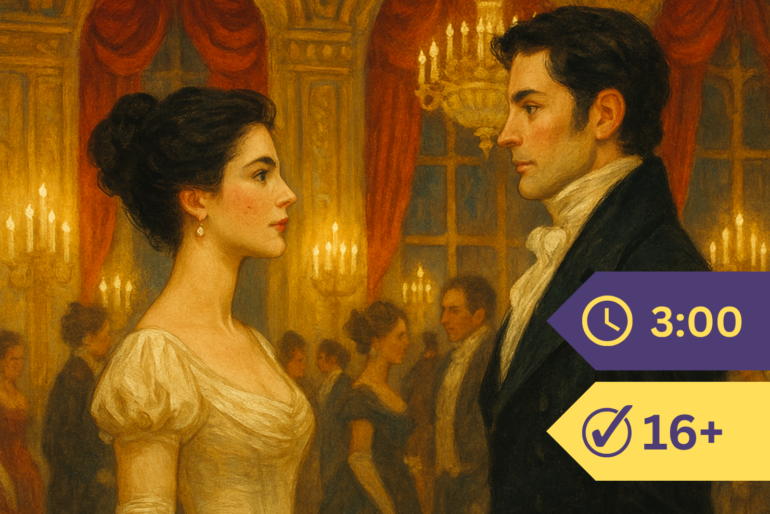
There was once a beautiful Englishwoman living in Rome, beautiful and rich as the sun, and heads without number turned as she passed. She would have nothing to do with any of them. Some defect she found in everyone who came near her. She was accomplished as well as beautiful, and she had drawn a portrait of the man she might one day agree to marry—and told her friends that she would consider no one who was not exactly like it.
One day a friend came to her with news: there was a certain young man who was, as far as she could tell, exactly like the portrait.
“Exactly?” said the Englishwoman.
“Well—exactly, except that one tooth is a little green.”
“Then I won’t see him.”
“But if he is otherwise exactly like the portrait—”
“He can’t be. The portrait has no defects.”
“Come and meet him once, at least—just out of curiosity.”
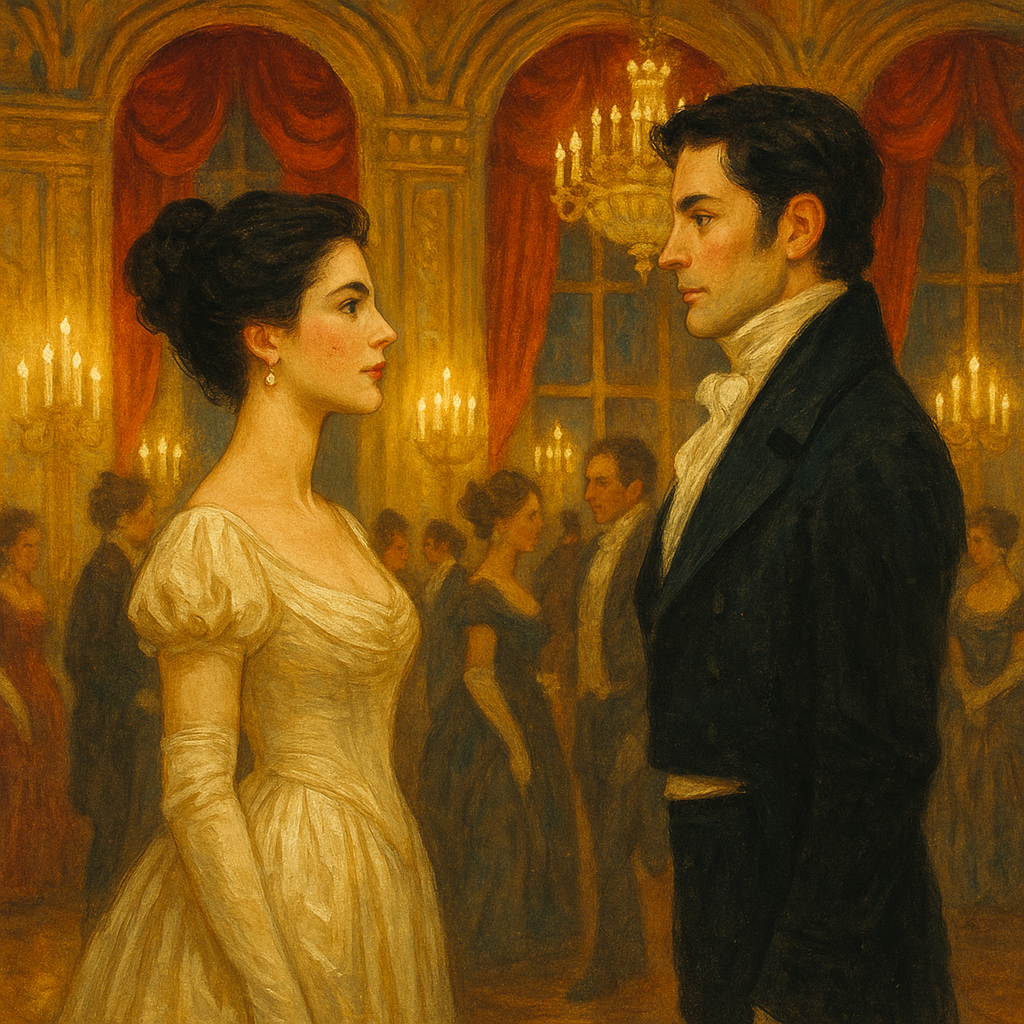
So the friend arranged that they should meet at a ball, and once they met, each was as pleased with the other as they were determined not to show it. She said to him, pleasantly: “Do you know, I don’t like that green tooth.”
And he, with equal pleasantness: “And do you know, I don’t like that patch on your face.”
The next time they met, he had no green tooth and she had no patch. A beauty patch, after all, can be put on and taken off at will. She looked at him skeptically: “If you’ve had a false tooth put in, I want nothing to do with you.”
“Not at all,” he said. “You took off your patch. I simply peeled away a small leaf I had pressed against the tooth. I wanted to see if you were really as particular as you seemed.”
They were desperately in love with each other, and the next thing was to arrange a secret marriage. His father held a great title and would never have consented to his son marrying a woman with none, however rich and beautiful. But she had money enough for both of them, and they contrived the marriage quietly, then bought a villa some distance from Rome and settled there.
For thirteen years they lived devoted to each other, and two children were born to them—a boy and a girl. It was only after those thirteen years that the father discovered where his son had been living all this time. He sent for an assassin, gave him a generous sum, and told him to bring the son home by whatever means necessary.
The assassin hired a carriage and dressed himself as a man of some importance. He called at the villa and said that a senior official of the government had urgent need to speak with the husband. Suspecting nothing, the husband went with him. It was night; he could not see which way they drove. Only when they arrived did he find himself delivered to his father’s palazzo—and kept there.
The assassin returned to the villa, bribed each of the servants generously enough to secure their silence, got in, and murdered the wife. He then brought the two children to their grandfather.
When the husband, still held in his father’s house, caught sight of the man, his young son ran to him: “Papa! That man killed Mama.”
He seized the assassin and made him confess everything.
“Then now you must finish the work you were hired to do,” the husband told him. “You have killed my wife. You will also kill the man who ordered it. He who gave the order is no father to me.”
The assassin went in and killed the father. When he came back out, the husband was waiting.
“Now it is your turn,” he said—and shot him.