One Christmas Eve, more years ago than some of us like to recall, a dozen traveling men and two or three newspaper men found themselves snowbound in a little Kansas town on the Central Branch. It had been snowing for several days, and the traveling men were mad as hornets, because every hour saw their chances growing slimmer of getting home to St. Joseph or Kansas City in time for Christmas.
About four o’clock on the day before Christmas, the “stub train” jolted through the drifts, stopped at the depot, and there its engine quietly died a peaceful death. They waded through the snow to the one little hotel the town boasted — but after a supper that would have tickled the palate of an epicure, and a while spent before the generous fire in the hotel office, the crowd was really quite good-natured and reasonably happy.
Billy Johnson, who represented a St. Joseph flouring mill and was better known as “Biscuit” Johnson, lit a cigar, tilted back in his chair, and remarked: “I move that the first man who says a word about ‘home tonight’ be fined the cigars for the crowd.”
The suggestion met with instant favor. Then someone added, “And if there’s any Christmas doings in town tonight, I move we all go down in a body.” That, too, met with favor, and Ed Allen was deputized to make inquiries. In a few minutes he returned and reported: “Only one church in town — and it’s going to have a Christmas tree.”
So the travelers bundled up, asked the direction, and waded through the drifts until they reached the church. It was early yet, so the strangers found seats together at the back and waited for the exercises to begin.
There were some good singers in the party, and they sang lustily when the familiar old hymns were announced — “Antioch,” “Coronation,” “Ring the Joy Bells” and the rest were sung with a will, while the presents were handed down from the dwarfed little Christmas tree to the expectant children. When the gifts had all been given out, the pastor rose and made a little talk. He spoke of the poor of the village and the country round about, and made an appeal for a liberal collection. These were the early days of Kansas, and there were no rich folk there then; most of those present were poor homesteaders themselves — but willing to do all they could for their still-poorer neighbors. So when the plates started around, everybody chipped in something.
But when the collectors reached that bunch of snowbound travelers and newspaper men, there was something doing.
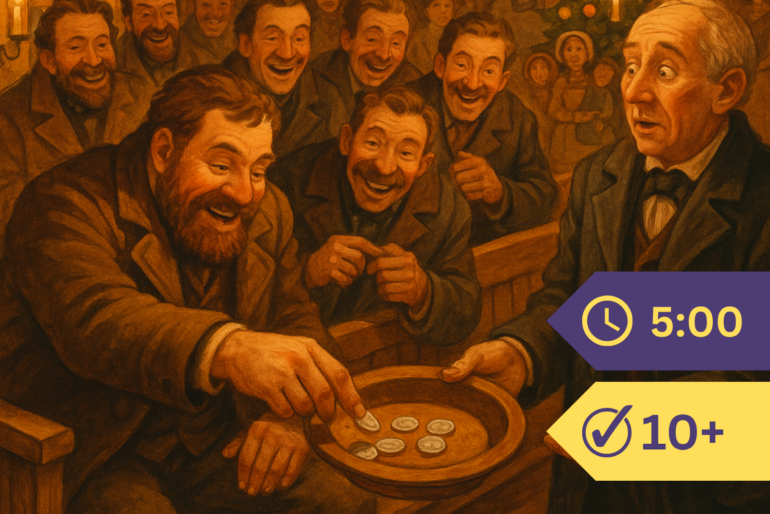
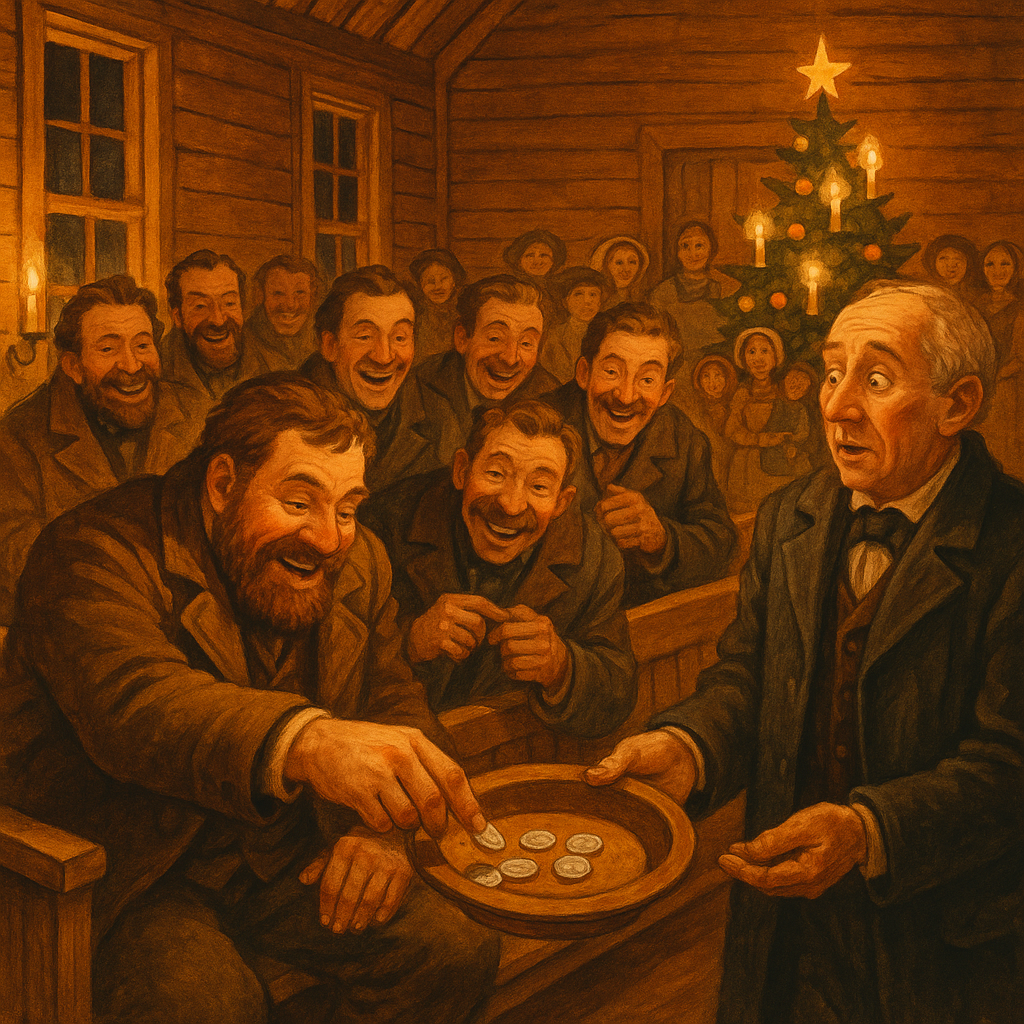
Tom Utt was first, and he dropped in two silver dollars. They rattled against the plate like a skylight hit with a hammer. The next man was game, and dropped in two more. And the next, and the next. Johnnie Longnacker couldn’t lay hands on two silver dollars, so he poured in a handful of small change that sounded like a charge of shot against a boiler. By the time the collector had worked his way around that crowd of jolly good fellows, he had to hold the plate with both hands — and the whole congregation was craning their necks to see what on earth was going on.
When the plates were carried back to the front, the good pastor took one up, raised his hands for the congregation to stand, and offered a prayer for the strangers within his gates — a prayer that more than one of those men has cherished in his memory for nearly a quarter of a century since.
When the boys got back to the little hotel afterward, they were feeling fine. And though they never did enforce the proposed fine on stories about home — for every man had one or more to tell — no one seemed to mind.