There was a miller who had fallen behind on his rent. The landlord came at last in person and gave him one final warning: pay tonight, or be turned out by force in the morning.
As the landlord turned to leave, he met the miller’s daughter coming back from the stream — a lively, handsome girl named Nina.
“Give me Nina,” the landlord said, “and I’ll forgive every penny you owe and sign the mill and the homestead over to you and your heirs forever.”
The miller looked at him calmly. “Give me the documents in writing, duly signed, and you shall have Nina.”
The landlord went inside, drew up a formal quittance of the debt and a full conveyance of the mill and property, and handed them to the miller.
“At an hour before sundown,” he said, “I’ll send for Nina.”
“You shall have her,” agreed the miller.
At the appointed hour, the landlord’s servant arrived with a carriage.
“I’ve come for Nina,” he said.
“She’s in the stable,” said the miller. “Take her.”
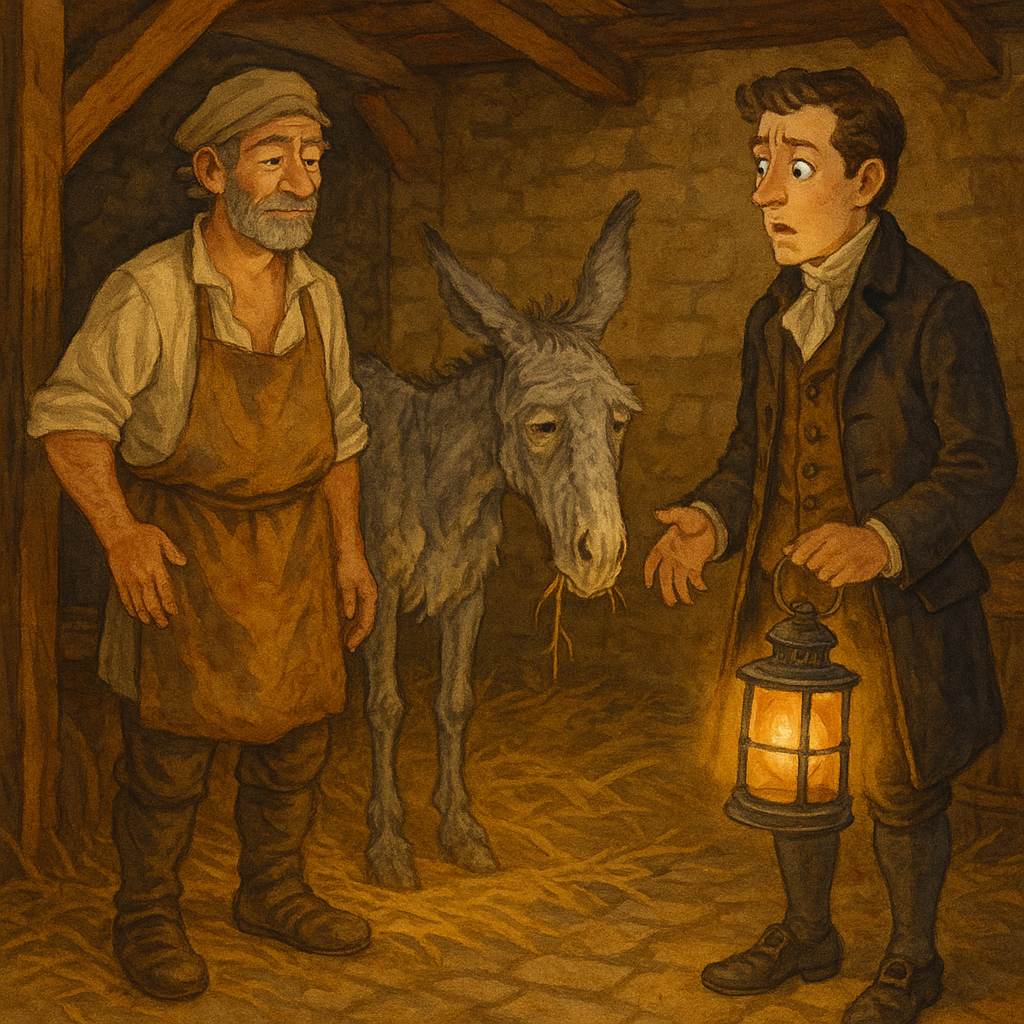
In the stable was a very old, very thin donkey.
“This is nothing but a donkey,” said the servant.
“That’s Nina,” said the miller. “We’ve always called her Nina. Take her and be off.”
The servant could find no good argument, and took the donkey home. The landlord was entertaining guests and assumed all was settled. He told the servant to take Nina upstairs to the best bedroom, light a fire, and bring her supper.
The servant did as he was told. When the guests finally left, the landlord went upstairs to find Nina. It was dark. He groped his way to the fireplace, found a warm, softly-breathing form lying there, and stroked her hair.
“What fine soft hair you have, Nina,” he said.
Then the servant brought the lamp.
The next morning, the landlord went before the judge and told the whole story. The miller came and told his. The judge examined the documents: they specified that the miller would deliver “Nina,” and he had delivered “Nina.” There was no evidence that any Nina other than the donkey had been intended. The miller kept the mill.
And that, says the story, is the plain truth, because it actually happened.