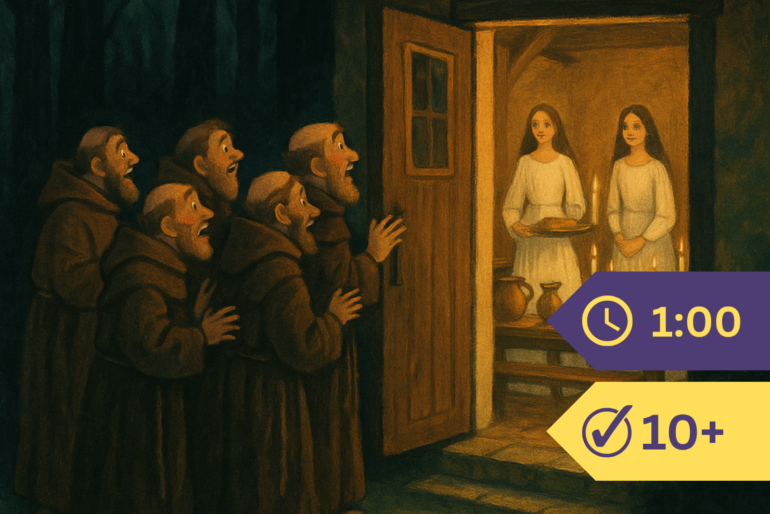
Some friars were out begging for their convent when night fell and caught them in a wood. They were afraid of wolves, and there seemed to be no cottage or farm anywhere near.
“We must put ourselves in the Madonna’s hands,” they said, “and wait to see what morning brings.”
They had barely said the words when one of them saw a light in the trees. They thought it must be a woodcutter’s hut and followed it — and came out instead in front of a proper inn, well-lit, with the door open.
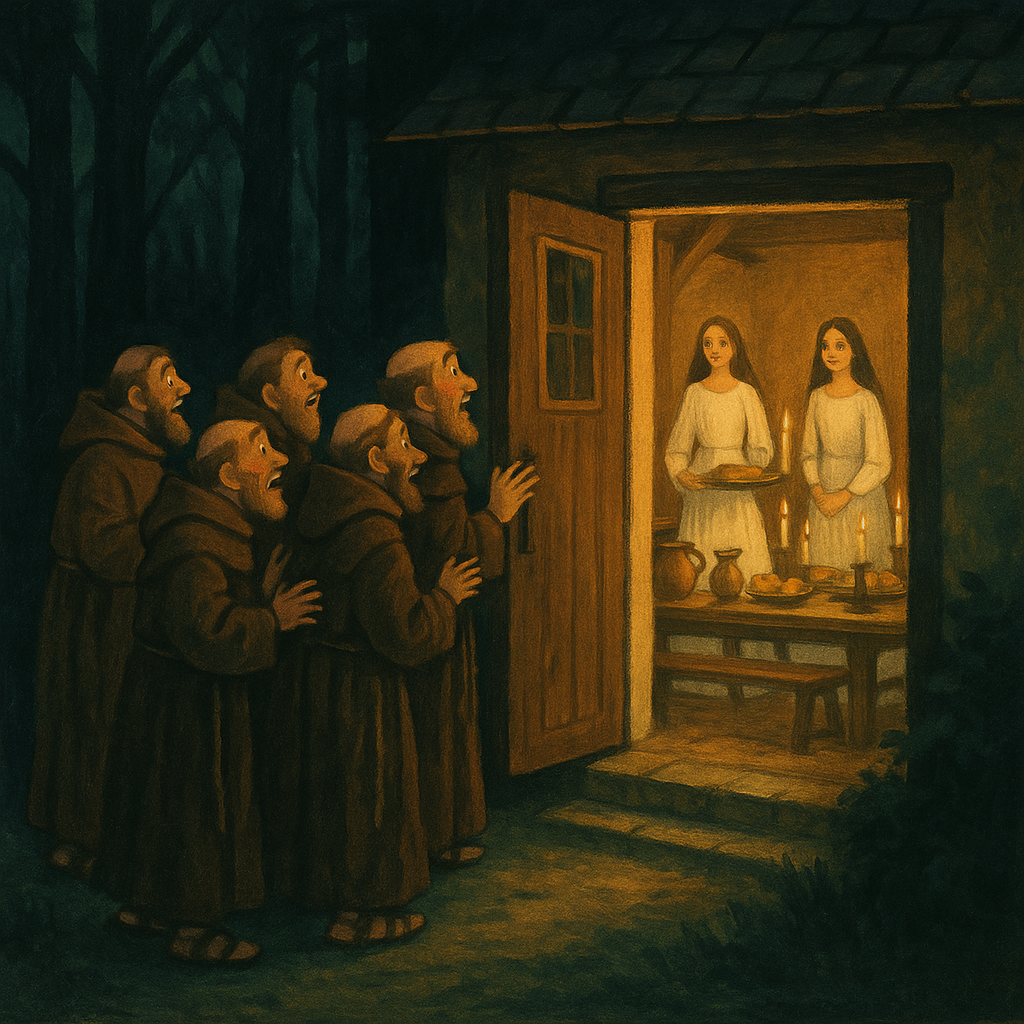
They went in. A fire was burning. A table was laid. Young women in white came and went, quiet and quick, and brought them everything they needed. When supper was done, the women showed them to rooms where a bed waited for each of them, and in the morning brought them breakfast.
Before they left, the friars asked to be taken to thank the mistress of the house. The women led them into a room where a beautiful woman of great calm received them, asked whether they had been well looked after, and wished them a good journey. As they went, she pressed a folded paper into their hands.
Out on the road, they turned to look back — and there was no inn. Not a stone of it. The field was empty.
Then they opened the paper, and saw it was written in bright golden letters, and they knew it was the Madonna herself who had kept them that night.