Within the hall are song and laughter,
The cheeks of Christmas glow red and jolly,
And sprouting is every corbel and rafter
With lightsome green of ivy and holly;
Through the deep gulf of the chimney wide
Wallows the Yule-log’s roaring hide;
The broad flame-pennons droop and flap
And belly and tug as a flag in the wind;
Like a locust shrills the imprisoned sap,
Hunted to death in its galleries blind;
And swift little troops of silent sparks,
Now pausing, now scattering away as in fear,
Go threading the soot-forest’s tangled darks
Like herds of startled deer.
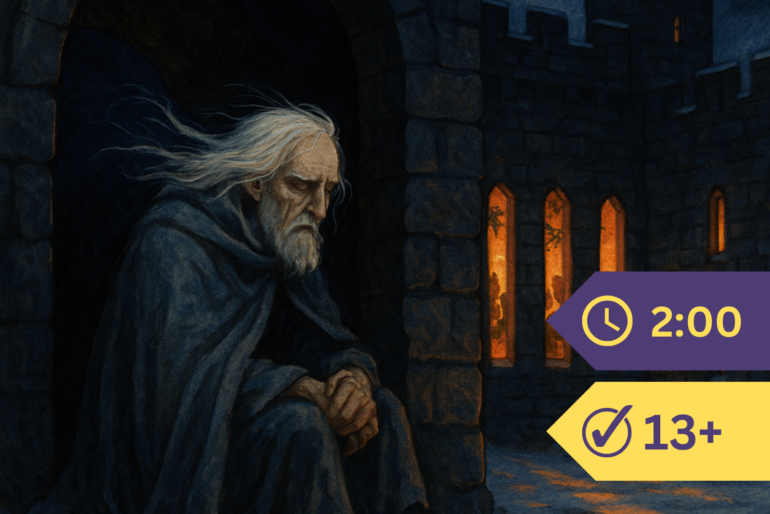
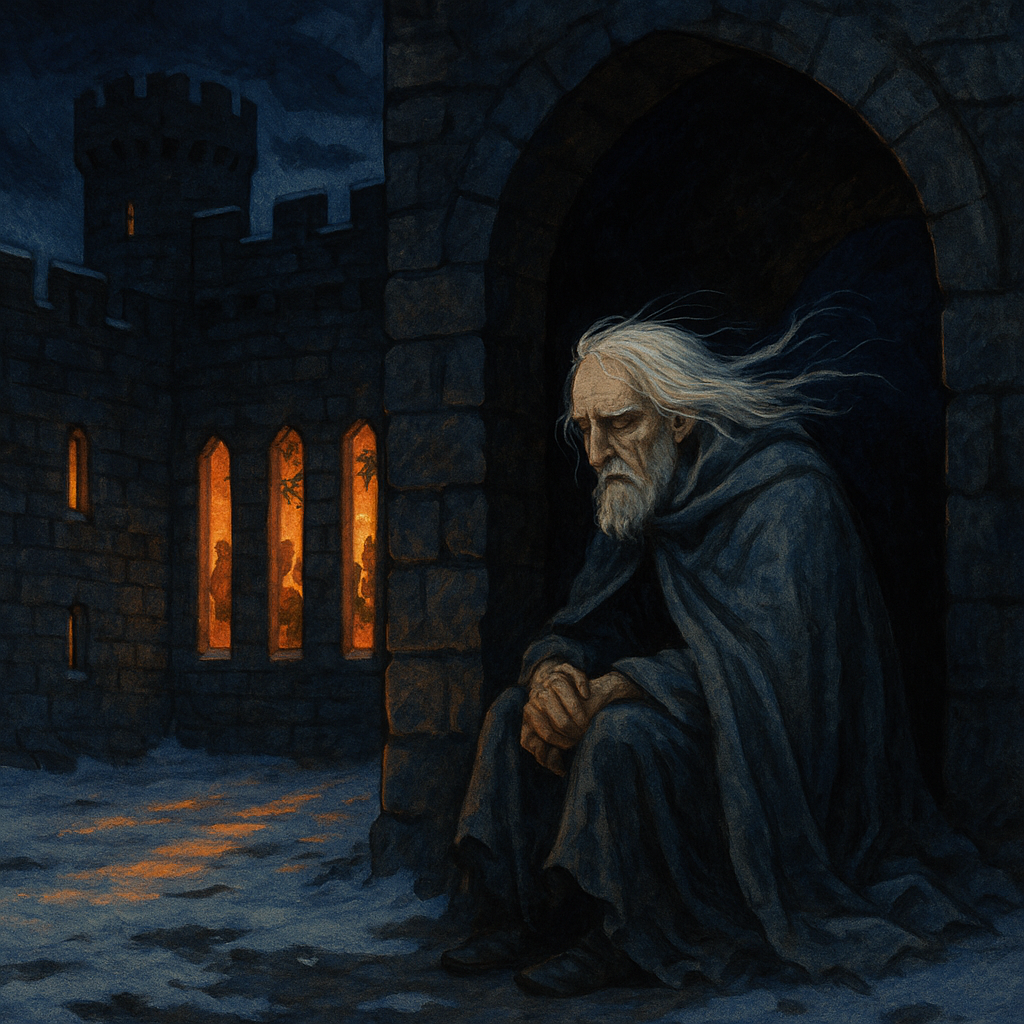
But the wind without was eager and sharp,
Of Sir Launfal’s gray hair it makes a harp,
And rattles and wrings
The icy strings,
Singing, in dreary monotone,
A Christmas carol of its own,
Whose burden still, as he might guess,
Was — “Shelterless, shelterless, shelterless!”
The voice of the seneschal flared like a torch
As he shouted the wanderer away from the porch,
And he sat in the gateway and saw all night
The great hall-fire, so cheery and bold,
Through the window-slits of the castle old,
Build out its piers of ruddy light
Against the drift of the cold.