
Summary


"Winter" by William Cowper opens with a striking portrait of winter personified as a frost-bearded, cloud-crowned ruler riding a storm-driven throne across a frozen sky. Cowper addresses winter directly, acknowledging its bleakness — shortened days, a captive sun — yet finds unexpected tenderness in the season's gifts: the fireside gathering of scattered families, long quiet evenings, and the deep pleasure of undisturbed domestic retirement. The poem moves from awe to affection, finding richness in winter's grip rather than dread.

Read Online

Winter, ruler of the inverted year,
Thy scattered hair with sleet like ashes filled,
Thy breath congealed upon thy lips, thy cheeks
Fringed with a beard made white with other snows
Than those of age, thy forehead wrapped in clouds,
A leafless branch thy sceptre, and thy throne
A sliding car, indebted to no wheels,
But urged by storms along its slippery way,
I love thee, all unlovely as thou seem’st,
And dreaded as thou art! Thou hold’st the sun
A prisoner in the yet undawning east,
Shortening his journey between morn and noon,
And hurrying him, impatient of his stay,
Down to the rosy west; but kindly still
Compensating his loss with added hours
Of social converse and instructive ease,
And gathering, at short notice, in one group,
The family dispersed, and fixing thought,
Not less dispersed by daylight and its cares.
I crown thee king of intimate delights,
Fireside enjoyments, homeborn happiness,
And all the comforts that the lowly roof
Of undisturbed retirement, and the hours
Of long uninterrupted evening know.
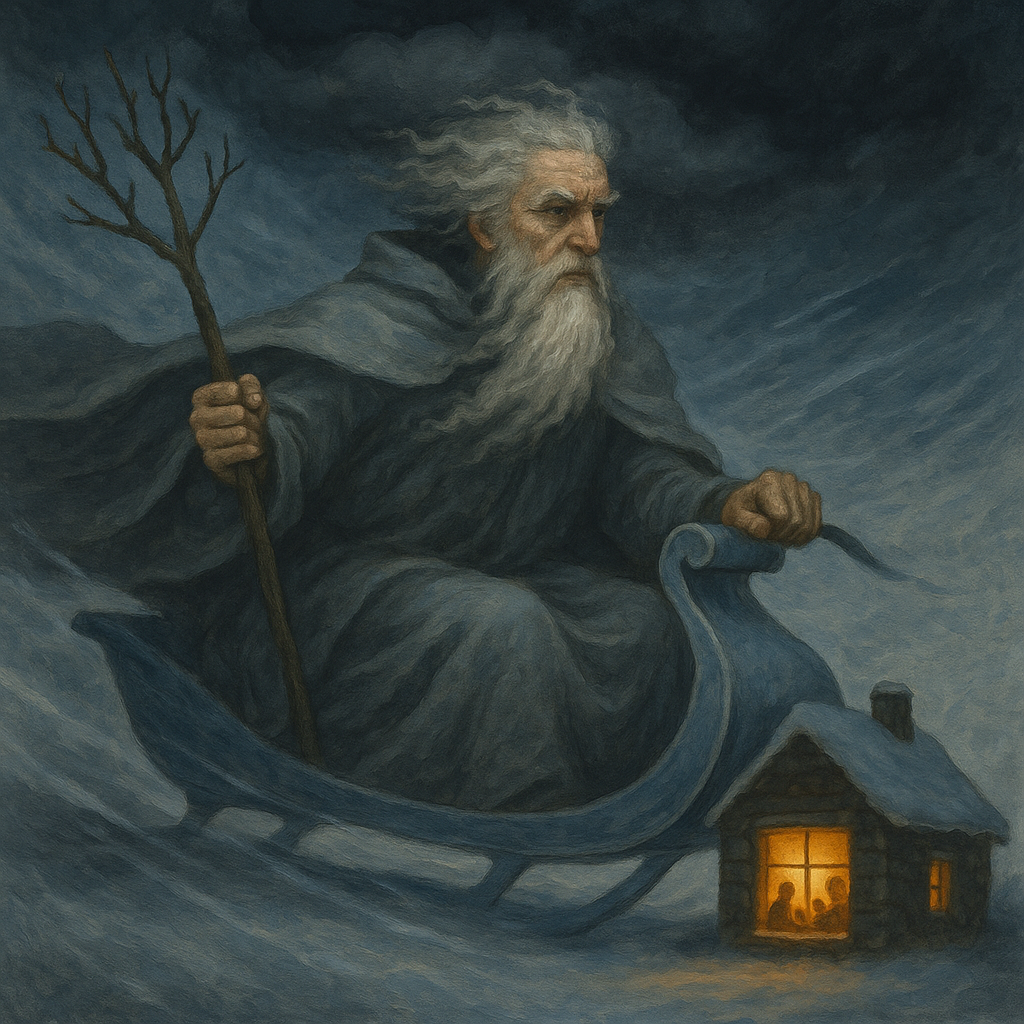

Winter personified as a frost-bearded king riding a storm-driven sled above a cosy cottage, illustrating Cowper's poem "Winter"

Add Ririro as a Preferred Source on Google


Credits

William Cowper was an 18th-century English poet whose work bridged the formal Augustan tradition and the emerging Romantic sensibility. Known for his sharp eye for domestic and natural detail, Cowper wrote "Winter" as part of his longer poem The Task (1785), where he celebrated the quiet pleasures of rural English life with warmth and gentle wit.