The World Is Too Much With Us

Summary


The World Is Too Much With Us is a sonnet in which a restless speaker stands before a moonlit sea and confesses a deep unease with modern life. Consumed by getting and spending, humanity has lost its bond with the wind, the waves and the wild. Torn between frustration and yearning, the speaker wishes to trade places with an ancient pagan, hoping for one glimpse of Proteus rising from the water or Triton sounding his horn.


Listen to audio


Read Online

The world is too much with us; late and soon,
Getting and spending, we lay waste our powers:
Little we see in nature that is ours;
We have given our hearts away, a sordid boon!
This Sea that bares her bosom to the moon;
The Winds that will be howling at all hours
And are up-gathered now like sleeping flowers;
For this, for every thing, we are out of tune;
It moves us not— Great God! I’d rather be
A Pagan suckled in a creed outworn;
So might I, standing on this pleasant lea,
Have glimpses that would make me less forlorn
Have sight of Proteus coming from the sea;
Or hear old Triton blow his wreathed horn.
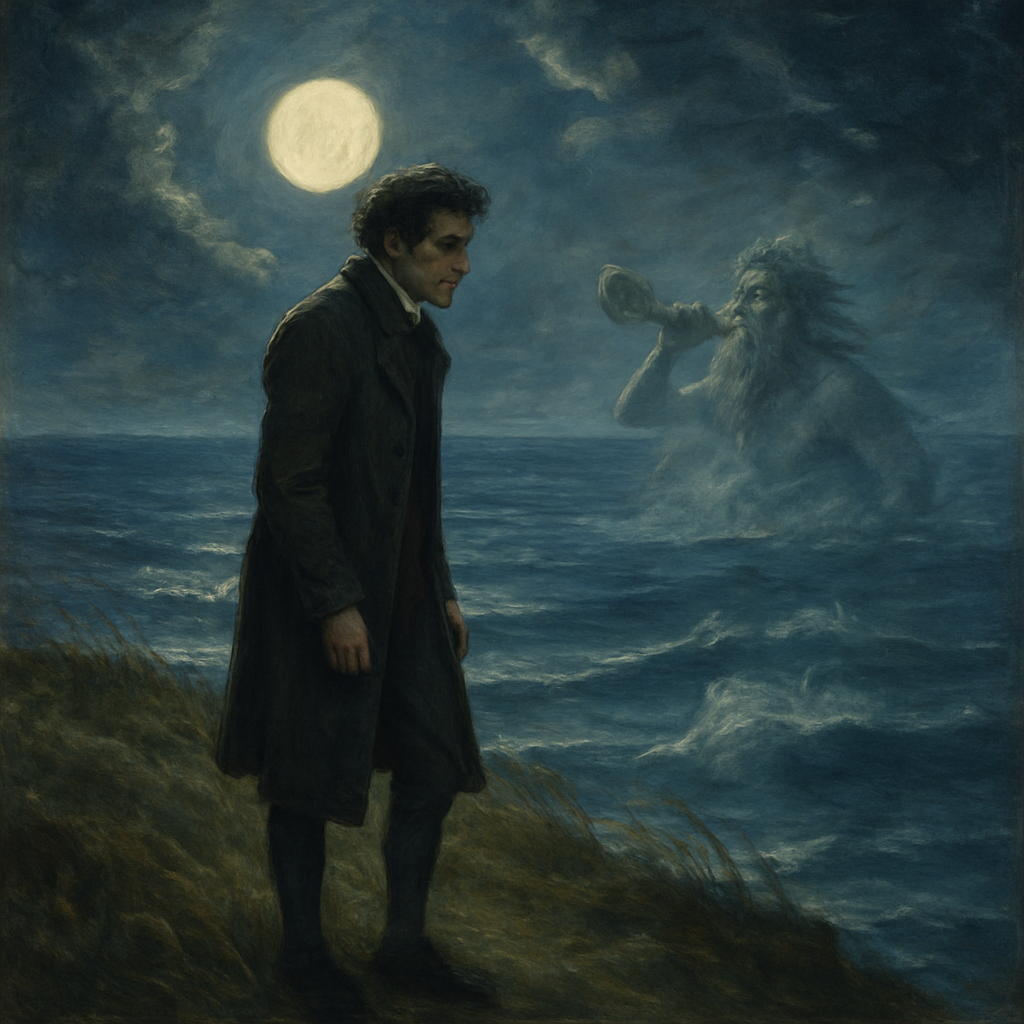

A lone man stands on a moonlit cliff gazing at the sea, in an illustration for The World Is Too Much With Us.

Add Ririro as a Preferred Source on Google


Credits

William Wordsworth was an English Romantic poet, a leading voice of the movement who celebrated nature and the inner life. This sonnet, written around 1802 and published in 1807, voices his criticism of the Industrial Revolution's growing materialism.