From out Cologne there came three kings
To worship Jesus Christ, their King.
To Him they sought, fine herbs they brought,
And many a beauteous golden thing;
They brought their gifts to Bethlehem town,
And in that manger set them down.
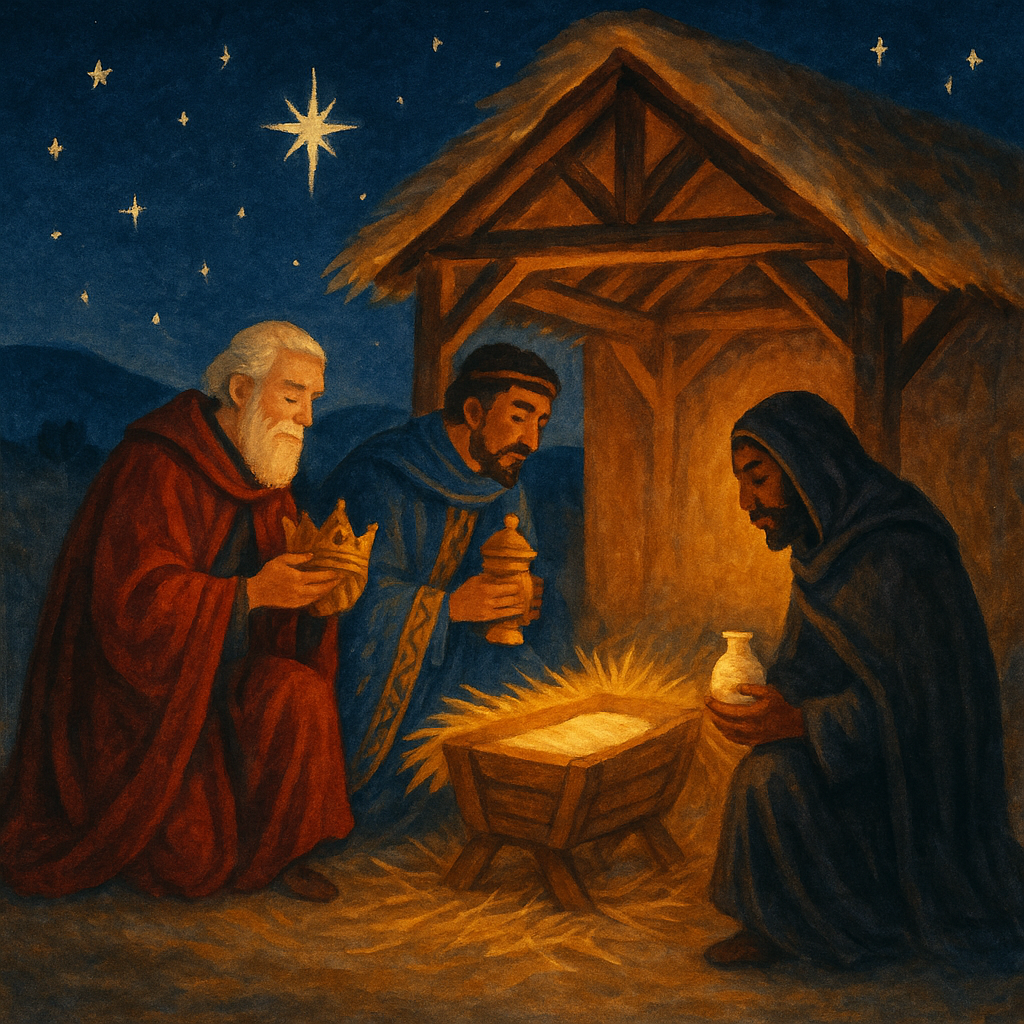
Then spake the first king, and he said:
“O Child, most heavenly, bright, and fair!
I bring this crown to Bethlehem town
For Thee, and only Thee, to wear;
So give a heavenly crown to me
When I shall come at last to Thee!”
The second, then. “I bring Thee here
This royal robe, O Child!” he cried;
“Of silk ’tis spun, and such an one
There is not in the world beside;
So in the day of doom requite
Me with a heavenly robe of white!”
The third king gave his gift, and quoth:
“Spikenard and myrrh to Thee I bring,
And with these twain would I most fain
Anoint the body of my King;
So may their incense sometime rise
To plead for me in yonder skies!”
Thus spake the three kings of Cologne,
That gave their gifts, and went their way;
And now kneel I in prayer hard by
The cradle of the Child to-day;
Nor crown, nor robe, nor spice I bring
As offering unto Christ, my King.
Yet have I brought a gift the Child
May not despise, however small;
For here I lay my heart to-day,
And it is full of love to all.
Take Thou the poor but loyal thing,
My only tribute, Christ, my King!