The Road Not Taken

Summary


"The Road Not Taken" opens with a solitary traveler pausing at a fork in an autumn wood, unable to follow both paths at once. Frost captures the quiet tension of an ordinary moment freighted with lasting consequence — the speaker chooses one road, consoles himself he will return for the other, yet suspects he never will. Decades later, he imagines retelling the choice "with a sigh," knowing that one decision, real or mythologized, shaped everything that followed.

Listen to audio


Read Online

Two roads diverged in a yellow wood,
And sorry I could not travel both
And be one traveler, long I stood
And looked down one as far as I could
To where it bent in the undergrowth;

Then took the other, as just as fair,
And having perhaps the better claim,
Because it was grassy and wanted wear;
Though as for that the passing there
Had worn them really about the same,

And both that morning equally lay
In leaves no step had trodden black.
Oh, I kept the first for another day!
Yet knowing how way leads on to way,
I doubted if I should ever come back.

I shall be telling this with a sigh
Somewhere ages and ages hence:
Two roads diverged in a wood, and I—
I took the one less travelled by,
And that has made all the difference.
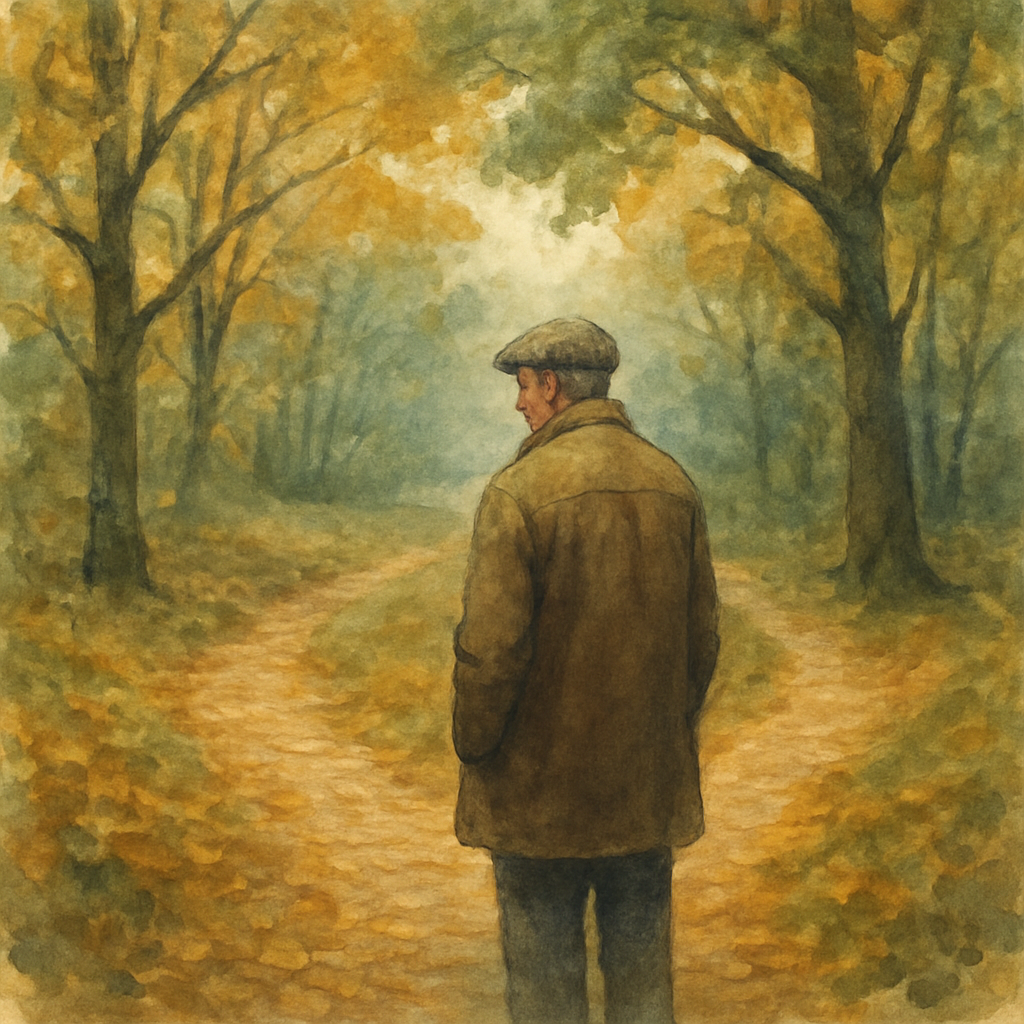

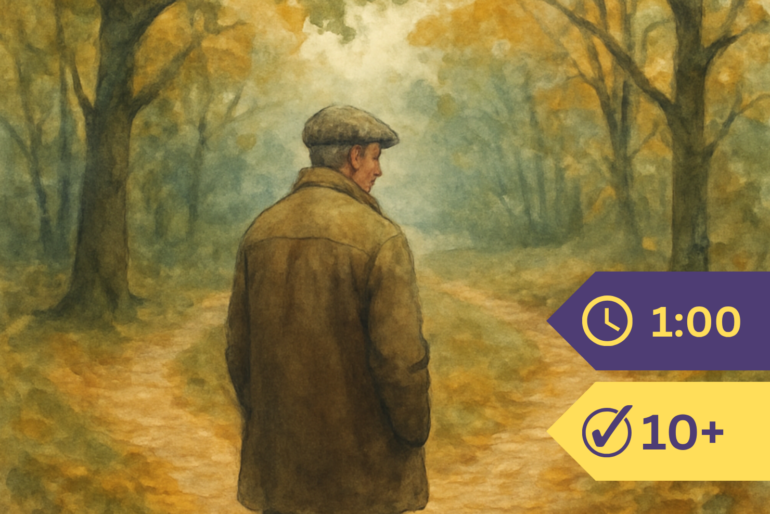
A lone traveler pauses at a fork in an autumn forest in The Road Not Taken by Robert Frost.

Add Ririro as a Preferred Source on Google


Credits

Robert Frost was an American poet whose work, rooted in rural New England landscapes, explored themes of choice, nature, and the human condition. First published in 1916 in his collection *Mountain Interval*, "The Road Not Taken" was originally written as a gentle tease aimed at Frost's friend and fellow poet Edward Thomas, who habitually second-guessed the paths they took on their walks together.