“All hail!” the bells of Christmas rang,
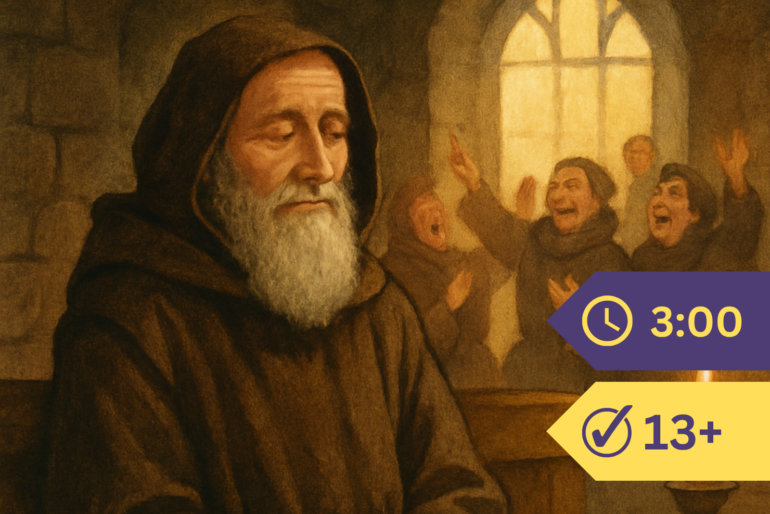
“All hail!” the monks at Christmas sang,
The merry monks who kept with cheer
The gladdest day of all their year.
But still apart, unmoved thereat,
A pious elder brother sat
Silent, in his accustomed place,
With God’s sweet peace upon his face.
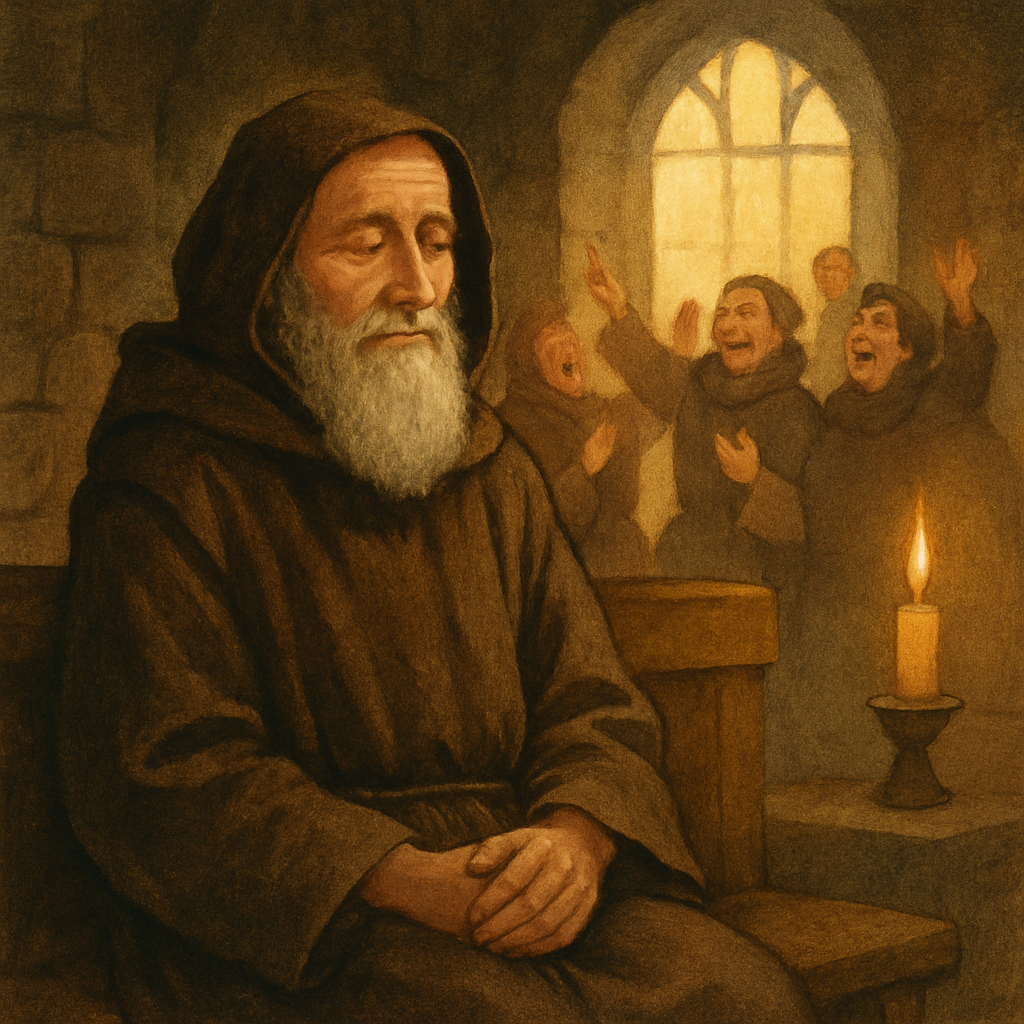
“Why sitt’st thou thus?” his brethren cried,
“It is the blessed Christmas-tide;
The Christmas lights are all aglow,
The sacred lilies bud and blow.
“Above our heads the joy-bells ring,
Without the happy children sing,
And all God’s creatures hail the morn
On which the holy Christ was born.
“Rejoice with us; no more rebuke
Our gladness with thy quiet look.”
The gray monk answered, “Keep, I pray,
Even as ye list, the Lord’s birthday.
“Let heathen Yule fires flicker red
Where thronged refectory feasts are spread;
With mystery-play and masque and mime
And wait-songs speed the holy time!
“The blindest faith may haply save;
The Lord accepts the things we have;
And reverence, howsoe’er it strays,
May find at last the shining ways.
“They needs must grope who cannot see,
The blade before the ear must be;
As ye are feeling I have felt,
And where ye dwell I too have dwelt.
“But now, beyond the things of sense,
Beyond occasions and events,
I know, through God’s exceeding grace,
Release from form and time and space.
“I listen, from no mortal tongue,
To hear the song the angels sung;
And wait within myself to know
The Christmas lilies bud and blow.
“The outward symbols disappear
From him whose inward sight is clear;
And small must be the choice of days
To him who fills them all with praise!
“Keep while you need it, brothers mine,
With honest seal your Christmas sign,
But judge not him who every morn
Feels in his heart the Lord Christ born!”