Out on the endless purple hills, deep in the
clasp of somber night,
The shepherds guarded their weary ones–
guarded their flocks of cloudy white,
That like a snowdrift in silence lay,
Save one little lamb with its fleece of gray.
Out on the hillside all alone, gazing afar with
sleepless eyes,
The little gray lamb prayed soft and low, its
weary face to the starry skies:
“O moon of the heavens so fair, so bright,
Give me–oh, give me–a fleece of white!”
No answer came from the dome of blue, nor
comfort lurked in the cypress-trees;
But faint came a whisper borne along on the
scented wings of the passing breeze:
“Little gray lamb that prays this night,
I cannot give thee a fleece of white.”
Then the little gray lamb of the sleepless eyes
prayed to the clouds for a coat of snow,
Asked of the roses, besought the woods; but
each gave answer sad and low:
“Little gray lamb that prays this night,
We cannot give thee a fleece of white.”
Like a gem unlocked from a casket dark, like
an ocean pearl from its bed of blue,
Came, softly stealing the clouds between, a
wonderful star which brighter grew
Until it flamed like the sun by day
Over the place where Jesus lay.
Ere hushed were the angels’ notes of praise
the joyful shepherds had quickly sped
Past rock and shadow, adown the hill, to kneel
at the Saviour’s lowly bed;
While, like the spirits of phantom night,
Followed their flocks–their flocks of white.
And patiently, longingly, out of the night,
apart from the others,–far apart,–
Came limping and sorrowful, all alone, the
little gray lamb of the weary heart,
Murmuring, “I must bide far away:
I am not worthy–my fleece is gray.”
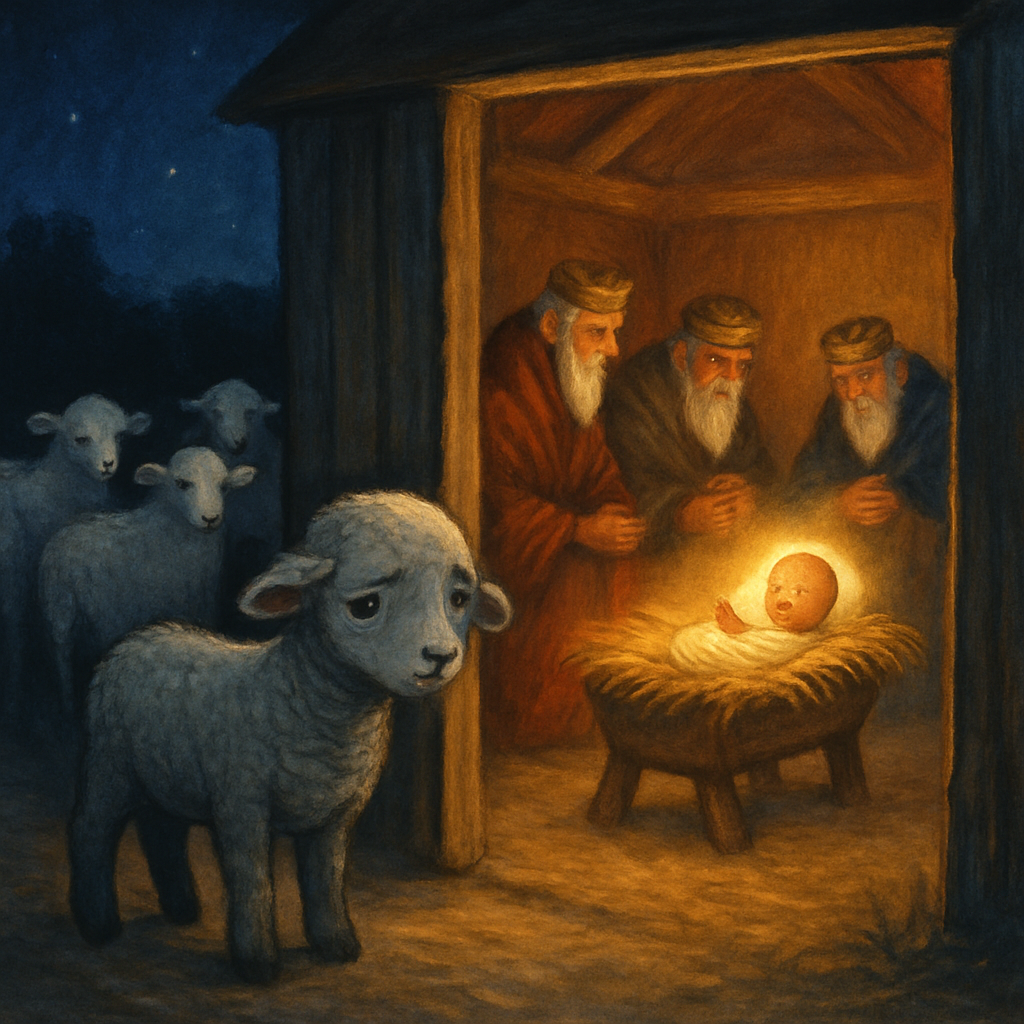
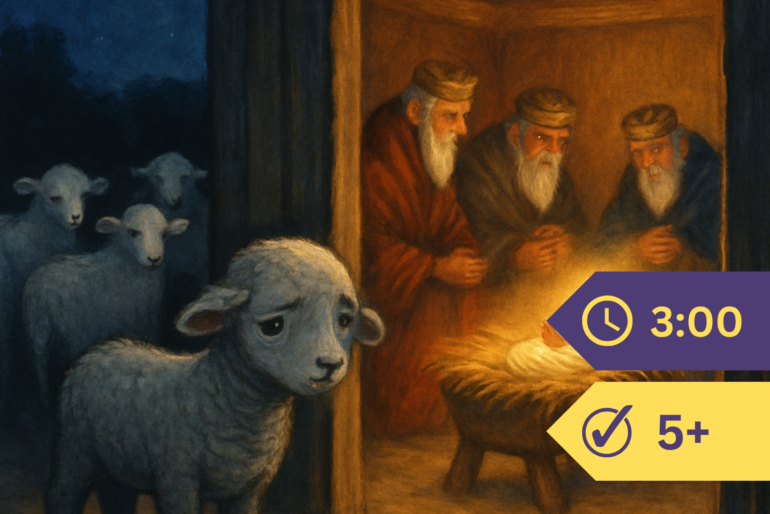
And the Christ Child looked upon humbled
pride, at kings bent low on the earthen floor,
But gazed beyond at the saddened heart of the
little gray lamb at the open door;
And he called it up to his manger low and laid
his hand on its wrinkled face,
While the kings drew golden robes aside to
give to the weary one a place.
And the fleece of the little gray lamb was blest:
For, lo! it was whiter than all the rest!
* * * * *
In many cathedrals grand and dim, whose windows
glimmer with pane and lens,
Mid the odor of incense raised in prayer, hallowed
about with last amens,
The infant Saviour is pictured fair, with
kneeling Magi wise and old,
But his baby-hand rests–not on the gifts, the
myrrh, the frankincense, the gold–
But on the head, with a heavenly light,
Of the little gray lamb that was changed to white.