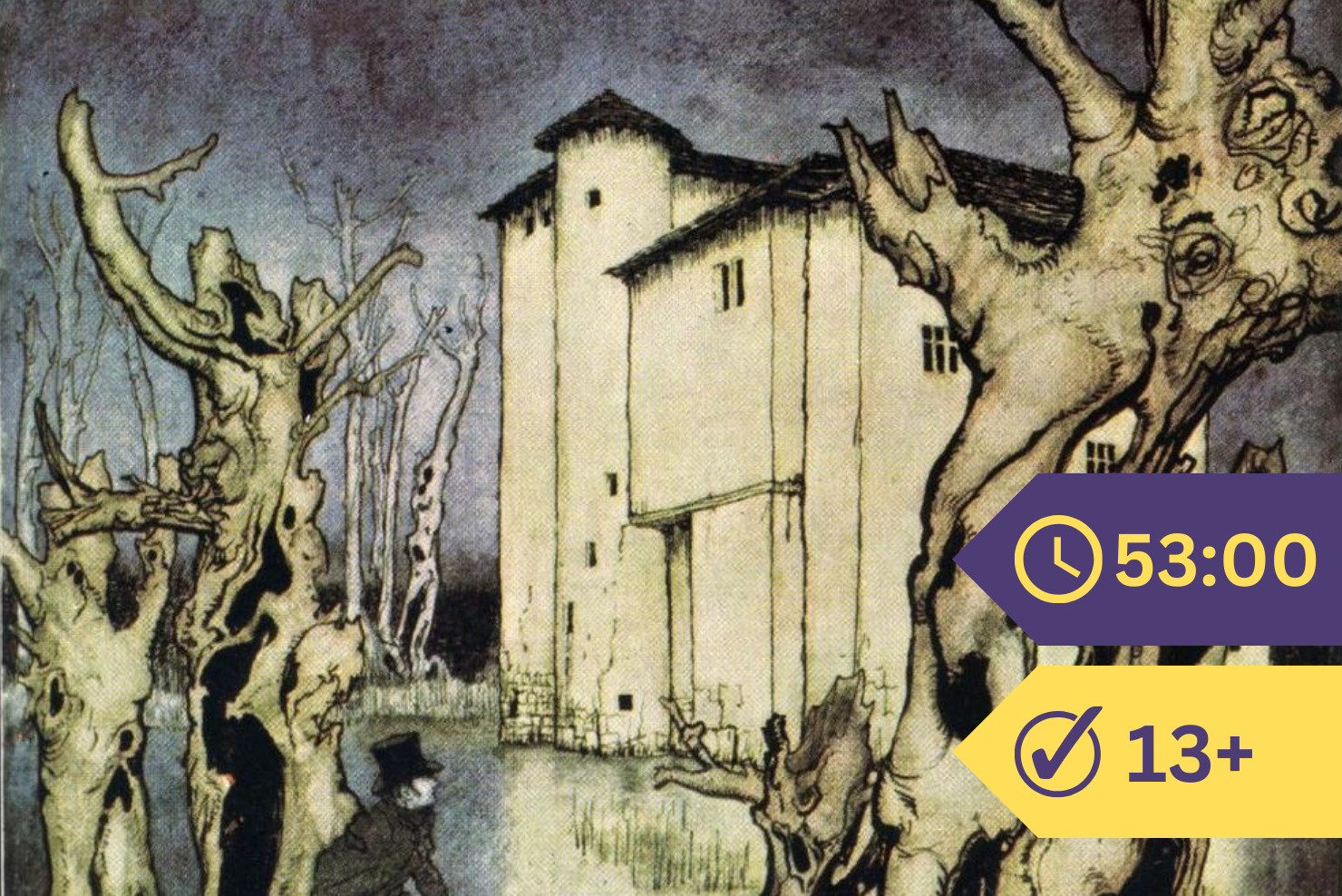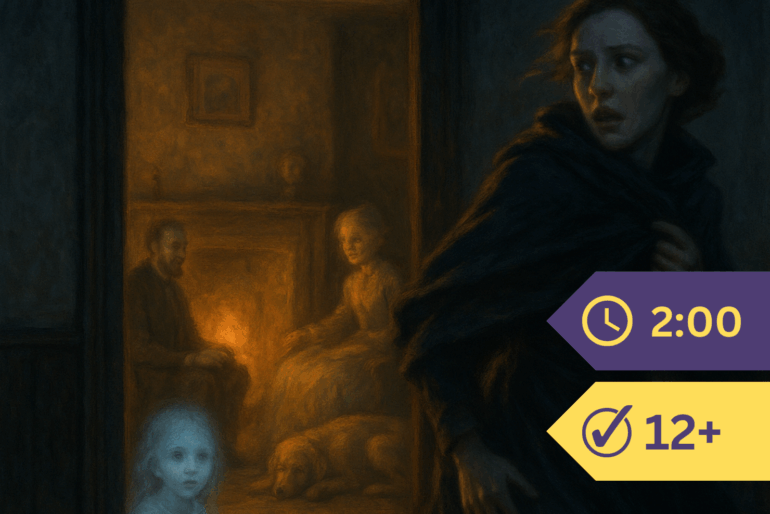
The House of Ghosts was bright within,
Aglow and warm and gay,
A place my own once loved me in,
That is not there by day:
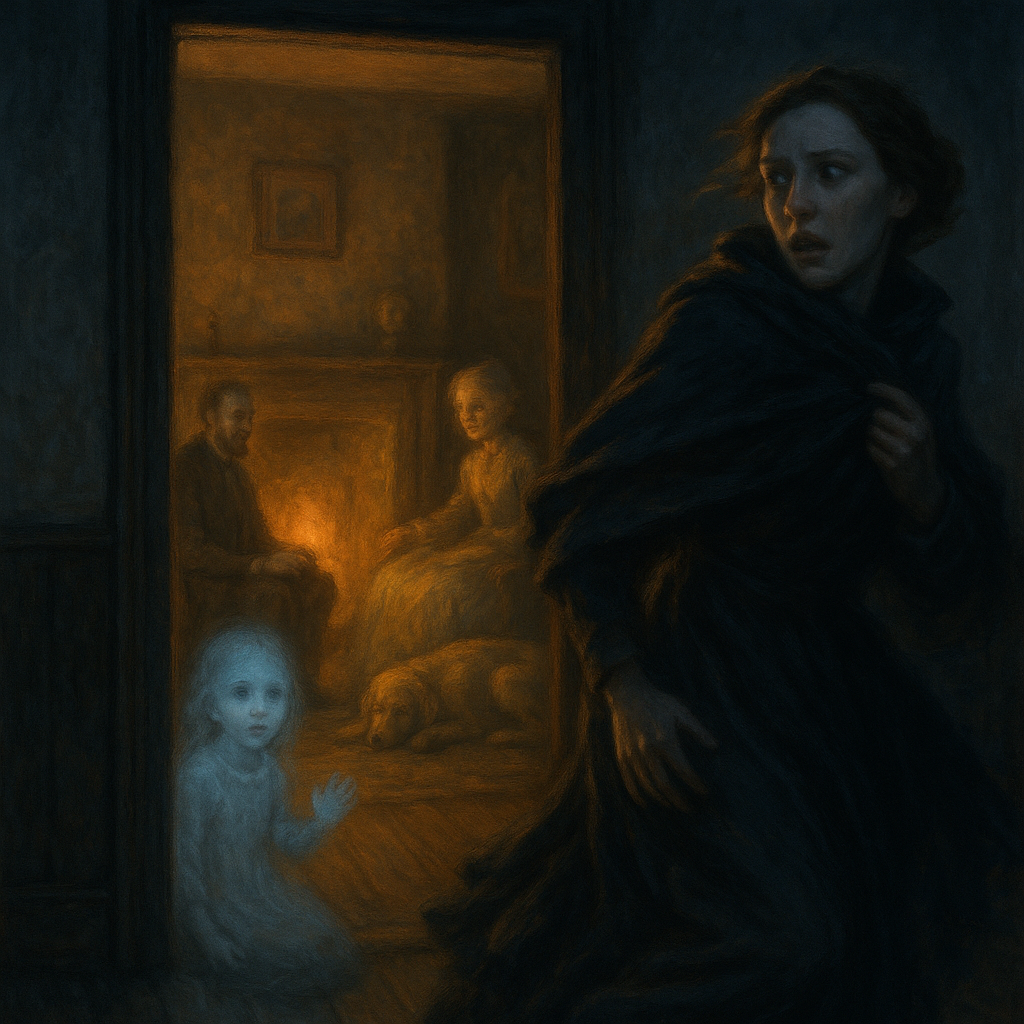
My hound lay drowsing on the floor:
From sunken graves returned
My folk that I was lonely for
Sat where the hearth-fire burned.
There was no lightest echo lost
When I undid the door,
There was no shadow where I crossed
The well-remembered floor.
I bent to whisper to my hound
(So long he had been dead!)
He slept no lighter nor more sound,
He did not lift his head.
I brushed my father as I came;
He did not move or see—
I cried upon my mother’s name;
She did not look at me.
Their faces in the firelight bent,
They smiled in speaking slow
Of some old gracious merriment
Forgotten years ago.
I was so changed since they had died!
How could they know or guess
A voice that plead for love, and cried
Of grief and loneliness?
Out from the House of Ghosts I fled
Lest I should turn and see
The child I had been lift her head
And stare aghast at me!