The Forest Reverie

Summary


"The Forest Reverie" is a poem by Edgar Allan Poe that draws a quiet parallel between two acts of transformation. In the first, a primeval forest is felled by human hands — and from its ruin, springs rise, wildflowers bloom, and new life emerges unbidden. In the second, a heart broken by lost love finds strange, sweet dreams surfacing from its own hidden depths. Poe traces grief not as an ending but as a source, suggesting that from the ashes of hope, the rare flowers of song will grow.

Listen to audio


Read Online

’Tis said that when
The hands of men
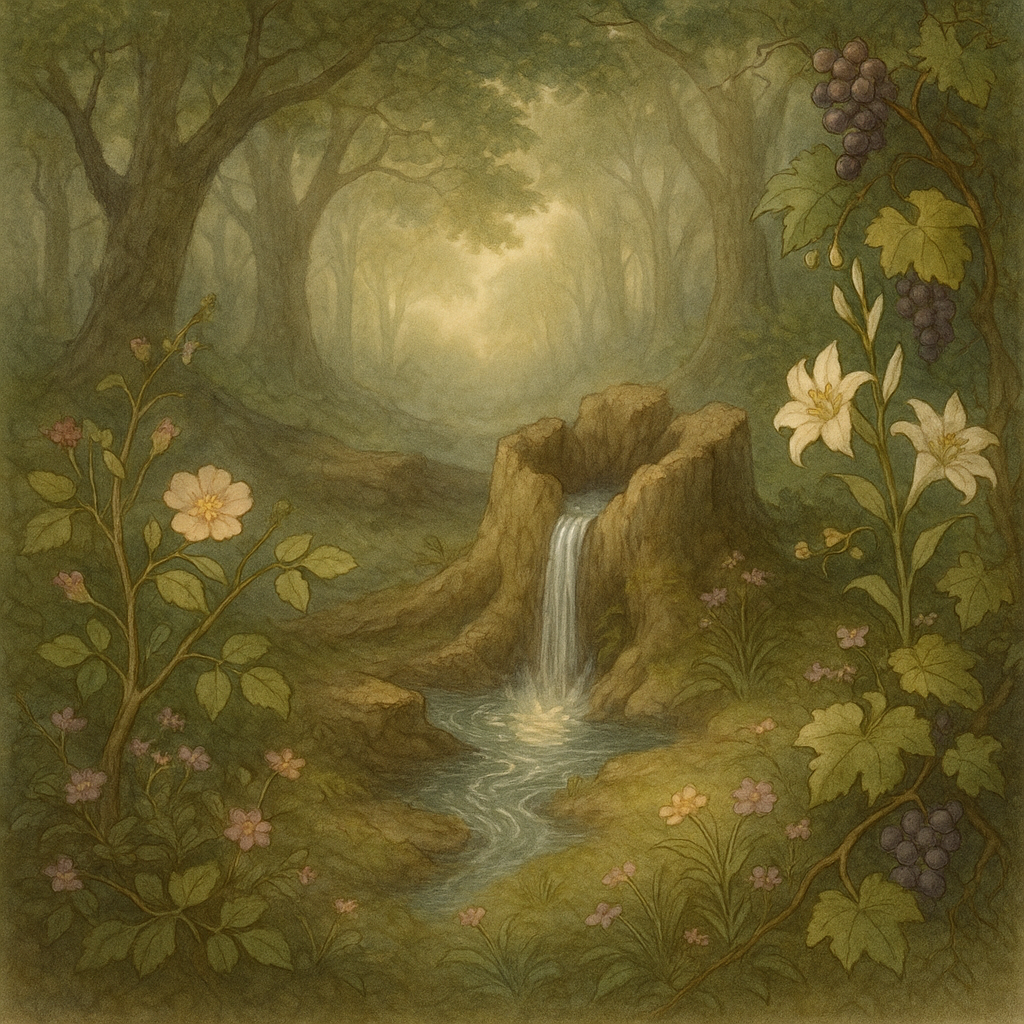
Tamed this primeval wood,
And hoary trees with groans of woe,
Like warriors by an unknown foe,
Were in their strength subdued,
The virgin Earth
Gave instant birth
To springs that ne’er did flow;
That in the sun
Did rivulets run,
And all around rare flowers did blow;
The wild rose pale
Perfumed the gale,
And the queenly lily adown the dale
(Whom the sun and the dew
And the winds did woo),
With the gourd and the grape luxuriant grew.

So when in tears
The love of years
Is wasted like the snow,
And the fine fibrils of its life
By the rude wrong of instant strife
Are broken at a blow—
Within the heart
Do springs upstart
Of which it doth not know;
And strange, sweet dreams,
Like silent streams
That from new fountains overflow,
With the earlier tide
Of rivers glide
Deep in the heart whose hope has died—
Quenching the fires its ashes hide,—
Its ashes, whence will spring and grow
Sweet flowers, ere long,
The rare and radiant flowers of song!

Credits

Edgar Allan Poe (1809–1849) was an American writer celebrated for his gothic fiction and haunting verse, but poems like "The Forest Reverie" reveal a quieter, more meditative side of his lyrical voice. The poem's extended natural metaphor — linking the clearing of a forest to the grief of lost love — reflects Poe's lifelong preoccupation with beauty, loss, and the mysterious creative power that suffering can unlock.


Related tags
, , , ,