On Christmas eve, the king, disconsolate,
Weary with all the round of pomp and state,
Gave whisper to his fool: “A merry way
Have I bethought us to spend our holiday.
Thou shalt be king, and I the fool will be—
And thou shalt rule the court in drollery
For one short day!” With caper, nod, and grin,
Full saucily replied the harlequin:
“A merry play; and, sire, amazing strange
For one of us to suffer such a change!
But thou? Why, all the kings of earth,” said he,
“Have played the fool, and played it skilfully!”
Then the king’s laugh stirred all the arras dim,
Till courtiers wondered at his humor grim.
And so it chanced, when wintry sunbeams shone
From Christmas skies, lo! perched upon the throne
Sat Lionel the Fool, in purple drest,
The royal jewels blazing on his breast.
On Christmas morning, too, the king arose,
And donned, with sense of ease, the silken hose
Of blue and scarlet; then the doublet red
With azure slashed; upon his kingly head,
That wearied oft beneath a jeweled crown,
He drew the jingling hood, and tied it down.
All day he crouched amid the chill and gloom—
None seeking him—within the turret room.
But when calm night with starry lamps came down
Her purple stairs, he crept forth to the town.
His scanty cape about his shoulders blew,
Close to his face the screening hood he drew.
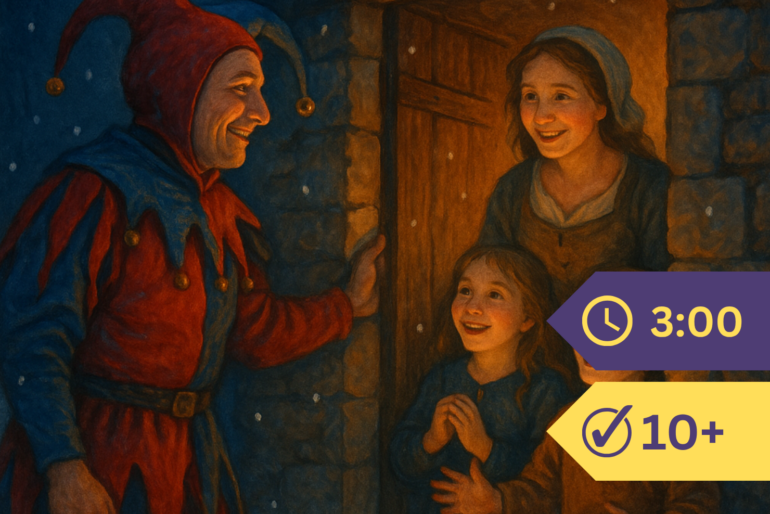
He knocked first at a cottage of the poor,
And lo! flew open wide the ready door.
“We have not much to give, dear fool,” they said,
“But thou art cold; come share our fire and bread!”
With willing hands they freed his cape from snow,
And warmed and cheered him ere they let him go.
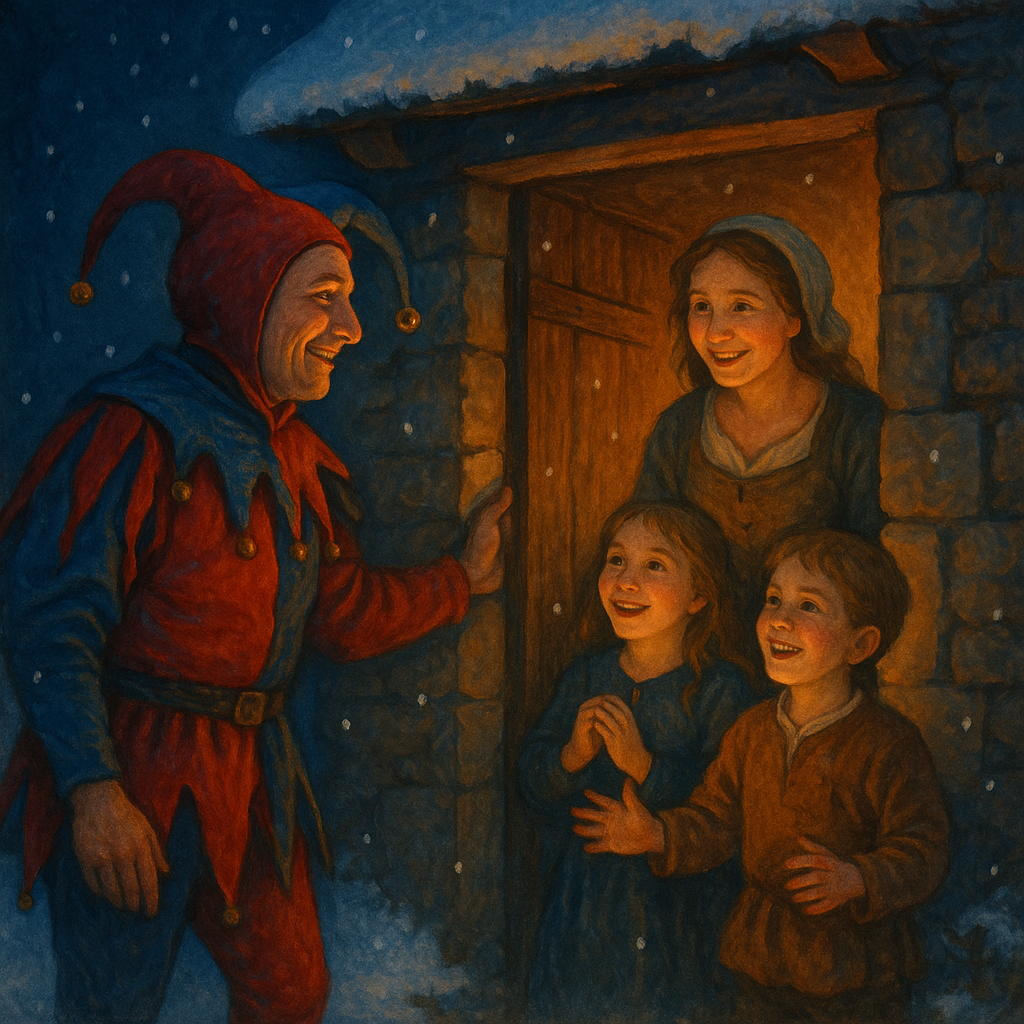
And so ‘t was ever. By the firelight dim
Of many a hearthstone poor they welcomed him;
And children who would shun the king in awe,
Would scamper to the doorway if they saw
The scarlet peak of Lionel’s red hood.
“Dear fool,” they called him loudly, “thou wert good
To bring the frosted cake! Come in and see
Our little Lisbeth—hark! she calls for thee!”
And so ‘t was ever. On his way the king
With softened heart saw many a grievous thing:
But love he found, and charity. And when
He crept at dawn through palace gates again,
He knew that he who rules by fear alone
May sit securely on his dreaded throne:
But he who rules by love shall find it true
That love, the milder power, is mightier, too.
“Dear fool,” he said, “thou art a king, in sooth:
The king of hearts! To-day no farce, but truth!
For I have seen that thou, beneath my rule,
Hast often played the king,—and I the fool!”