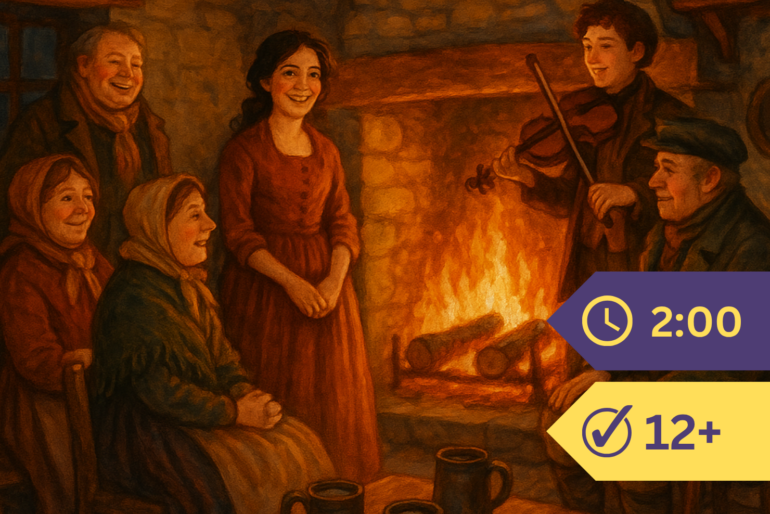
Come down to-marra night, an’ mind
Don’t leave thy fiddle-bag behind.
We’ll shiake a lag an’ drink a cup
O’ yal to kip wold Chris’mas up.
An’ let thy sister tiake thy yarm,
The wa’k woont do ‘er any harm:
Ther’s noo dirt now to spwile her frock
Var ‘t is a-vroze so hard ‘s a rock.
Ther bent noo stranngers that ‘ull come,
But only a vew naighbors: zome
Vrom Stowe, an’ Combe, an’ two ar dree
Vrom uncles up at Rookery.
An’ thee woot vine a ruozy fiace,
An’ pair ov eyes so black as sloos,
The pirtiest oones in al the pliace.
I’m sure I needen tell thee whose.
We got a back bran’, dree girt logs
So much as dree ov us can car:
We’ll put ’em up athirt the dogs,
An’ miake a vier to the bar,
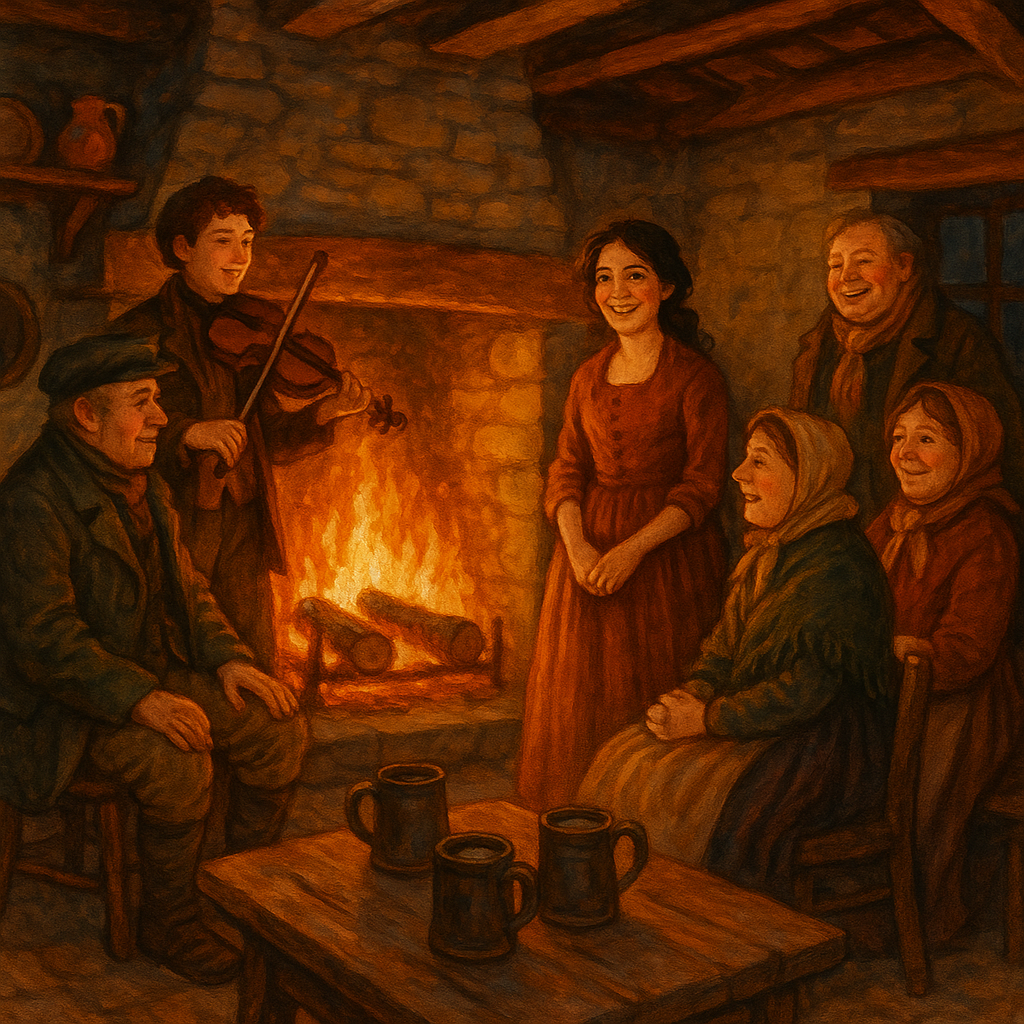
An’ ev’ry oone wull tell his tiale,
An’ ev’ry oone wull zing his zong,
An’ ev’ry oone wull drink his yal,
To love an’ frien’ship al night long.
We’ll snap the tongs, we’ll have a bal,
We’ll shiake the house, we’ll rise the ruf,
We’ll romp an’ miake the maidens squal,
A catchen o’m at bline-man’s buff.
Zoo come to-marra night, an’ mind
Don’t leave thy fiddle-bag behind.
We’ll shiake a lag an’ drink a cup
O’ yal to kip wold Chris’mas up.