The little lad was grave and good;
He ne’er had had such thoughts before.
(It happened in an English wood,
Two hundred years ago, and more —
Two hundred and twoscore.)
A sturdy little lad was he,
Who always meant to do the right.
(His name was Year-of-Jubilee;
His clear gray eyes first saw the light
The year of Naseby fight.)
Along the woodland path he went
Upon his errand, trudging slow;
His looks upon the ground were bent.
Between the trunks the sunset glow
Shone red across the snow.
It was the eve of Christmas day,
When rigid rules aside were cast
By such as walked the wicked way:
His sober household kept a fast;
He wished the day were past!
In solemn fast small joy he had,
Though shamed he was his thought to speak —
This little, hearty, hungry lad!
Like ripened apple was his cheek,
So round, and plump, and sleek.
Hark! what was that? He starts, he stops.
The flutter of a rising bird?
A rabbit rustling in the copse?
A stiff, sad-colored leaf that stirred?
What was the sound he heard?
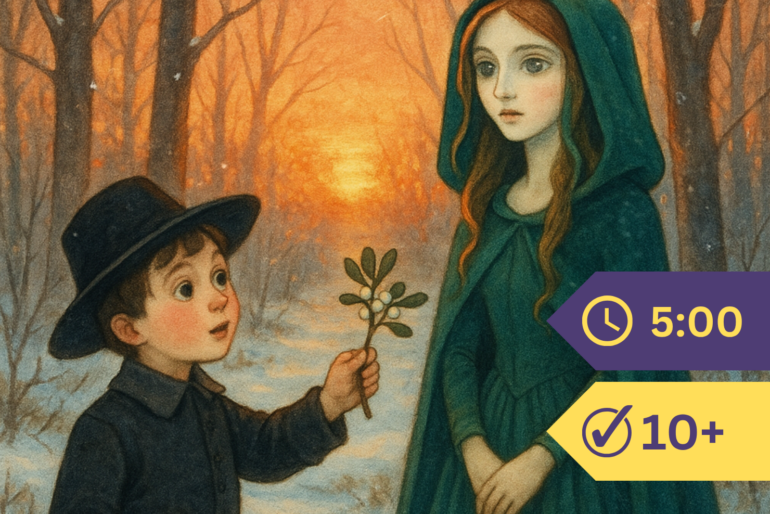
The light was round her as she stood,
The slender maid, so wonder-fair,
In gown of green, and velvet hood.
He felt a fear to see her there,
So lonely and so rare!
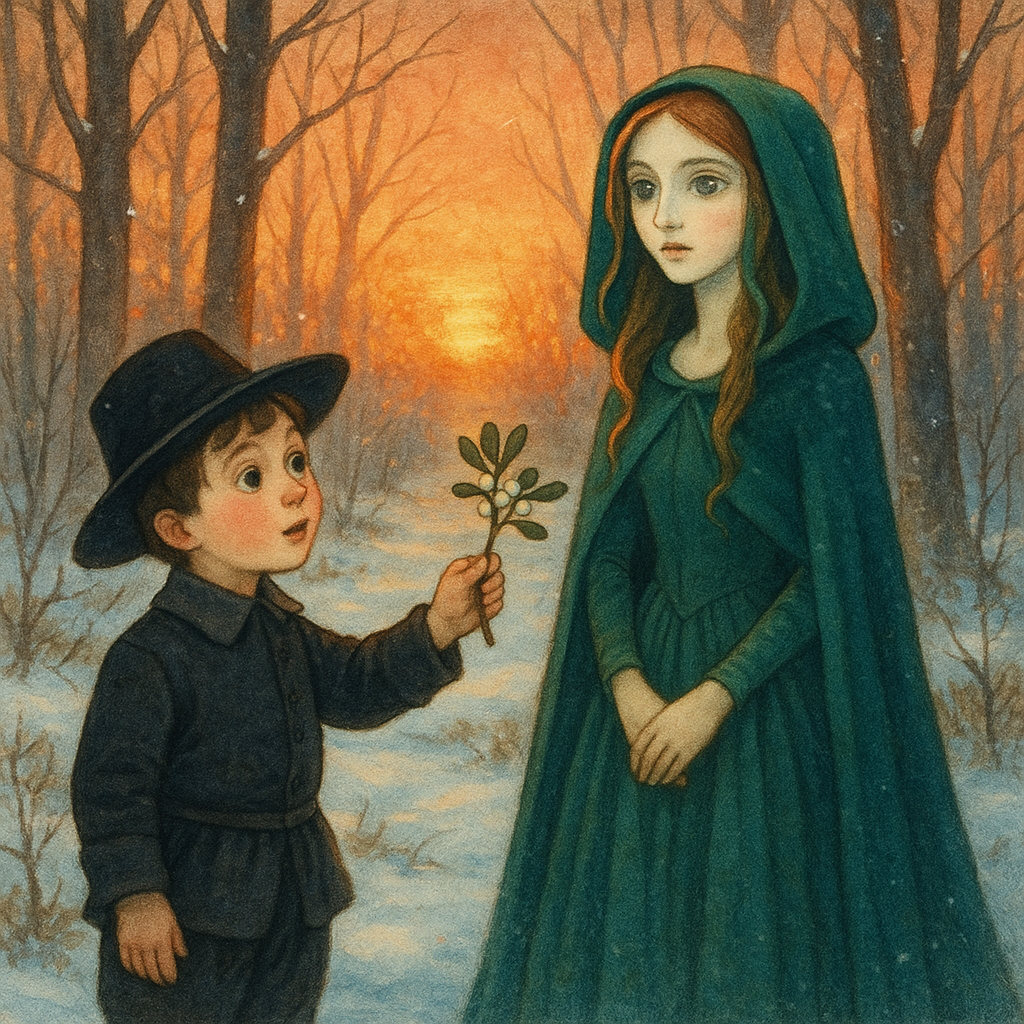
She fixed her starry gaze on him.
“I prithee now, good lad,” said she,
“Canst break the bough with berries dim
That springs so high on yonder tree?”
“Yea, verily!” cried he.
In haste to serve so fair a maid,
He plucked her down the elfin bough;
But once again he waxed afraid.
With beating heart, with frowning brow,
He cried, “What maid art thou?”
“I doubt it is a heathen thing —
My Aunt Refrain hath told me that.
Its leaf is like a leathern wing;
It is as gruesome as a bat,
A toad, or brindled cat!”
(“Perchance she is a blue-eyed witch
That dwelleth in the wood,” he thought.
“Her silken gown is strange and rich.
In subtle snare she hath me caught;
My ruin, sure, is wrought!”)
“Good Master Roundhead, shrink not so!”
She said. “Thou wast a friend in need
To pluck my pearly mistletoe.
A merry Christmas be thy meed
For that most gentle deed!
“But merry Christmas is no more
In English land! I mind me how
We kept the joyful feast of yore,
In yon old ivied Hall, whence now
I’ve stolen to seek this bough!
“The men and maids, a rosy crowd,
Made noisy mirth, and thought no sin.
With pipe, and tabor beating loud —
Ah me, with what a joyous din
They brought the Yule block in!
“On high the elfin bough would hang;
And surely ‘t was a gleeful game,
And all the walls with laughter rang
When Hodge kissed Moll beneath the same,
Nor thought the jest a shame!
“With plums, and spice, and citron sweet,
Madge cook would work in cunning wise;
She kneaded paste, she shredded meat —
I trow thou wouldst have oped thine eyes
To see the Christmas pies!
“Good store, good cheer, for many a year
In that old Hall had we,” she said;
“But now the days are grim and drear,
The larder’s bare, and mirth is dead.”
She sighed, she turned, she fled.
Along the woodland path she went
As swiftly as the speeding doe;
For now the wintry day was spent,
Between the trunks the sunset glow
Grew faint upon the snow.
And little Year-of-Jubilee
Stood still, and stared, and heaved a sigh.
He thought, “Perhaps it would not be
A grievous sin to wish that I
Could dream of Christmas pie!”