
The Crown of the Year

Summary


The Crown of the Year is a short autumn poem that greets a mellow morning still warm with the last of summer. The speaker looks closely at humble things: seeded dock in umber, golden hawk-bit, a single late wild rose, and crimson woodbine glowing like wine. Each plant becomes a dear friend, and each fading bloom carries a quiet ache. Beneath the wistful mood, the poem finds peace in the hazy purple light of the season, and it asks why autumn deserves to be called the year's crown.

Listen to audio


Read Online

Ah, happy morning of autumn sweet,
Yet ripe and rich with summer’s heat.

Near me each humble flower and weed——
The dock’s rich umber, gone to seed,

The hawk-bit’s gold, the bayberry’s spice,
One late wild rose beyond all price;

Each is a friend and all are dear,
Pathetic signs of the waning year.

The painted rose-leaves, how they glow!
Like crimson wine the woodbines show;

The wholesome yarrow’s clusters fine,
Like frosted silver dimly shine;

And who thy quaintest charm shall tell,
Thou little scarlet pimpernel?

In the mellow, golden autumn days,
When the world is zoned in their purple haze,

A spirit of beauty walks abroad,
That fills the heart with peace of God;

The spring and summer may bless and cheer,
But autumn brings us the crown o’ the year.
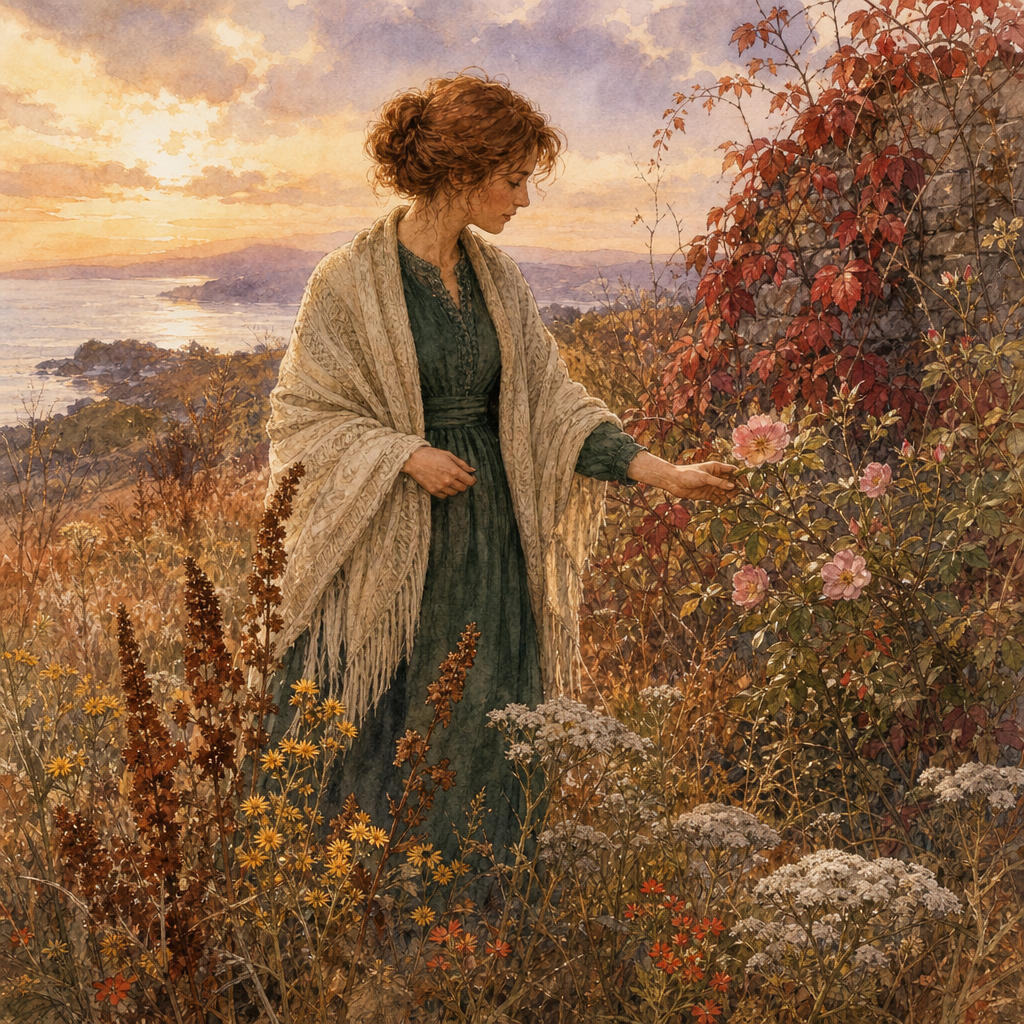
Woman touching a late wild rose in an autumn meadow, illustrating Celia Thaxter's poem The Crown of the Year.

Add Ririro as a Preferred Source on Google


Credits

Celia Thaxter was an American poet of the nineteenth century, best known for her verse and prose about the rugged Isles of Shoals off the New England coast. Her close, affectionate eye for wildflowers and weeds shows in this poem's catalogue of yarrow, woodbine and scarlet pimpernel.