The Coming of Christmas

Summary


"The Coming of Christmas" by Lady Lindsay sets the warmth of the Christmas season — wassail, music, feasting, and the greeting of old friends — against a quiet, urgent refrain: "Thou that slumberest, wake and pray." Each stanza layers on more of the holiday's outward splendour, from jewelled tokens to the harp and viol, only to pivot inward with that same solemn whisper. The poem asks whether the soul is truly present beneath all the festive noise, giving Christmas cheer a surprisingly contemplative edge.

Listen to audio


Read Online

Christmas is a-drawing near,
    Christmas-tide and Christmas cheer,
Merry wassail, merry song,
Joyous dance and roundelay —
All that doth to Yule belong.
Yet unto my soul I say,
“Thou that slumberest, wake and pray.”

Christmas is a-nearing quite,
Time of feast and full delight,
Pleasant pomp and allegresse,
Harp and viol’s music gay,
Jewelled tokens, gaudy dress.
Yet unto my soul I say,
“Thou that slumberest, wake and pray.”
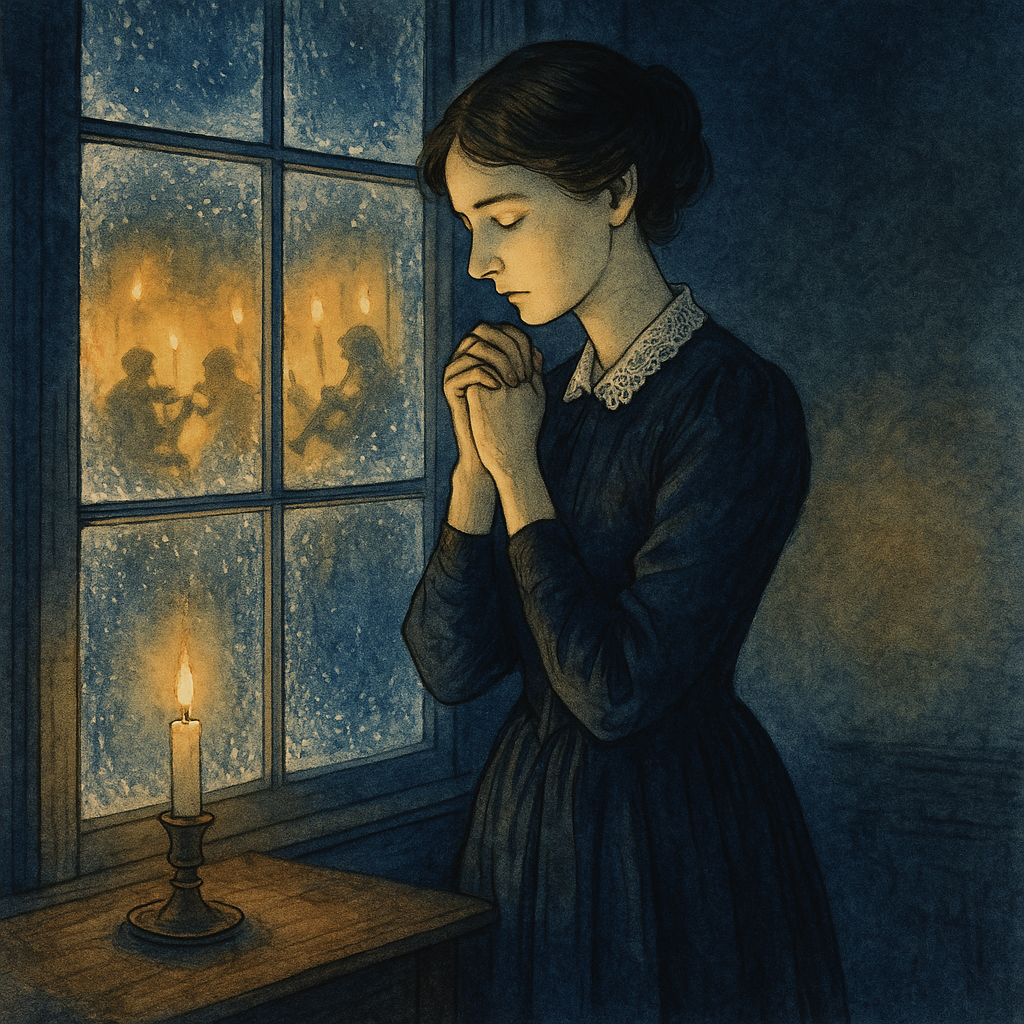
A Victorian woman prays quietly by a frost-covered window in "The Coming of Christmas" by Lady Lindsay.

Christmas is a-chiming soon,
Bringing Love for choicest boon,
Pensioners to sit in hall,
Comrades, friends of many a day,
Greeting fair from great and small.
Yet unto my soul I say,
“Thou that slumberest, wake and pray.”


Credits

Lady Lindsay was a Victorian-era British poet known for verse that weaves religious reflection into the rhythms of everyday and seasonal life. This poem is notable for its disciplined refrain structure, using the repetition of a single prayerful line to quietly anchor each celebratory stanza.