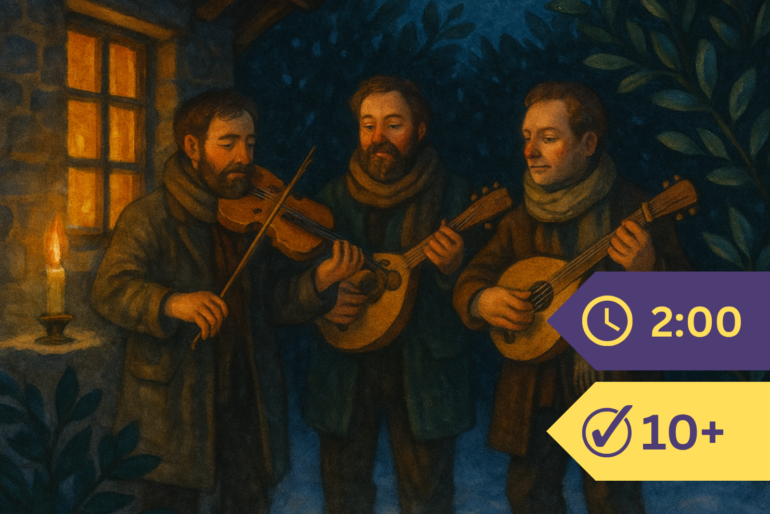
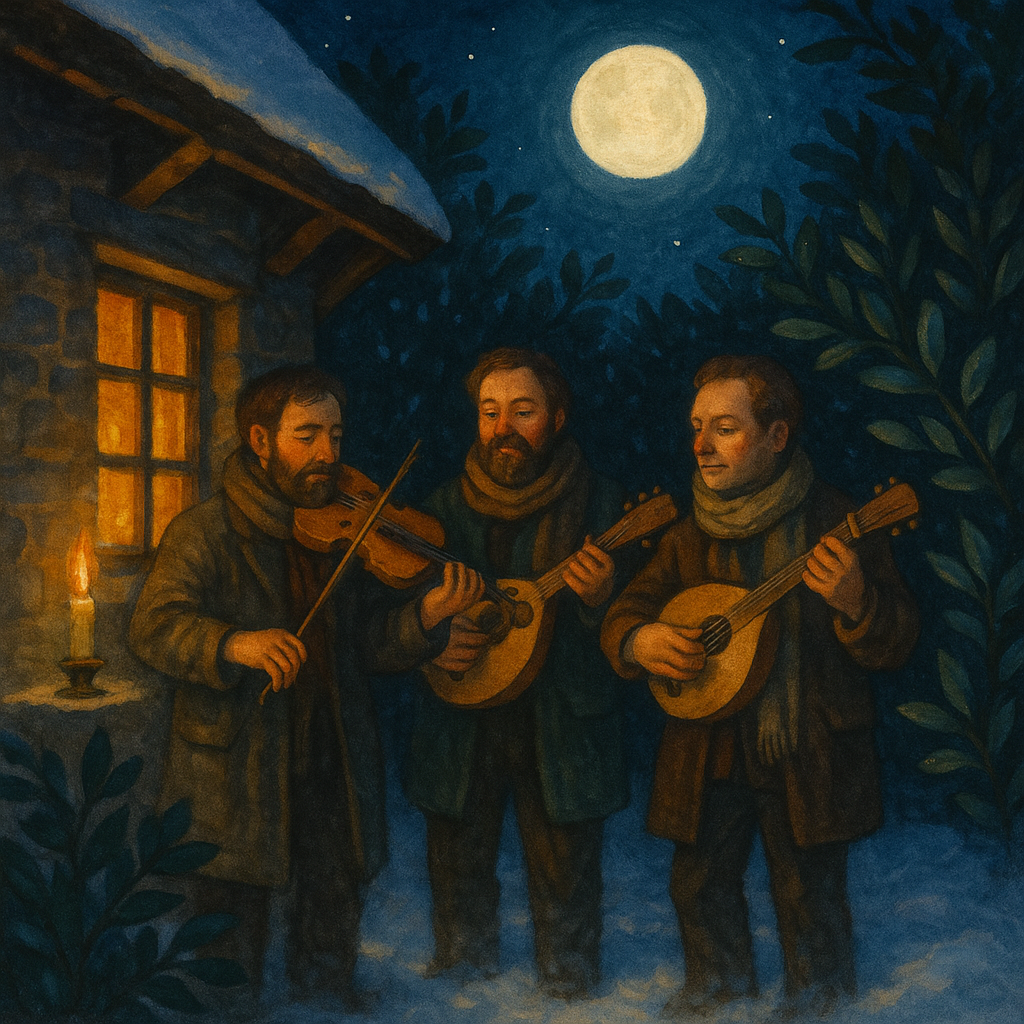
The minstrels played their Christmas tune
To-night beneath my cottage eaves;
While, smitten by a lofty moon,
The encircling laurels, thick with leaves,
Gave back a rich and dazzling sheen
That overpowered their natural green.
Through hill and valley every breeze
Had sunk to rest, with folded wings:
Keen was the air, but could not freeze
Nor check the music of the strings;
So stout and hardy were the band
That scraped the chords with strenuous hand!
And who but listened — till was paid
Respect to every inmate’s claim:
The greeting given, the music played,
In honor of each household name,
Duly pronounced with lusty call,
And “Merry Christmas” wished to all!
How touching, when, at midnight, sweep
Snow-muffled winds, and all is dark,
To hear, and sink again to sleep!
Or, at an earlier call, to mark
By blazing fire, the still suspense
Of self-complacent innocence;
The mutual nod, — the grave disguise
Of hearts with gladness brimming o’er;
And some unbidden tears that rise
For names once heard, and heard no more;
Tears brightened by the serenade
For infant in the cradle laid.
Hail, ancient Manners! sure defence,
Where they survive, of wholesome laws;
Remnants of love whose modest sense
Thus into narrow room withdraws;
Hail, Usages of pristine mould,
And ye that guard them, Mountains old!