The Antipodes: Christmas at the Cape

Summary


"The Antipodes: Christmas at the Cape" by John Runcie paints a sun-drenched South African Christmas set against the familiar holly-and-snow backdrop of the Northern Hemisphere. Vineyards ripen at Stellenbosch, crickets chirp at the gate instead of carollers in the cold, and moths drift where snowflakes would fall. Through three stanzas and a repeated carol refrain, Runcie celebrates the warmth, haze, and summer bloom of a Cape Christmas without dismissing the northern tradition — holding both in joyful harmony.

Listen to audio


Read Online

Your Christmas comes with holly leaves
And snow about your doors and eaves;
Our lighted windows, open wide,
Let in our summer Christmas tide;
And where the drifting moths may go —
Behold our tiny flakes of snow;

    But carol, carol in the cold;
        And carol, carol as ye may, —
    We sing the merry songs of old
        As merrily on Christmas Day.

Your hills are wrapped in rainy cloud,
Your sea in anger roars aloud;
But here our hills are veiled with haze
In harmonies of blues and grays;
The waters of two oceans meet
With friendly murmurs by our feet;

    But carol, carol, Christmas Waits,
        And carol, carol, as ye may, —
    The Crickets by our doors and gates
        Sing in the grace of Christmas Day.

The rain and sunshine of the Cape
Lie folded in the ripening grape,
And Stellenbosch and Drakenstein,
With bounteous orchard, field of vine,
And every spot that we pass by —
Lie burnished ‘neath our Christmas sky;
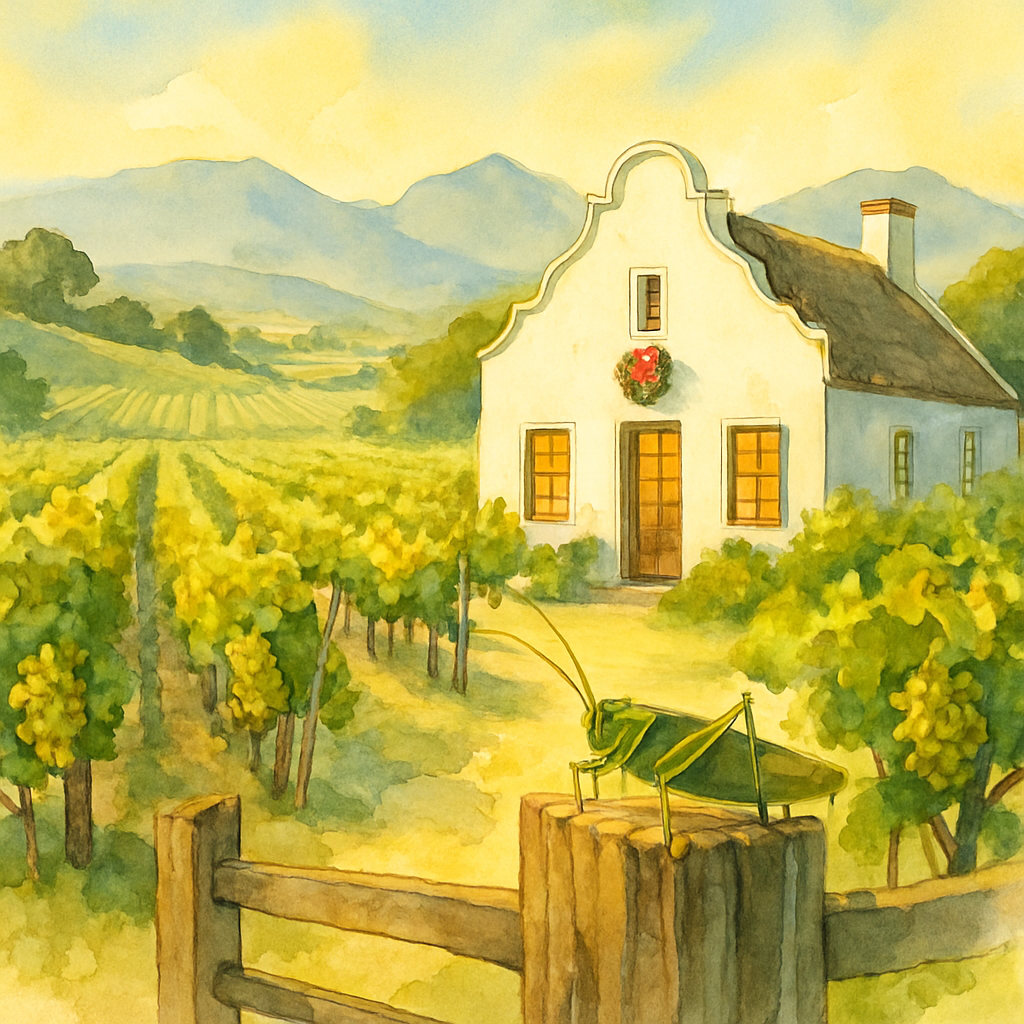
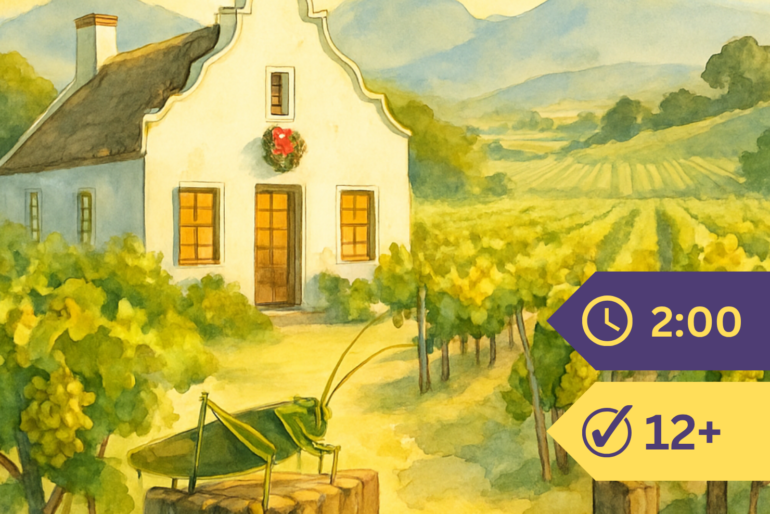
A sun-drenched Cape Winelands vineyard at Christmas, illustrating the poem "Christmas at the Cape" by John Runcie.

    So carol, carol in your snow
        And carol, carol as ye may, —
    We carol ‘mid our blooms ablow,
        The grace of Summer’s Christmas Day.

Credits

John Runcie was a 19th-century Scottish-born poet who spent time in South Africa and drew on its landscapes for his verse. This poem is notable for its specific naming of Cape Winelands locations — Stellenbosch and Drakenstein — grounding its celebration of a Southern Hemisphere Christmas in vivid, real geography.