Sonnet—To Science

Summary


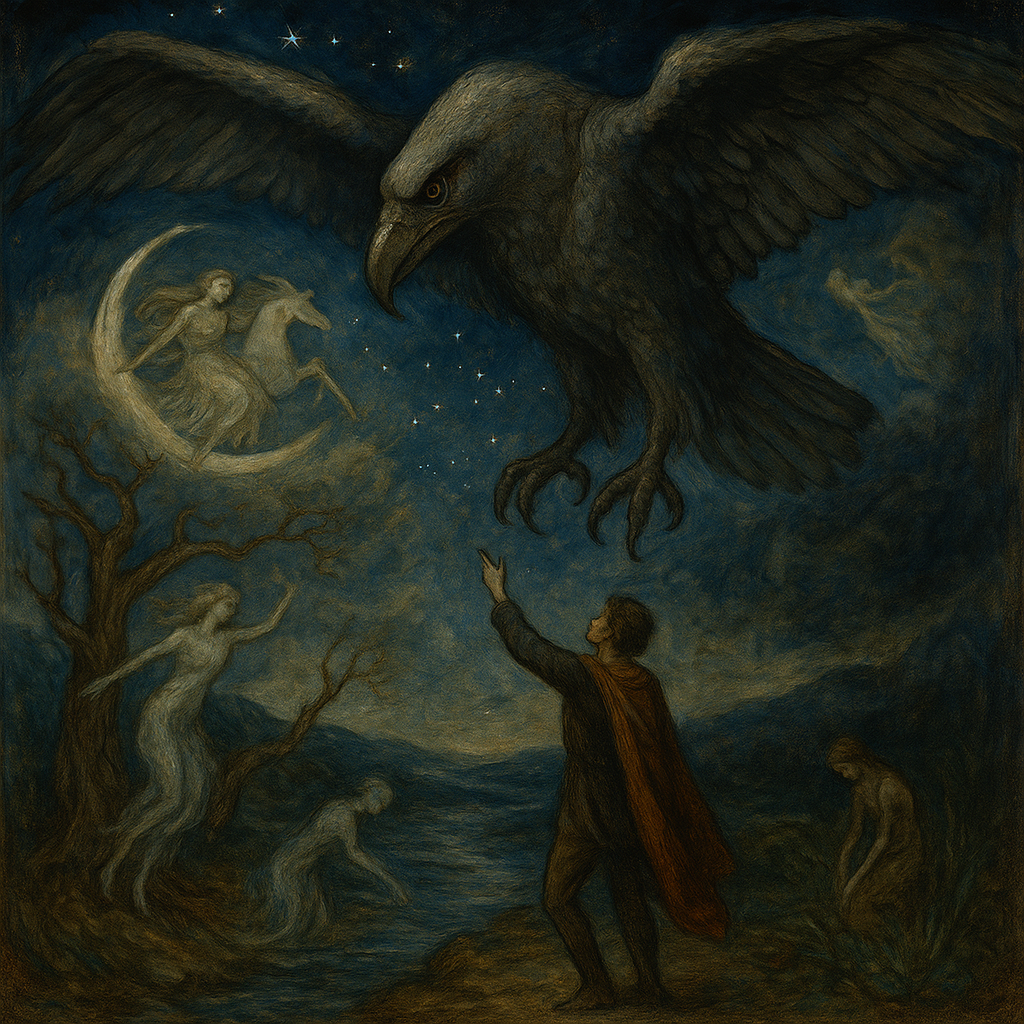
"Sonnet—To Science" is a free poem by Edgar Allan Poe in which the speaker confronts Science as a cold, predatory force — a vulture feeding on the poet's heart with its "dull realities." Poe mourns the mythic world Science has dismantled: Diana torn from her chariot, Naiads driven from rivers, wood nymphs stripped from their forests. The poem builds into a raw, personal lament — a poet robbed of the summer dreams and jewelled skies that once fed his imagination.

Listen to audio


Read Online

Science! true daughter of Old Time thou art!
Who alterest all things with thy peering eyes.
Why preyest thou thus upon the poet’s heart,
Vulture, whose wings are dull realities?
How should he love thee? or how deem thee wise,
Who wouldst not leave him in his wandering
To seek for treasure in the jewelled skies
Albeit he soared with an undaunted wing?
Hast thou not dragged Diana from her car?
And driven the Hamadryad from the wood
To seek a shelter in some happier star?
Hast thou not torn the Naiad from her flood,
The Elfin from the green grass, and from me
The summer dream beneath the tamarind tree?

Credits

Edgar Allan Poe (1809–1849) was an American writer celebrated for his poetry, gothic fiction, and pioneering work in detective literature. "Sonnet—To Science" is notable as one of Poe's earliest published poems, appearing as a preface to his 1829 collection *Al Aaraaf, Tamerlane, and Minor Poems*, signalling a tension between rational inquiry and artistic imagination that would shape his entire body of work.