Summary


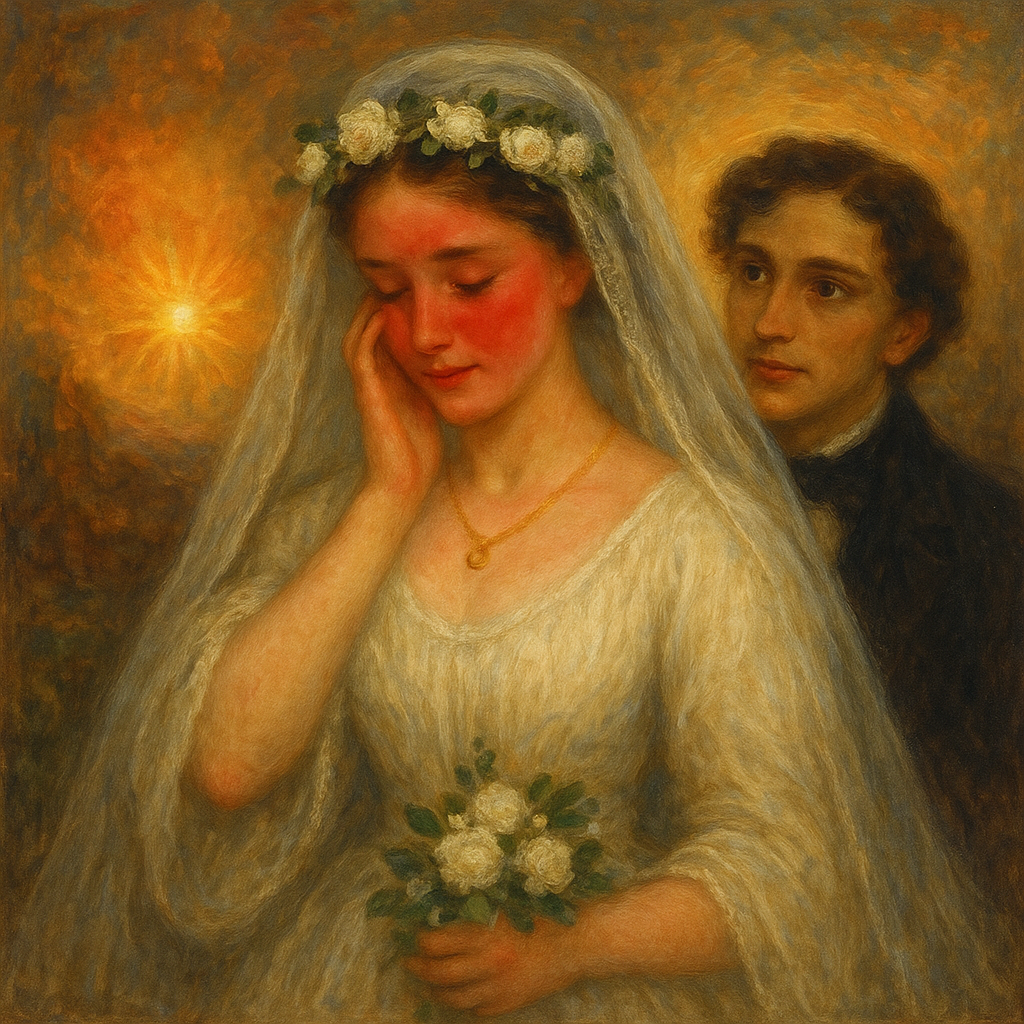
"Song" by Edgar Allan Poe is a short poem that captures a moment of quiet, devastating longing. A speaker watches a woman blush on her bridal day — her happiness full, her world bright with love — yet that very blush ignites a fiercer, more painful flame in his own chest. Through just four stanzas, Poe traces the fine edge between beauty and heartbreak, where a single glance and a crimson cheek become the whole of what one man's aching sight can hold.


Listen to audio


Read Online

When a burning blush came o’er thee,
Though happiness around thee lay,
The world all love before thee:

And in thine eye a kindling light
(Whatever it might be)
Was all on Earth my aching sight
Of Loveliness could see.

That blush, perhaps, was maiden shame—
As such it well may pass—
Though its glow hath raised a fiercer flame
In the breast of him, alas!

Who saw thee on that bridal day,
When that deep blush would come o’er thee,
Though happiness around thee lay,
The world all love before thee.

Credits

Edgar Allan Poe was an American poet and writer of the 19th century, celebrated for his mastery of atmosphere, beauty, and melancholy. "Song" is considered one of his earliest poems, believed to have been written when Poe was still a teenager, reflecting a precocious sensitivity to love and loss that would define his voice throughout his career.