So, now is come our joyfulst feast,
Let every man be jolly;
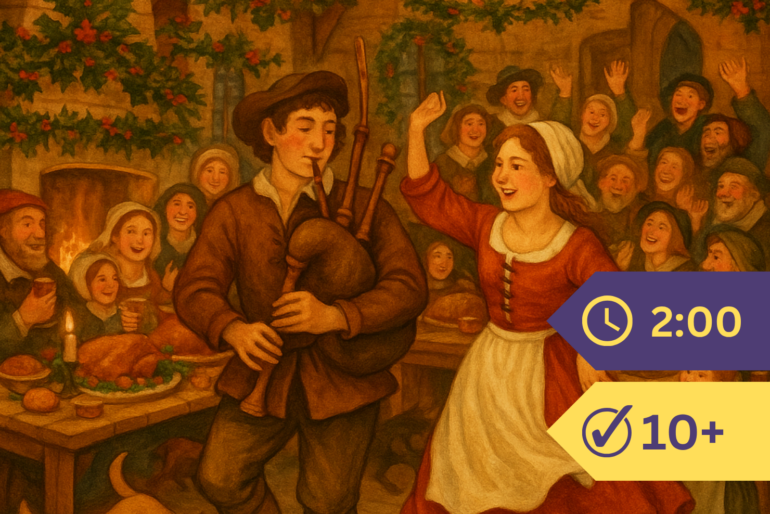
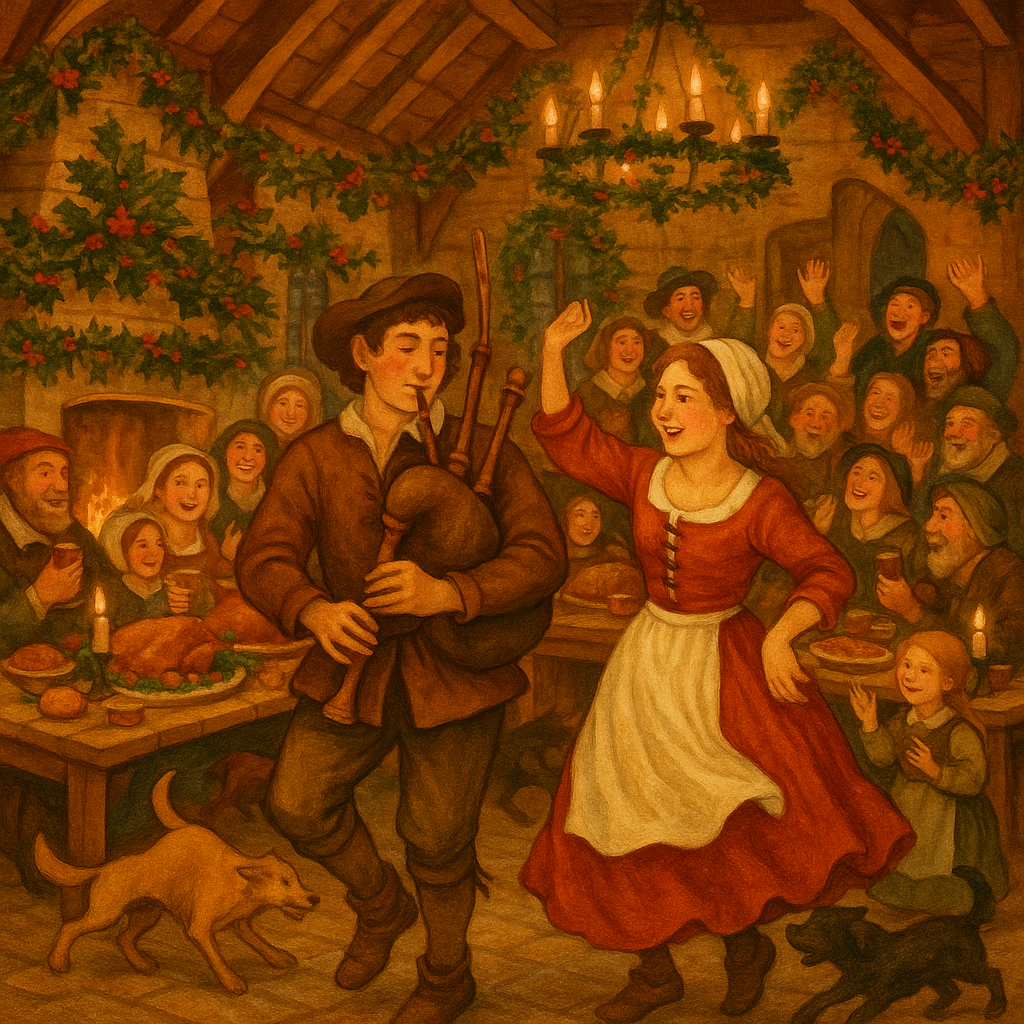
Each room with ivy leaves is drest,
And every post with holly.
Though some churls at our mirth repine,
Round your foreheads garlands twine;
Drown sorrow in a cup of wine,
And let us all be merry.
Now all our neighbours’ chimneys smoke,
And Christmas logs are burning;
Their ovens they with baked meats choke,
And all their spits are turning.
Without the door let sorrow lie;
And if for cold it hap to die,
We’ll bury’t in a Christmas pie,
And evermore be merry.
Now every lad is wondrous trim,
And no man minds his labour;
Our lasses have provided them
A bag-pipe and a tabor;
Young men and maids, and girls and boys,
Give life to one another’s joys;
And you anon shall by their noise
Perceive that they are merry.
Rank misers now do sparing shun;
Their hall of music soundeth;
And dogs thence with whole shoulders run,
So all things there aboundeth.
The country folks themselves advance
For crowdy-mutton’s come out of France;
And Jack shall pipe, and Jill shall dance,
And all the town be merry.