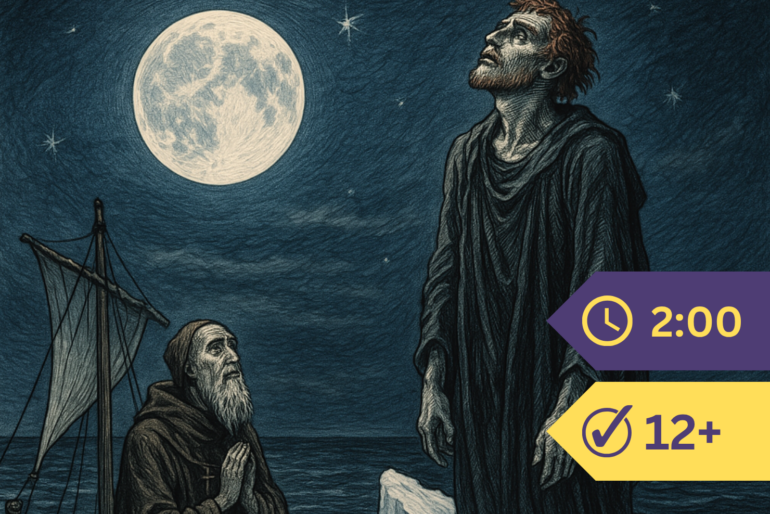
Saint Brandan sails the northern main;
The brotherhoods of saints are glad.
He greets them once, he sails again;
So late! such storms! The saint is mad!
He heard, across the howling seas,
Chime convent-bells on wintry nights;
He saw, on spray-swept Hebrides,
Twinkle the monastery-lights;
But north, still north, Saint Brandan steered;
And now no bells, no convents more!
The hurtling Polar lights are neared,
The sea without a human shore.
At last (it was the Christmas-night;
Stars shone after a day of storm)
He sees float past an iceberg white,
And on it — Christ! — a living form.
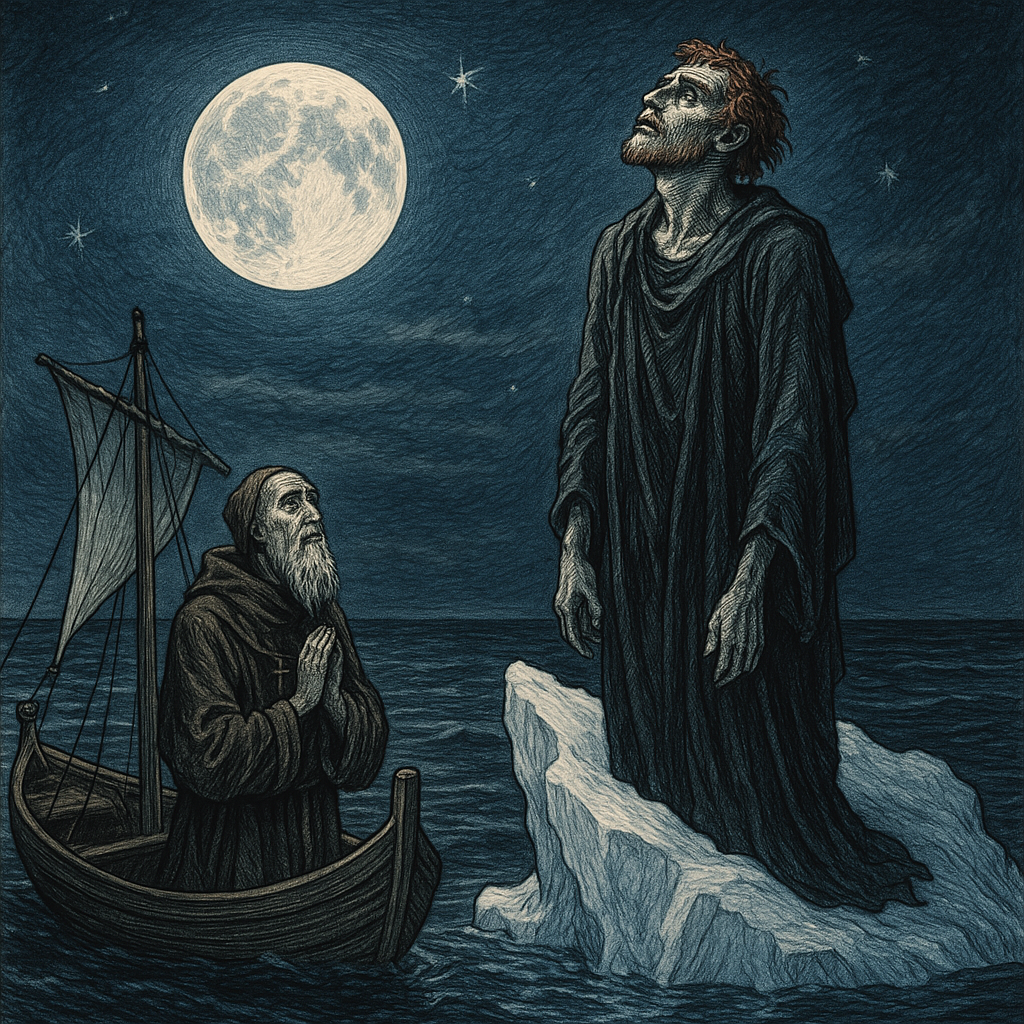
That furtive mien, that scowling eye,
Of hair that red and tufted fell,
It is — oh, where shall Brandan fly? —
The traitor Judas, out of hell!
Palsied with terror, Brandan sate;
The moon was bright, the iceberg near.
He hears a voice sigh humbly, “Wait!
By high permission I am here.
“One moment wait, thou holy man!
On earth my crime, my death, they knew;
My name is under all men’s ban:
Ah! tell them of my respite too.
“Tell them, one blessèd Christmas-night
(It was the first after I came,
Breathing self-murder, frenzy, spite,
To rue my guilt in endless flame), —
“I felt, as I in torment lay
‘Mid the souls plagued by heavenly power,
An angel touch mine arm, and say, —
‘Go hence, and cool thyself an hour!’
“‘Ah! whence this mercy, Lord?’ I said.
‘The leper recollect,’ said he,
‘Who asked the passers-by for aid,
In Joppa, and thy charity.’
“Then I remembered how I went,
In Joppa, through the public street,
One morn when the sirocco spent
Its storms of dust with burning heat;
“And in the street a leper sate,
Shivering with fever, naked, old;
Sand raked his sores from heel to pate,
The hot wind fevered him fivefold.
“He gazed upon me as I passed,
And murmured, ‘Help me, or I die!’
To the poor wretch my cloak I cast,
Saw him look eased, and hurried by.
* * * *
“Once every year, when carols wake,
On earth, the Christmas-night’s repose,
Arising from the sinner’s lake,
I journey to these healing snows.
“I stanch with ice my burning breast,
With silence balm my whirling brain.
O Brandan! to this hour of rest,
That Joppan leper’s ease was pain.”
Tears started to Saint Brandan’s eyes;
He bowed his head, he breathed a prayer,
Then looked — and lo, the frosty skies!
The iceberg, and no Judas there!