On Servian hearths the Christmas fire
Did slowly molder and expire.
In Servian hearts there glowed a flame
No time shall quench, no tyrants tame.
Through royal Petersburg the Czar
Rode in his slow, triumphal car;
The Christmas bells rang loud and sweet
Before the Liberator’s feet.
At Bucharest, where snow lay white
Beneath the friendly veil of night,
Was ushered in, with captive state,
The vanquished of the Czar and fate.
His brow was stern — on Plevna’s plain
The snow fell fast upon the slain,
The Prophet’s standards fled to sea;
Roumania — Servia — they are free!
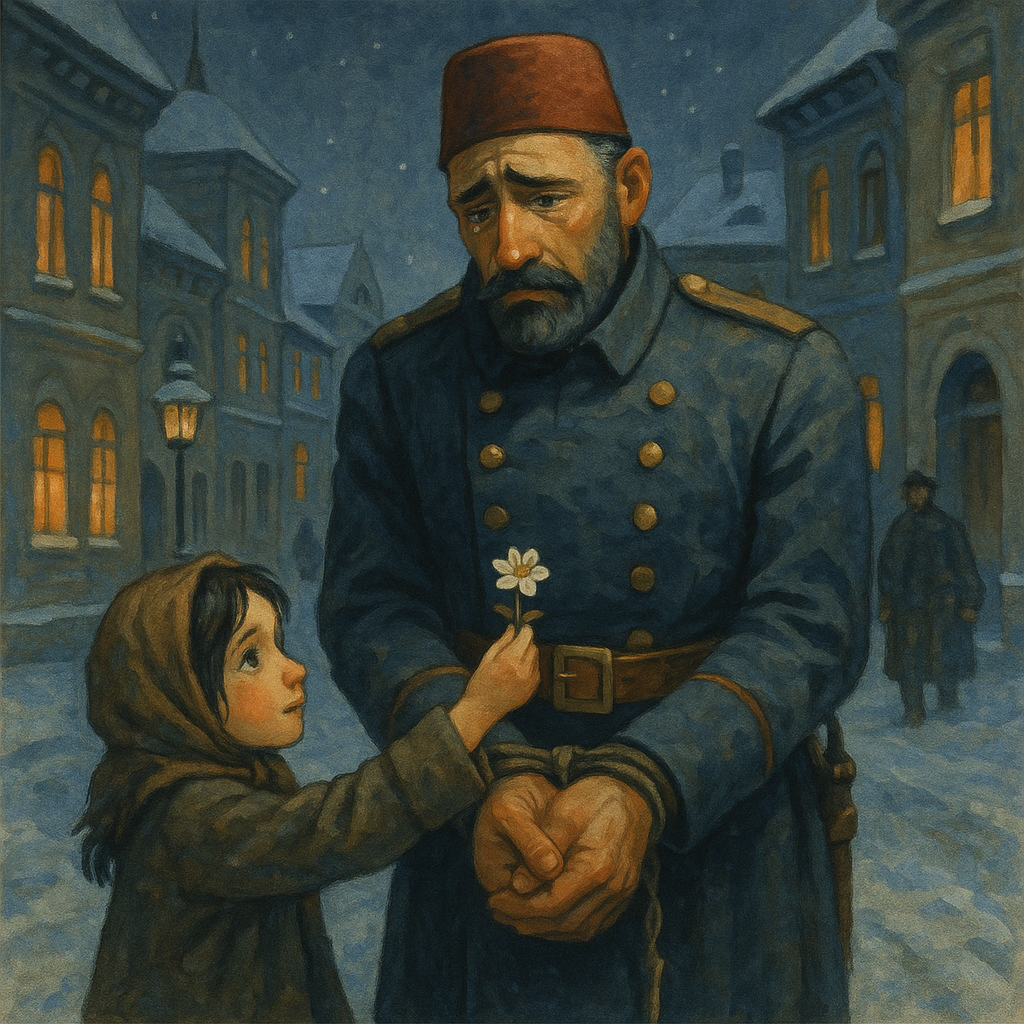
Roumania’s daughter, unaware,
Had caught the glance of stern despair;
She smiled on him with childish grace,
The vanquished tyrant of her race;
For comfort in this bitter hour
She laid within his hand a flower;
The captive’s eyes with tears were dim,
He kissed the lips that smiled on him.
Sweet pledge of peace, and debt confessed
Between oppressor and oppressed!
An echo thrilling Moslem pride:
“Good will to men at Christmas-tide.”
The Crescent wanes — the Star ascends —
The reign of force and terror ends;
And love hath overcome the sword
Upon the Birthday of the Lord.