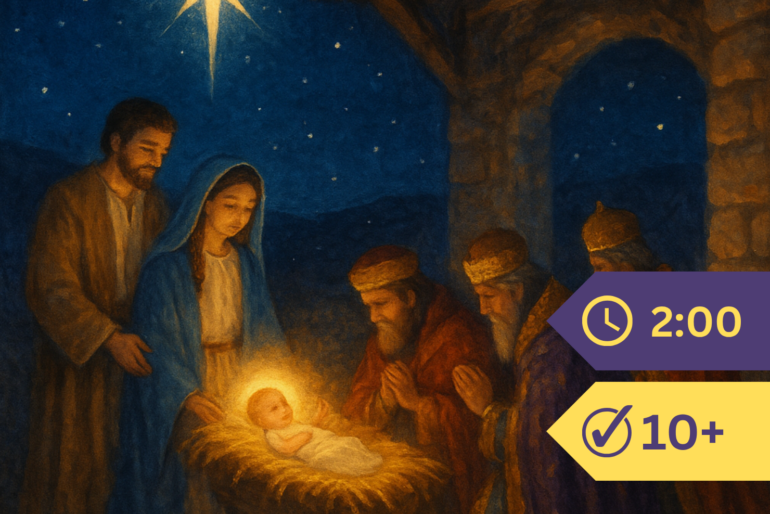
O holy night, the stars are brightly shining;
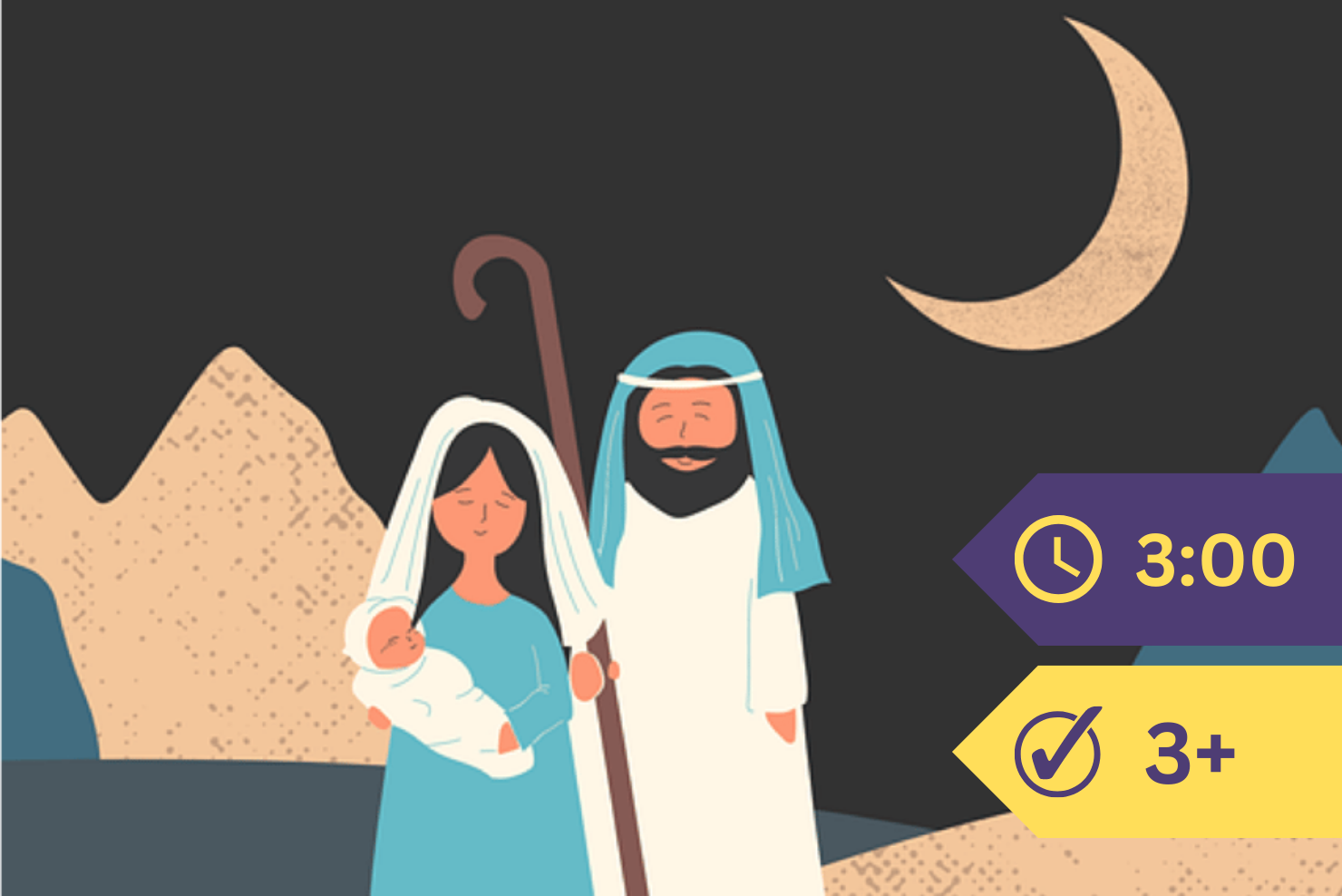
It is the night of the dear Saviour’s birth.
Long lay the world in sin and error pining,
Till He appeared and the soul felt its worth.
A thrill of hope, the weary world rejoices,
For yonder breaks a new and glorious morn!
Fall on your knees! O hear the angel voices!
O night divine, O night when Christ was born!
O night divine! O night, O night divine!
Led by the light of faith serenely beaming,
With glowing hearts by His cradle we stand.
So led by light of a star sweetly gleaming,
Here came the wise men from the orient land.
The King of kings lay thus in lowly manger,
In all our trials born to be our friend.
He knows our need, to our weakness no stranger.
Behold your King, before Him lowly bend!
Behold your King, your King, before Him lowly bend!
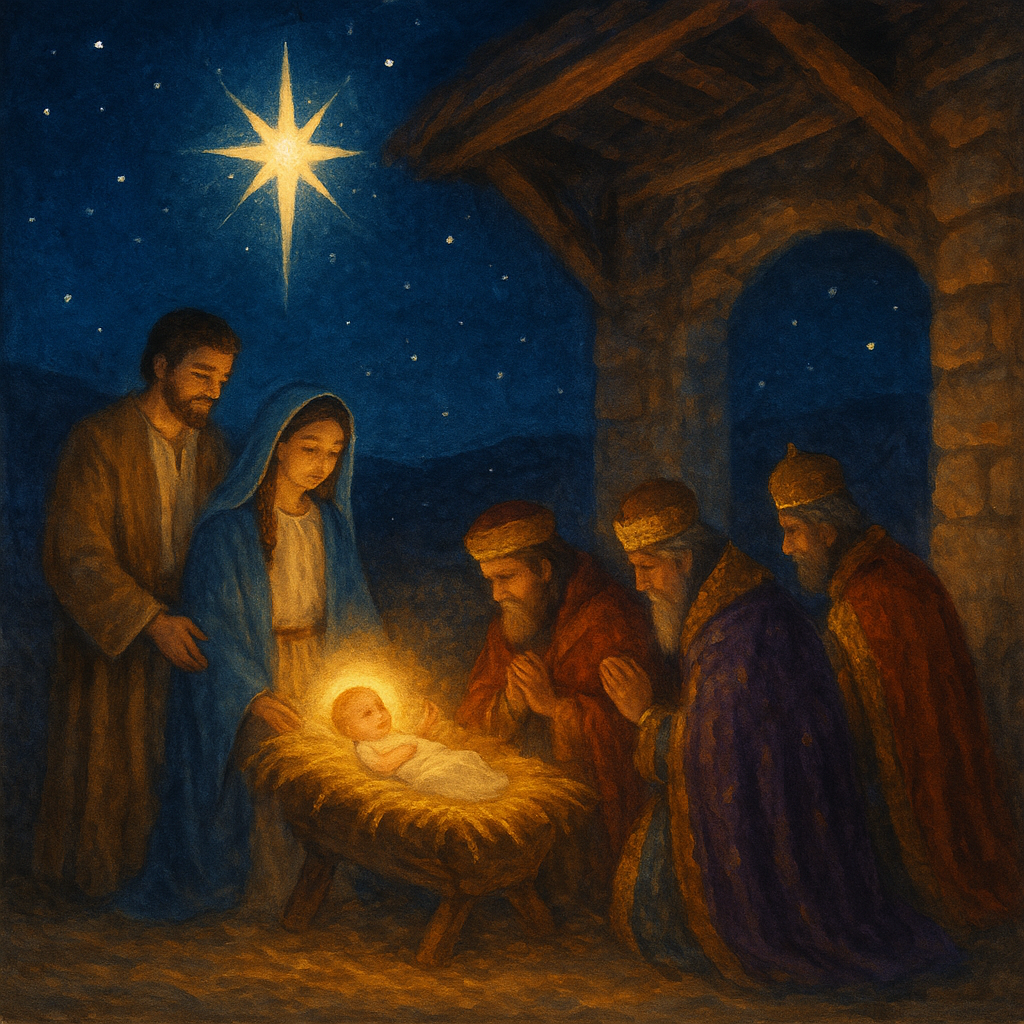
Truly He taught us to love one another;
His law is love and His gospel is peace.
Chains shall He break, for the slave is our brother;
And in His name all oppression shall cease.
Sweet hymns of joy in grateful chorus raise we;
Let all within us praise His holy name.
Christ is the Lord! Then ever, ever praise we!
His power and glory evermore proclaim!
His power and glory evermore proclaim!